
Why Kimi K3 changes the cost math for marketing automation
Moonshot AI's Kimi K3 is the largest open-weight model ever, priced 40–70% below US frontier models. This article explains how the accelerating commoditization of the model layer threatens gross margins for AI features in marketing automation platforms and what strategies marketers and martech leaders should consider.
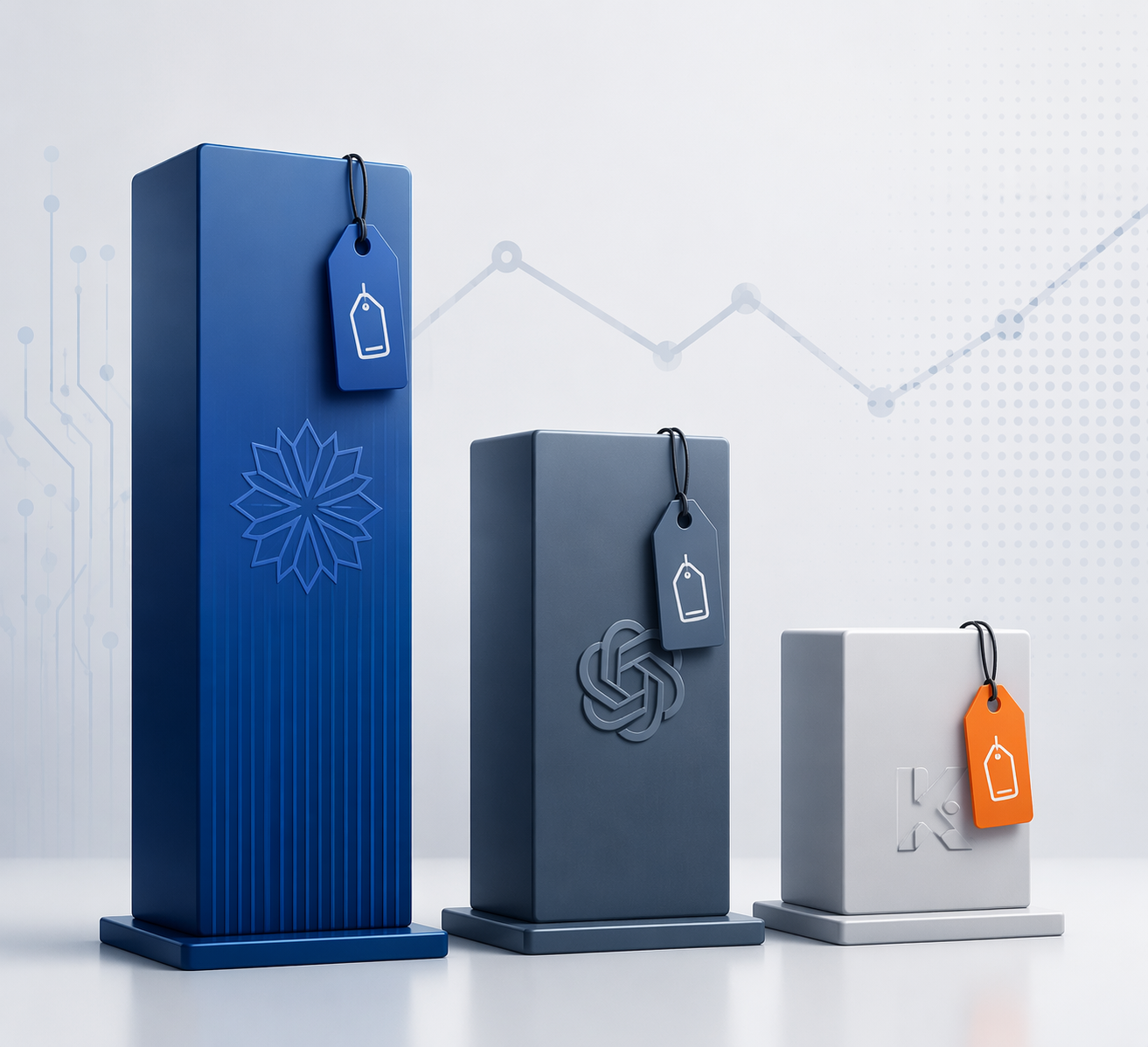
Kimi K3 matters because the invoice moved before the benchmark debate did. Moonshot AI’s model arrived in mid-July 2026 as a 2.8-trillion-parameter system with open weights scheduled for July 27. In launch-week pricing, it sat at $3 input and $15 output per million tokens, versus $5/$30 for GPT-5.6 Sol and $10/$50 for Claude Fable 5 [1][2][3]. Its most visible early strength is coding, and benchmark verification is still early; the marketing automation issue is cost structure, not whether Kimi writes better email copy.
The margin story is the real story
For a marketing automation vendor, that spread is not a benchmark curiosity. It reaches straight into the part of the business that used to look like software margin and now behaves more like consumption infrastructure. If a feature layer for copy generation, segmentation help, personalization, lead scoring, or workflow assistance is built on third-party inference, the vendor is absorbing a cost curve that has been repriced in public.
That repricing was already visible before Kimi K3. In Digital Applied’s Q2 2026 report, Chinese AI providers had gone from under 2% to 45%+ of OpenRouter traffic in one year, and OpenRouter’s Justin Summerville said Chinese models were 60% to 90% cheaper than Anthropic and OpenAI rivals [4].
That is the important shift for martech economics. Cheap is no longer a synonym for second-tier, and a vendor that priced AI as a premium add-on when the model layer was scarce is now exposed to a much less forgiving supply market.
Switching pressure is already visible
Lindy.ai is the kind of example finance teams pay attention to. The company moved 100% of inference traffic from Anthropic to DeepSeek and said its AI costs fell 10x; CEO Flo Crivello said Anthropic was costing “more than payroll” and that “every founder I know is thinking about switching” [5][6].
That is not a marketing automation case study, and it does not mean marketing teams should swap their stack to Kimi K3 tomorrow. It does show what happens when an executive can route around a premium model and the bill drops fast enough to get a CFO’s attention.
Where margins break first
The pressure lands unevenly. Vendors that hard-code one premium model into every AI feature take the hit first. Flat subscriptions with “unlimited” AI are the next weak spot, because usage can outrun the price that was set when inference was expensive. Platforms that can route tasks across models, meter usage cleanly, and separate platform value from inference consumption have more room to absorb the change.
That matters because the gross-margin gap is already visible. The SaaS CFO’s margin analysis puts traditional SaaS at 70% to 80% gross margin, while AI-heavy products are targeting around 52% [7]. Once inference becomes a recurring operating cost instead of a hidden feature cost, that gap shows up in pricing, renewal pressure, and product decisions.
Compliance and procurement cannot be hand-waved
The Chinese-model wave is not just about lower tokens. It also raises procurement and disclosure questions for U.S. buyers, because Chinese model use has already drawn scrutiny and distillation accusations have become part of the public argument [8][1]. For martech teams, that means the buying question is no longer only which model is best, but also where it is hosted, who routes it, and what exactly the vendor discloses.
The questions that separate pricing theater from architecture
The practical response is less glamorous than a model swap. The right questions are procurement questions:
- Which features are tied to which models, and can the vendor explain that at the SKU level?
- Can the platform route tasks across models when cheaper ones are good enough?
- Is usage capped, metered, or bundled in a way that protects gross margin as volume grows?
- Does pricing separate platform value from inference consumption, or does every AI feature quietly become metered infrastructure?
Kimi K3 may or may not become the model inside a marketer’s daily workflow. That is not the point. The point is that it makes it harder for marketing automation platforms to defend AI premiums without cost-aware architecture, and it makes model routing, usage control, and hybrid pricing look less like product sophistication and more like basic margin discipline.
References
- CNBC, “China's Moonshot AI unveils Kimi K3 that rivals OpenAI, Anthropic”, July 17, 2026
- Fortune, “Moonshot's Kimi K3 pushes Chinese AI into Fable-level territory”, July 16, 2026
- VentureBeat, “China's Moonshot AI releases Kimi K3, the largest open-source model ever rivaling top U.S. systems”
- Digital Applied, “Chinese AI Models Q2 2026: 10-Provider Landscape Report”, Q2 2026
- NPR, “Some U.S. startups are turning to cheap Chinese AI models”, July 15, 2026
- Rest of World, “Low-cost Chinese AI models like DeepSeek gain traction in the U.S.”
- The SaaS CFO, “Your AI Feature Is Quietly Destroying Your Gross Margin”
- CNBC, “Chinese AI models gain ground with U.S. companies as costs surge”, July 7, 2026

Comments
Join the discussion with an anonymous comment.