

Kalshi's $20M World Cup bet paid off with 3 million new users
Kalshi spent roughly $20 million on sponsorships, athlete endorsements, TV, digital ads, and out-of-home displays during the 2026 World Cup, acquiring 3 million new users and driving $40 billion in volume. This case study breaks down the multi-channel strategy within CFTC constraints and the controversial digital ad tactics that drew regulatory scrutiny.
As of July 20, the day after the Spain-Argentina final, Kalshi’s World Cup promotion looked lopsided: a two-year-old prediction market platform spending roughly $20 million around the tournament, then reporting 3 million new users and about $40 billion in volume while several established sportsbook apps moved the other way on daily activity measures.[1][2] That is the kind of result growth teams like to frame as a clean out-marketing story. It is more useful, and more accurate, to treat it as a campaign case record with several labels still attached: the exact total media spend is not public, the largest user and volume figures are company-shared, and the legal status underneath the campaign remains contested.
The important part of the Kalshi World Cup promotion marketing push was not that it found one spectacular channel. It built a stack. National-team partnerships gave it sporting legitimacy. Athlete posts gave it reach. A co-branding route put it near the World Cup without paying FIFA’s full sponsorship price. TV and outdoor media made the brand feel large. Paid social sharpened the comparison with sportsbooks. Affiliate links and promo codes captured demand at the moment search interest and match attention were highest.
The Campaign Was Built Around Access, Not Just Spend
The cleanest way to read the campaign is by asking what each channel was hired to do. The answer was not the same across the plan.
| Campaign layer | Main job in the system |
|---|---|
| AFA and Croatia/HNS sponsorships | Borrow national-team legitimacy and cultural proximity to the tournament |
| Messi and Modrić | Convert team access into mass attention and recognizable trust cues |
| ADI Predictstreet co-branding | Create World Cup-adjacent visibility without buying FIFA’s full sponsorship package |
| TV commercial | Make Kalshi feel credible outside performance-marketing environments |
| Out-of-home live odds | Attach the product to live match context |
| Digital ads | Frame Kalshi against sportsbooks and turn regulatory difference into a consumer message |
| Affiliate and promo-code distribution | Turn publisher traffic into account creation and first trades |
That division of labor matters because a smaller entrant rarely wins a global sports moment by trying to match incumbents impression for impression. DraftKings, FanDuel, BetMGM, and Caesars already have brand memory, app installs, user databases, media buying teams, and years of sportsbook advertising repetition. Kalshi needed a route that made its constraints visible in a useful way.
The route started with a regulatory distinction. Kalshi operates as a CFTC-regulated prediction market rather than a state-licensed sportsbook. That distinction shaped the campaign’s permission structure: where it could present itself, how it could differentiate from sportsbooks, and why its sports-event contracts triggered legal fights. It also made the campaign possible in a form that would have been harder to explain if Kalshi had simply acted like another book with a bonus offer.
Argentina Supplied the First Legitimacy Shock
The Argentine Football Association deal gave Kalshi the kind of association a young financial-markets brand cannot manufacture with paid social alone: the Argentina crest, proximity to the defending global soccer iconography around Lionel Messi, and a clean reason to appear in tournament conversation. Industry coverage described the AFA partnership as Kalshi’s biggest marketing win yet, and the campaign’s most obvious attention asset was a Messi Instagram post reaching an account with 507 million followers and generating more than 1.5 million likes.[3]
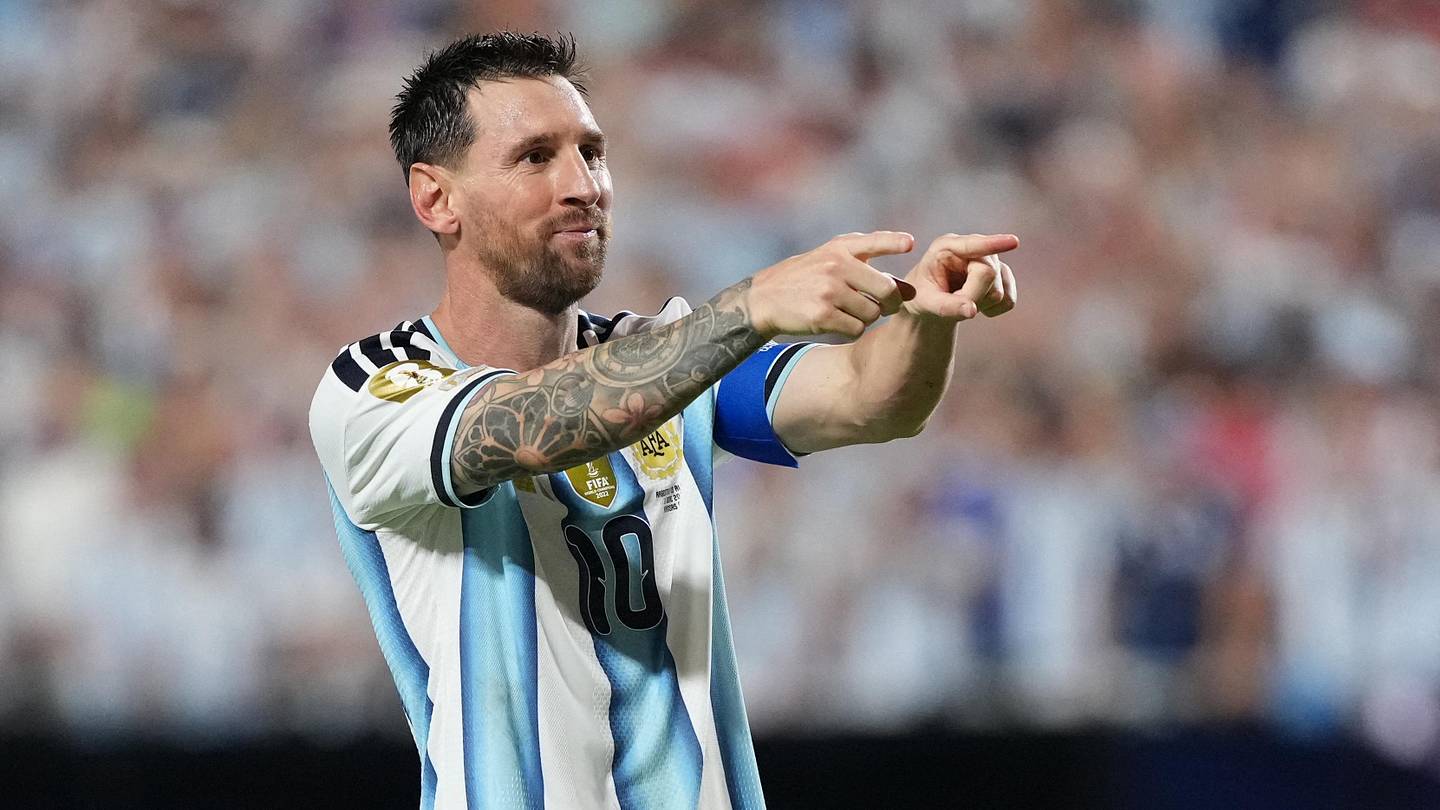
The Messi post was not just reach. Reach is the lazy way to value an athlete asset. The better question is what kind of doubt the asset removes. For many potential users, Kalshi’s product category still requires explanation: prediction market, event contract, CFTC-regulated venue, not a conventional sportsbook. The AFA and Messi layer did not explain all of that. It did something more primitive and often more valuable in a mass event window: it made the brand look less random.
That matters during a compressed tournament. A user seeing Kalshi for the first time does not have weeks to research the company before a match. A national-team crest and a Messi post reduce the unfamiliarity tax enough for the next touchpoint—a promo code, a search result, an ad, a referral link—to have a better chance of working.
Croatia Added a Second Signal, With Modrić as the Human Bridge
Kalshi did not stop with Argentina. Its Croatia/HNS partnership included Luka Modrić as a global brand ambassador, announced shortly before the tournament window intensified.[4] The pairing worked differently from the Messi/AFA moment. Messi gave the campaign unmatched mass attention. Modrić gave it another kind of football legitimacy: elite career credibility, European football familiarity, and a face that could travel across TV creative and brand materials without making the campaign feel like a single-market stunt.
The TV spot, “Hands,” featuring Modrić, aired nationally starting June 17.[5] In a campaign like this, TV is not merely a reach buy. It reassures a skeptical audience that the company has enough substance to appear in a familiar broadcast environment. For a brand asking users to trade on sports outcomes through a category many people still confuse with betting, that credibility cue is not cosmetic.
The Co-Branding Workaround Was the Cleverest Media Buy
The campaign’s sharpest move was not the athlete spend. It was the co-branding structure. Through ADI Predictstreet, Kalshi secured World Cup-adjacent sideline advertising while avoiding FIFA’s full sponsorship price, which was reported at about $150 million; the Kalshi-linked package was reported at roughly $20 million.[1]
That gap is the campaign’s central media-economics fact. It does not mean Kalshi bought the same rights as a FIFA sponsor at a discount. It means the company found a narrower access path that still put the brand near the tournament’s attention field. For a challenger, that is often the difference between being absent from the main cultural screen and appearing just close enough to borrow the event’s heat.
This is where “out-marketed” needs some discipline. Kalshi did not simply produce better ads than incumbents. It used legal category design, partner access, and co-branded inventory to change the price of appearing relevant. The campaign’s advantage was architectural before it was creative.
Outdoor Boards Turned Odds Into Match-Time Theater
Kalshi’s out-of-home campaign displayed live odds and was featured by Ad Age among creative campaigns to know about during the tournament period.[6] Live odds are a useful outdoor mechanic because they do not ask the billboard to carry the whole product explanation. They behave like a scoreboard, a news alert, and a trading prompt at once.
The medium also helped Kalshi stay event-native. A static brand line would have flattened the campaign into generic awareness. A live price gave passersby a reason to understand Kalshi as something that moves with the match. That is a better fit for a prediction market than a polished slogan, especially when the product’s appeal depends on changing probabilities.
Affiliate Codes Did the Unglamorous Conversion Work
The most underrated part of the Kalshi World Cup promotion marketing system was the affiliate and referral layer. A Messi post can create attention. A sideline board can create recognition. But someone still has to catch the user when they search, compare offers, read previews, check odds, or look for a bonus before a match.
Kalshi’s referral mechanics made that capture path straightforward: publisher-specific promo codes pushed users toward account creation and initial trading behavior. The GOAL offer, for example, used a “trade $10, get $15” structure, and similar codes appeared across more than 20 publishers and media properties, including CBSSPORTS, GOAL, COVERS20, ACTION, and HANDLE.[7][8]
This is not glamorous growth work, which is why it is easy to undercount. But it is often where expensive attention becomes measurable acquisition. The publisher code does several jobs at once: it localizes the offer to the reader’s current context, gives the publisher a conversion reason to mention Kalshi, lets Kalshi track partner performance, and reduces the activation barrier by tying the reward to a first trade rather than mere awareness.
The breadth of codes also suggests Kalshi was not waiting for one media placement to carry the funnel. It created many small doors into the same event-driven product moment. A user reading a match preview on one site, a betting comparison on another, or a sports news piece elsewhere could encounter a tailored Kalshi path without needing to remember the brand from a prior TV spot.
The “Not a Sportsbook” Message Became Both Edge and Liability
Kalshi’s most aggressive digital creative made the campaign’s contradiction visible. NPR reported that Kalshi ran ads on YouTube, Facebook, and Snapchat featuring a sunglasses-clad monkey in soccer jerseys with the caption, “Life after switching from predatory sportsbooks to using Kalshi.” After NPR’s inquiry, the ads were removed from public ad libraries; Kalshi said the ads were still running, but independent verification through those libraries was no longer possible as of July 17, 2026.[9]
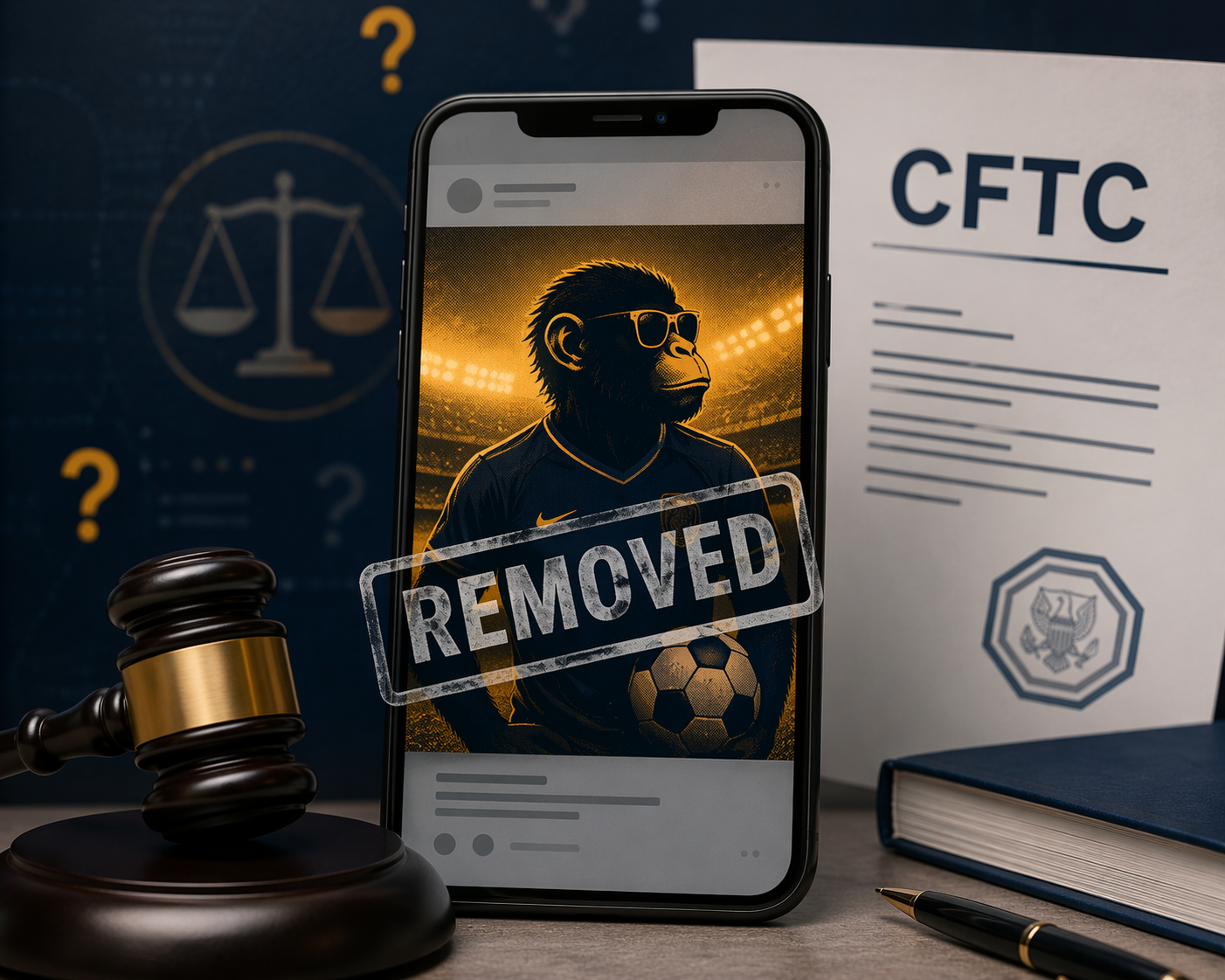
The creative is worth lingering on because it was not a side drama. It was the campaign’s positioning compressed into an ad: Kalshi wanted the user to see sportsbooks as the old category and Kalshi as the cleaner switch. That contrast depended on the company’s regulatory framing. If Kalshi is not a sportsbook, then attacking sportsbooks becomes more than competitor-bashing; it becomes category separation.
But the same framing invites scrutiny. The more Kalshi markets sports event contracts in the emotional and behavioral territory of sports betting, the more regulators, state gaming authorities, and critics can ask whether the distinction is meaningful to consumers. A campaign can use legal classification as a wedge, but it cannot fully control how platforms, watchdogs, or courts interpret the consumer experience.
That is why the removed-ad-library detail matters. It does not prove the ads were unlawful. It does show that the campaign’s most provocative creative became harder to verify in public ad archives precisely when the legal and consumer-protection questions were becoming part of the story.
What the Results Show, and What They Do Not
The reported outcomes are strong enough to explain why the campaign drew attention. They are not clean enough to settle the question of durable product preference.
| Metric | Reported result | What to keep in mind |
|---|---|---|
| New users | 3 million new users during the World Cup push | Company-shared figure; independent audit not provided in the available materials |
| Trading volume | About $40 billion reported by Kalshi; more than $31 billion in monthly volume also reported in coverage | Volume is not the same as retained users or revenue quality |
| Daily active users | Kalshi was up 36% above its June 15 level by June 30 | Apptopia data reported via CoinDesk; tournament windows can create temporary usage spikes |
| Sportsbook DAU comparison | DraftKings fell 36%, FanDuel 41%, and BetMGM and Caesars each 32% over the same comparison | App activity decline does not by itself prove users permanently switched |
| Install share | Kalshi and Polymarket combined accounted for 78.5% of installs among six major betting-related apps, versus about 6% a year earlier | The figure combines two prediction-market platforms and measures installs, not long-term engagement |
| Female user growth | Female users grew 106% during the tournament and reached 33.3% of Kalshi’s user base, compared with 22% to 23% at DraftKings and FanDuel | Demographic expansion is meaningful, but the available data does not prove post-tournament retention |
| Brand momentum | Kalshi appeared as the only prediction market on YouGov’s brand momentum list alongside Coca-Cola, Pepsi, and Visa | Brand momentum is an awareness and perception signal, not a profitability measure |
Those app and brand metrics were reported by CoinDesk using Apptopia and YouGov-related figures; CNBC also reported heavy prediction-market volume as the World Cup kicked off.[2][10] The direction is hard to ignore: Kalshi and Polymarket were attracting installation and trading attention at the exact moment legacy sportsbooks were not showing the same app-activity pattern.
Still, the strongest defensible claim is narrower than “Kalshi beat the sportsbooks.” The data supports a peak-event acquisition surge and a successful attention capture during a global sports window. It does not yet show whether those users stayed, whether their trading behavior remained healthy after the final, whether acquisition costs were efficient after all media and affiliate payments, or whether World Cup users will behave like durable financial-market customers.
The Legal Layer Is Not a Footnote
The campaign’s performance has to be read against ongoing legal pressure. More than 20 federal lawsuits are pending over whether Kalshi’s sports-event contracts constitute unlicensed sports betting, and the CFTC under the Trump administration has sued nine states attempting to regulate prediction markets.[9] That is not background noise for marketers. It is part of the media machine’s operating system.
If courts or regulators narrow the space Kalshi used, several campaign components become harder to repeat. Digital ads may lose the freedom to draw such a sharp line against sportsbooks. Affiliate publishers may face more compliance friction. Co-branded sports access may become more sensitive. App stores and ad platforms may apply stricter review standards. The growth team’s cleverest advantage—the ability to stand near sports betting demand while claiming a different category—would become less stable.
The opposite is also possible. If Kalshi’s position holds, the World Cup campaign will look less like a one-off stunt and more like an early demonstration of how federally regulated event markets can buy sports attention differently from state-licensed sportsbooks. The available evidence does not settle that outcome.
A Strong Campaign, Not Yet a Proven Playbook
Kalshi’s World Cup campaign deserves attention because the pieces fit. The AFA deal made the brand feel culturally present. Messi made the reach undeniable. Croatia and Modrić added another layer of football legitimacy. ADI Predictstreet lowered the cost of World Cup-adjacent visibility. TV and outdoor media made the company look larger than a niche trading app. Digital ads sharpened the category fight. Publisher promo codes gave the funnel somewhere to land.
That is a real marketing achievement. It is also not the same as proof that every challenger can copy the strategy, or that Kalshi’s World Cup users will remain valuable after the tournament cycle. The campaign shows how regulatory positioning and co-branded access can let a smaller platform punch above its media weight during a global event. The harder evaluation is still waiting on legal clarity, audited retention, and evidence of post-tournament user quality.
References
- Kalshi’s Next Bet: A World Cup Deal, Yahoo Finance / Bloomberg, June 11, 2026.
- Prediction Markets See Volume Surge as World Cup Kicks Off, CNBC, July 4, 2026.
- Kalshi secures Argentina partnership ahead of World Cup, SBC News, June 17, 2026.
- Kalshi Announces Croatia HNS Partnership and Luka Modrić Ambassador Deal, Kalshi Newsroom, June 15, 2026.
- Kalshi TV Spot, 'Hands' Featuring Luka Modrić, iSpot.tv, June 2026.
- 13 Creative Campaigns to Know About Today, Ad Age, June 2026.
- Referral Program FAQ, Kalshi Help Center.
- Kalshi Promo Code Coverage, CBS Sports, June 2026.
- Kalshi ads attacking 'predatory sportsbooks' removed from public ad libraries after NPR inquiry, NPR, July 17, 2026.
- Kalshi and Polymarket Capture World Cup Betting App Installs and Brand Momentum, CoinDesk, July 14, 2026.

Comments
Join the discussion with an anonymous comment.