
John Deere's Five-Layer Field of Dreams Sponsorship Activation
John Deere extends its MLB Field of Dreams sponsorship across five distinct activation layers—from Kevin Costner-narrated video to on-site tractor experiences, creator-led TikTok, and CSR meal-packing—while keeping a single narrative thread intact. This case study examines how the brand achieves message consistency across owned, earned, paid, and experiential channels.
The useful question in John Deere’s MLB Field of Dreams sponsorship is not whether a legacy equipment brand can buy its way into a beautiful baseball setting. Many brands can buy presence. Fewer can keep one idea intact once the sponsorship leaves the launch film and starts moving through hospitality, social, community programming, earned media, and a second event market.
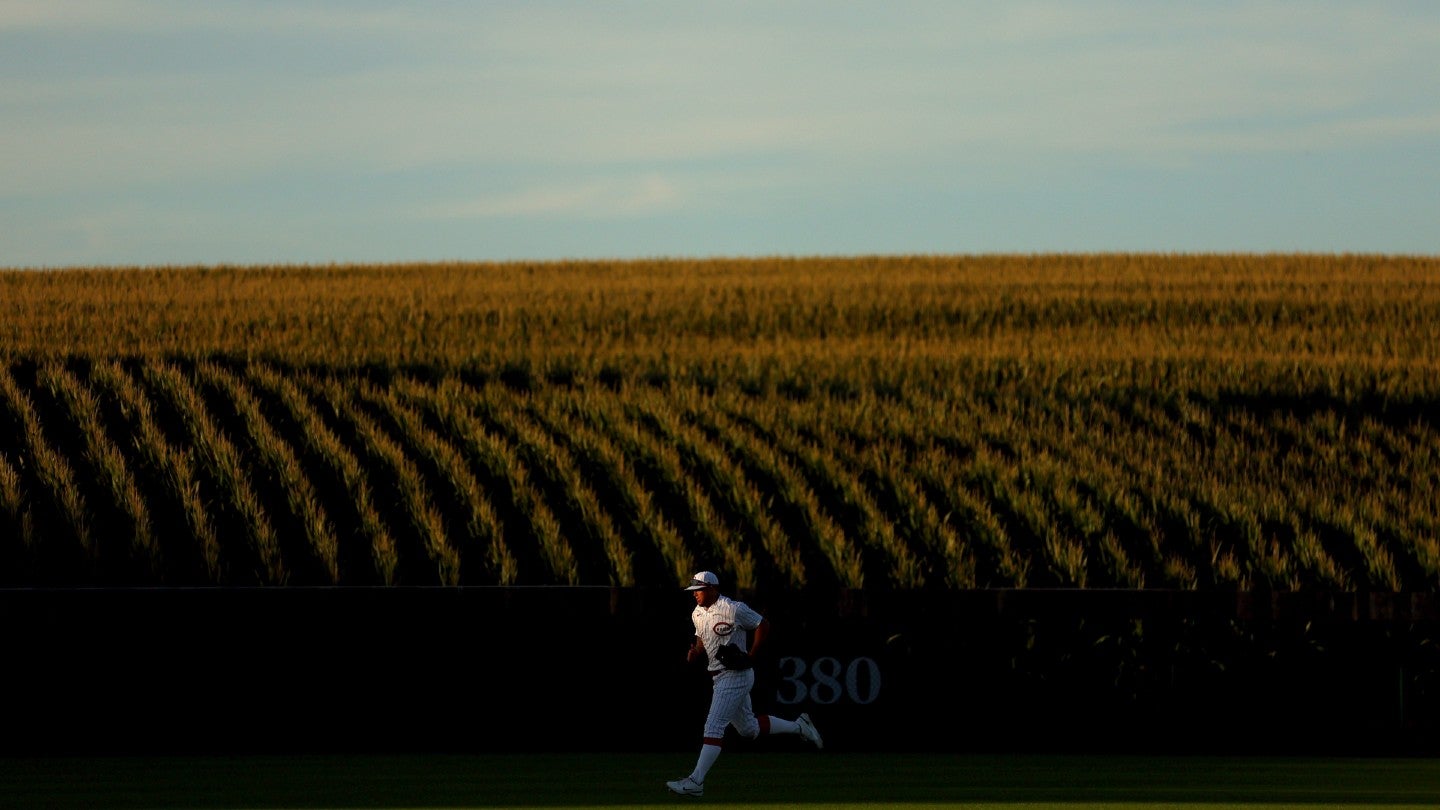
John Deere’s advantage here is that the Field of Dreams setting already carries the kind of memory the brand would otherwise have to manufacture: land prepared before anyone arrives, work that is invisible once the game begins, and a rural backdrop that does not need a product demo to feel relevant. Deere is not asking baseball fans to care about equipment first. It is distributing its heritage through a baseball story already associated with preparation, pride, and performance.
That makes the campaign worth studying, with one important limit: the 2026 Field of Dreams game has not happened yet. It is scheduled for Aug. 13, 2026, with the Minnesota Twins and Philadelphia Phillies playing in Dyersville, Iowa, so public materials can show architecture, commitments, and message discipline, not completed sponsorship ROI.[1][2]
The Launch Film Gives the Campaign Its Center of Gravity
The launch video matters because it solves the first sponsorship problem: how to enter the Field of Dreams story without over-explaining the fit. John Deere and Major League Baseball announced the partnership with a spot narrated by Kevin Costner, whose connection to the original film lets the campaign borrow emotional continuity without forcing Deere to narrate its own importance.[1]
Celebrity is not doing the hard work by itself. Costner’s voice works because it carries pastoral memory, not because fame automatically creates meaning. The brand can stay near the edge of the story: the field is prepared, the land is visible, the game is coming, and the equipment brand is present as part of the unseen system that makes the scene possible.
That restraint is the difference between heritage distribution and a costume change. Heritage distribution, in this case, means taking credibility from a context where the brand already has a believable role, then letting each channel express one part of that role. The ContentGrip analysis frames Deere’s positioning through Preparation, Pride, and Performance, a useful shorthand as long as the underlying factual claims stay tied to primary announcements and public reporting.[3]
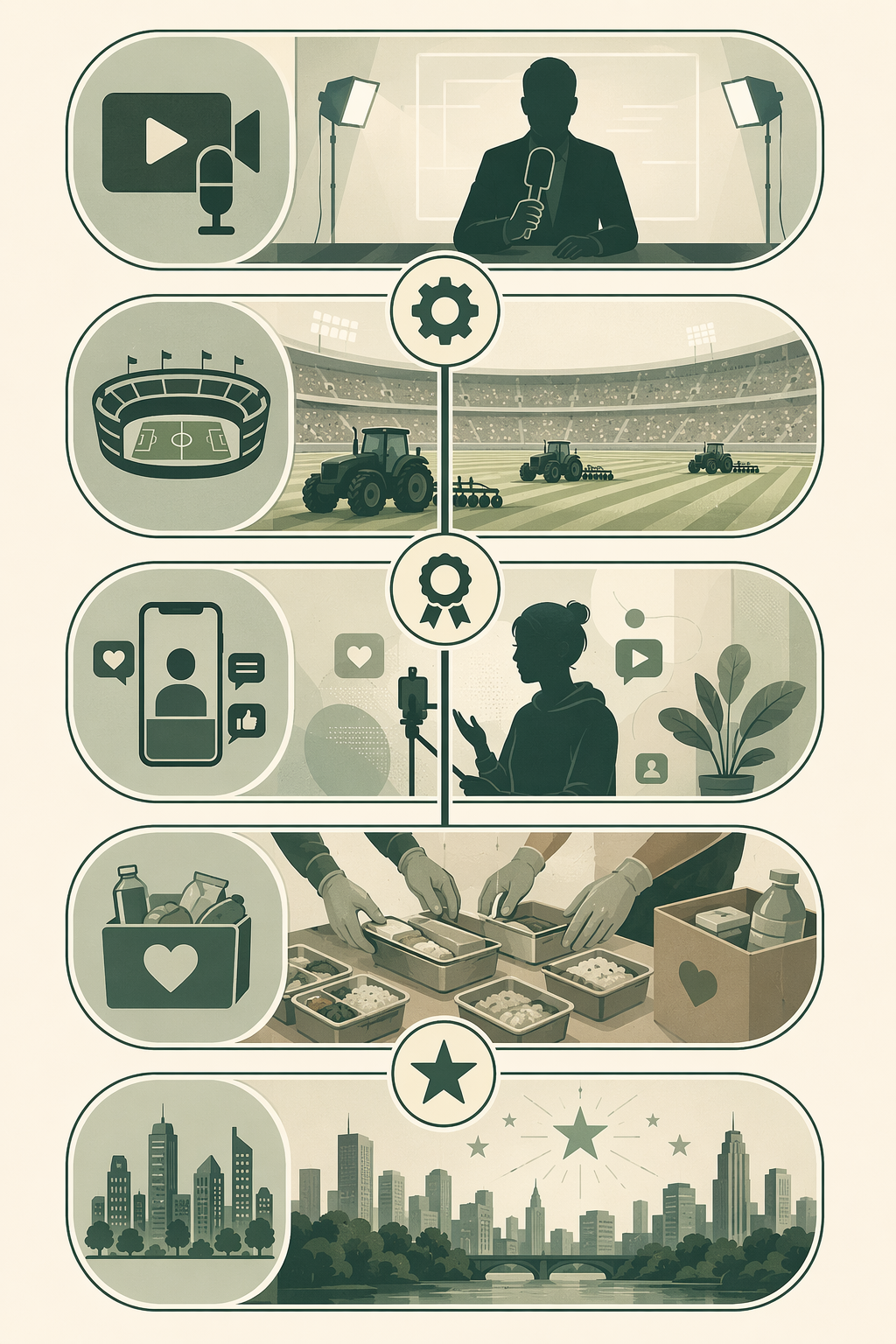
| Activation layer | Channel job | How it keeps the thread intact |
|---|---|---|
| Kevin Costner-narrated launch video | Create the emotional frame for owned, earned, and paid distribution | Connects Deere to land, memory, and preparation before game day |
| Field of Dreams on-site experience | Turn the sponsorship into a physical fan encounter | Uses tractors, vintage equipment, and photo opportunities where the equipment belongs |
| Creator-led TikTok | Translate the idea into a native social voice | Lets Chief Tractor Officer Rex Curtiss speak from inside Deere’s equipment culture |
| Hits for Hunger CSR | Attach the preparation theme to a community action | Moves from symbolic values to meal-packing commitments |
| All-Star Week in Philadelphia | Extend continuity beyond Iowa | Keeps the MLB partnership visible before the Field of Dreams moment |
On Site, the Equipment Has to Feel Earned
The on-site layer is where a campaign like this can become either elegant or embarrassing. A tractor in the wrong place turns into a prop. A tractor in Dyersville, beside a ballpark carved into farmland, can read as part of the operating environment.
Public previews describe fan-facing elements that lean into that fit: tractor photo opportunities, vintage John Deere equipment displays, and brand presence around the Aug. 13 Field of Dreams game.[2][4] These are not radical experiential mechanics, and they do not need to be. Their job is not to surprise fans with a new brand behavior. Their job is to let the audience physically encounter the same promise the launch film sets up: before the game becomes romantic, someone has done the work.
The smartest part is that the activation does not appear to require fans to learn a complicated product story. Vintage equipment can carry pride. Modern equipment can carry performance. The field setting carries preparation. If the game-day execution keeps those cues clean, the experience can do what good sponsorship environments do: make the brand feel inevitable for a moment, not inserted.
The platform also has a real audience precedent, though precedent is not a forecast. KWQC reported that the 2021 Field of Dreams game drew 5.9 million viewers, Fox’s best regular-season baseball audience since 2005, while the 2022 game drew more than 3.1 million viewers.[4] Those figures explain why the property is attractive. They do not prove that the 2026 version will deliver the same attention, or that Deere’s activation will convert that attention into business value.
The Social Layer Needs a Native Voice, Not Another Recap
Creator distribution is the layer most likely to break the campaign if it chases platform behavior without protecting the idea. A launch spot can be polished. A stadium experience can be controlled. TikTok is less forgiving; if the social layer becomes a loose pile of trends, the Field of Dreams sponsorship turns into another content calendar.
That is why Rex Curtiss, John Deere’s Chief Tractor Officer, is a more interesting asset than a generic influencer buy. Ambrook reported that Curtiss won a one-year, $200,000 Chief Tractor Officer contract with Deere; the same account cites a 700,000-plus follower figure through a paywalled PR Week reference, so that number is best treated as reported provenance rather than an independently visible campaign metric.[5]
The strategic value is not simply reach. Curtiss gives Deere a social voice that can plausibly talk about equipment, fields, maintenance, and the people behind the work without sounding as though the sponsorship team has wandered into the wrong app. In this architecture, TikTok is not asked to repeat the Costner film in miniature. It can show the texture around preparation: machines, operators, grounds, details, waiting, pride of use.
That distinction matters for paid and organic planning. The video anchor gives the campaign emotional permission. The on-site experience gives it physical proof. The creator layer gives it a vernacular. If all three were judged by the same metric, the campaign would flatten. Their value is that each layer changes behavior by channel while returning to the same sponsorship role.
CSR Makes the Values Concrete, but Not Yet Measurable
The Hits for Hunger component gives the sponsorship its clearest community action. KWQC reported that the program includes packing 260,000 meals for Iowa families through River Bend Food Bank and sits within a broader Feeding America commitment of 1 million meals.[4]
Those numbers matter because they prevent the values language from floating away. A meal-packing commitment has a beneficiary, a partner, and an output. It also keeps the campaign close to the same idea of unseen systems: food does not appear by accident, fields do not prepare themselves, and community support depends on labor that often disappears behind the final moment.
Still, the public record does not answer the harder sponsorship question. Is Hits for Hunger reputational insurance around a high-visibility sports platform? Is it community proof for a brand whose customer base has a direct relationship to agriculture and food systems? Is it expected to create measurable business return? The available materials support the first two possibilities more cleanly than the third. Calling it ROI now would turn a concrete action into an unsupported claim.
All-Star Week Extends the System Before the Iowa Moment
The Philadelphia All-Star Week layer is lighter in the public materials, but it has a clear architectural role. MLB and Deere described the partnership as extending through All-Star Week activations in Philadelphia as well as the Field of Dreams game.[1] That gives the brand a runway before Dyersville rather than forcing all attention into one night.
The risk with extension layers is that they become extra inventory wearing the same logo. If Philadelphia merely adds presence, it is useful but not especially distinctive. If it carries the same preparation story into a different baseball environment, it can help the campaign feel like a season-long MLB partnership rather than a single nostalgic set piece.
There is also a broader context around America 250 storytelling. ContentGrip frames Deere’s approach as one that centers farmers, builders, and workers rather than more politically exposed national symbolism.[3] That is a sensible risk-management posture for a heritage brand in 2026, but it should be treated as strategic interpretation unless Deere’s own public materials make the same causal claim. The safer read is that the Field of Dreams platform lets Deere talk about American work without turning the campaign into a civics lecture.
What Marketers Can Actually Take From the Case
The replicable part of the John Deere model is not the cornfield, the film reference, or the celebrity narrator. Those are property-specific assets. The replicable part is the way the campaign assigns each layer a different job without changing the underlying promise.
- The launch film establishes the emotional contract before the brand asks for attention elsewhere.
- The Field of Dreams experience turns that contract into a place fans can walk through and photograph.
- The creator layer translates the idea into platform-native behavior instead of recycling campaign copy.
- The CSR layer gives the values claim an observable community output.
- The All-Star Week layer keeps continuity in market before the hero event.
That is a useful sponsorship planning discipline. Too many activation decks treat every channel as a separate opportunity to prove activity: one slide for social engagement, one for hospitality, one for earned media, one for cause marketing, one for paid reach. The audience experiences none of that structure. It experiences either a coherent brand presence or a sequence of unrelated impressions.
Deere’s Field of Dreams plan is strongest where the channel behavior changes but the sponsorship role stays stable. Costner does not need to sell tractors. The tractors do not need to become mascots. Curtiss does not need to sound like a press release. The meal-packing program does not need to carry the whole brand purpose. Each layer can do less because the shared positioning is doing more.
The Judgment Before Game Day
As a pre-event case, John Deere’s Field of Dreams sponsorship activation is a strong model of message architecture. It borrows credibility from a setting where land, labor, memory, and baseball already touch. It then distributes that credibility across video, experience, creator social, CSR, and MLB event presence without asking each layer to invent a new reason for the brand to be there.
The open questions remain important. Public sources do not provide sponsorship deal value. They do not yet provide 2026 viewership, post-event engagement quality, sales impact, brand lift, hospitality outcomes, or the business return of the CSR layer. The campaign can be praised for coherence now. Its effectiveness still has to be proven after the Aug. 13, 2026 game.
References
- John Deere Partners with Major League Baseball, PRNewswire
- MLB Field of Dreams Game Between Twins and Phillies Announced with John Deere as Presenting Sponsor, People
- John Deere’s Field of Dreams sponsorship shows heritage marketing’s next play, ContentGrip
- Deere presenting sponsor of Field of Dreams game, KWQC, July 20, 2026
- John Deere’s Chief Tractor Officer Is TikTok Famous. What Happens Next?, Ambrook

Comments
Join the discussion with an anonymous comment.