

Tracking IREN's AI Cloud Revenue Milestones in 2025
Trace IREN's AI cloud revenue growth from $16.4M in FY2025 through each public milestone to the >$4B ARR target announced in July 2026, with sourced numbers and clear distinctions between recognized revenue and forward-looking targets. Get a grounded, milestone-by-milestone reference case for AI infrastructure demand velocity.
IREN’s AI cloud revenue growth in 2025 is useful precisely because the headline numbers do not all mean the same thing. The company reported $16.4 million of AI cloud revenue for FY2025, up from $3.1 million in FY2024, then spent the next year announcing GPU expansion, ARR targets, a five-year Microsoft contract, additional AI customers, and a larger NVIDIA infrastructure partnership.[1] Read as one smooth curve, that sequence is misleading. Read as milestones with different levels of commitment behind them, it becomes a cleaner reference case for how AI infrastructure demand can move from early recognized revenue to capacity-backed ambition.
| Date | Disclosed fact | Number type | Source | What the milestone signals |
|---|---|---|---|---|
| FY2025 | AI cloud revenue rose from $3.1M in FY2024 to $16.4M in FY2025 | Recognized revenue | IREN FY25 results [1] | Small but audited baseline before the larger GPU scale-up |
| August 2025 | IREN became an NVIDIA Preferred Partner and targeted 10,900 GPUs with a $200M-$250M AI cloud ARR goal | Forward-looking ARR target and capacity plan | IREN September update via StockTitan [2] | Early validation that GPU cloud could become a material revenue line |
| September 2025 | IREN doubled its AI cloud target to 23,000 GPUs and raised its AI cloud ARR target to more than $500M | Forward-looking ARR target and capacity plan | IREN September update via StockTitan [2] | Acceleration from initial deployment into capacity-scale positioning |
| November 2025 | IREN announced a $9.7B five-year AI cloud contract with Microsoft, including a 20% prepayment | Total contract value over five years | IREN Microsoft announcement [3] | Hyperscaler validation, with materially stronger demand visibility |
| November 2025 | Q1 FY26 revenue reached a record $240M; Dell GPU equipment commitments were reported at $5.8B | Reported quarterly revenue and supplier commitment | CoinDesk earnings coverage [4] | The demand story required large hardware financing, not just sales momentum |
| December 2025 | Together AI, Fluidstack, and Fireworks AI were reported as additional AI customers | Customer additions | Yahoo Finance coverage [5] | Some easing of concentration risk, though not yet proof of broad diversification |
| May 2026 | NVIDIA and IREN announced a strategic partnership to accelerate deployment of up to 5GW of AI infrastructure | Infrastructure partnership capacity | NVIDIA announcement [6] | A larger supplier-backed infrastructure path for future AI cloud capacity |
| July 2026 | IREN’s AI cloud ARR target was described as more than $4B | Forward-looking ARR target; limited verification | GlobeNewswire headline/meta description [7] | Ambition milestone, not the same as recognized revenue |
That distinction matters for anyone using IREN as a board-memo reference point. The FY2025 figure is revenue already recognized. The $200 million to $250 million target, the later more-than-$500 million target, and the more-than-$4 billion July 2026 target are forward-looking ARR goals. The $9.7 billion Microsoft figure is a five-year contract value, not a single-year revenue number. The 5GW NVIDIA partnership describes infrastructure deployment potential, not revenue already earned.
The FY2025 Baseline Was Real, but Still Small
IREN’s FY2025 AI cloud revenue was $16.4 million, compared with $3.1 million in FY2024, a 429% year-over-year increase.[1] That growth rate is attention-grabbing, but the dollar base is the more useful part of the story. It shows that IREN had moved beyond concept-stage AI cloud activity, while still operating at a scale that would not yet explain the later multibillion-dollar headlines.
For marketing and strategy teams evaluating the AI infrastructure supply chain, this is the clean starting point: IREN had a recognized AI cloud revenue line before the larger announcements arrived. That revenue did not prove the later ARR targets by itself. It made the later targets easier to evaluate because the company was not starting from zero.
August and September Turned Revenue Into a Capacity Story
The first category change came in August 2025, when IREN became an NVIDIA Preferred Partner and targeted 10,900 GPUs with a $200 million to $250 million AI cloud ARR goal.[2] That was not the same as reporting $200 million of revenue. It was a capacity-backed target tied to GPU deployment and supplier recognition.
That supplier recognition mattered because AI cloud demand is constrained by more than customer interest. Providers need access to GPUs, power, data center capacity, financing, and credible deployment timelines. Preferred Partner status did not remove execution risk, but it made the company’s scale-up plan easier for customers and capital providers to take seriously.
September compressed the timeline. IREN said it was doubling AI cloud capacity to 23,000 GPUs and raising its AI cloud ARR target to more than $500 million.[2] The important movement was not just the larger number. It was the short interval between initial partner-backed ambition and a much larger capacity target.
This is where IREN’s 2025 AI cloud revenue growth can become slippery. The company’s disclosed FY2025 AI cloud revenue remained $16.4 million. The September figure was an ARR target built around expanded capacity, and IREN’s own disclosure language said the target was not fully contracted and offered no assurance it would be achieved.[2] The signal was demand velocity and financing ambition, not completed revenue recognition.
The Microsoft Contract Changed the Risk Conversation
The November 2025 Microsoft contract deserves the most attention because it changed what outside observers could reasonably infer. IREN announced a $9.7 billion AI cloud contract with Microsoft over five years, including a 20% prepayment.[3] A simple division of the total contract value by five years points to roughly $1.9 billion per year, but that is calculated annualized contract math, not a guaranteed annual revenue floor.
The prepayment also matters. A 20% prepayment on a $9.7 billion contract implies a meaningful upfront customer commitment, but it does not make the full five-year value equivalent to revenue already recognized.[3] For a company scaling GPU cloud infrastructure, the prepayment is important because it can support capital planning and supplier confidence. For a buyer or marketer citing the number, the safe phrasing is still “five-year contract value,” not “annual revenue.”
CoinDesk’s coverage shortly after the announcement reported that IREN posted record Q1 FY26 revenue of $240 million and noted $5.8 billion in contracted Dell GPU equipment.[4] Those two figures help explain why the Microsoft deal landed differently from an ordinary customer win. The customer commitment, quarterly revenue context, and hardware procurement scale appeared together.
Hyperscaler validation changes perceived risk because it answers a different question from early revenue growth. The FY2025 AI cloud line showed that customers were paying. The Microsoft contract suggested that a much larger buyer was willing to reserve substantial AI cloud capacity over a multi-year horizon. That does not eliminate deployment risk, but it moves the story from “can this provider sell GPU cloud?” toward “can this provider deliver against a very large commitment?”
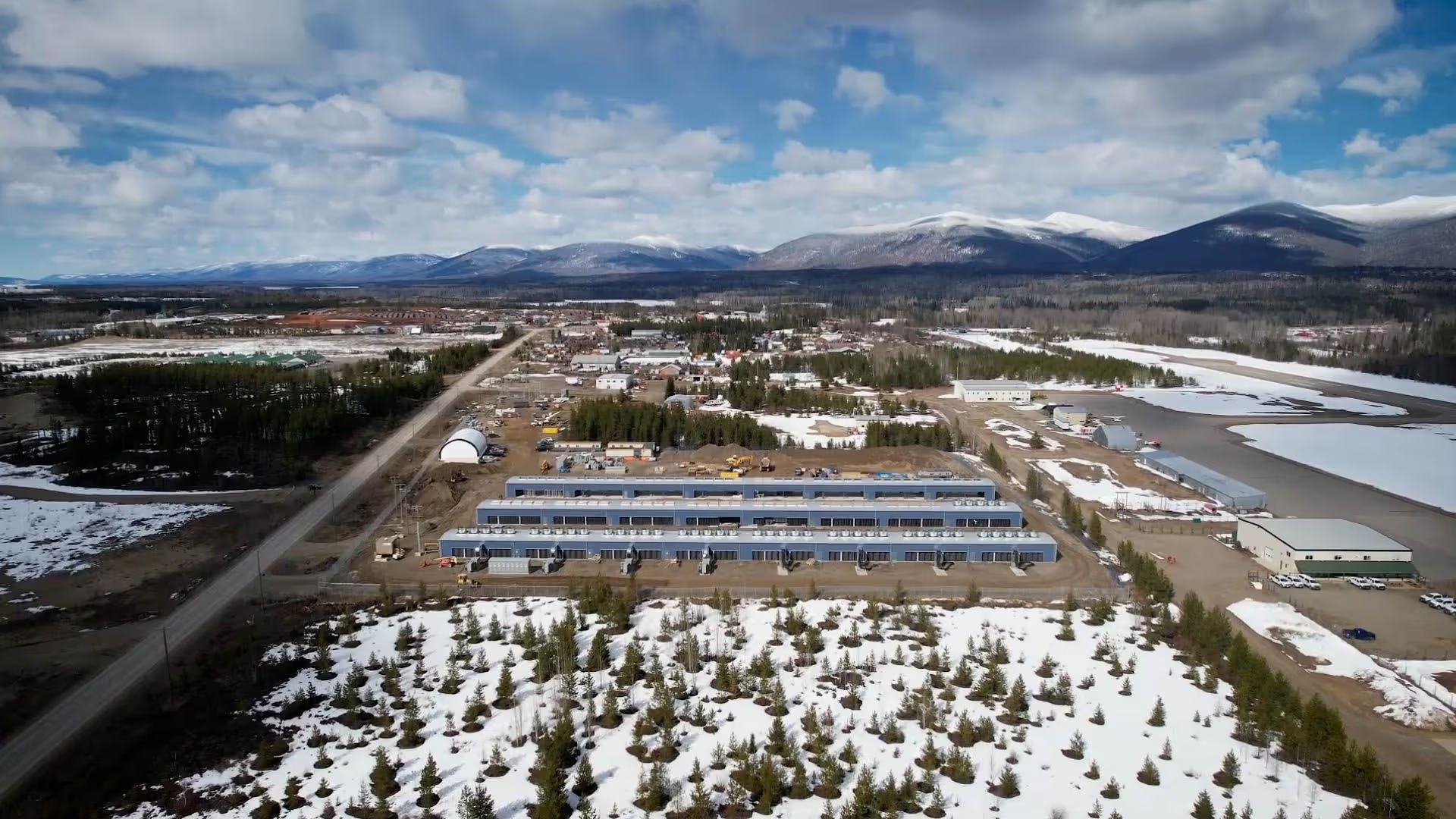
That distinction is also where concentration risk enters. A large hyperscaler contract can validate demand and deepen dependence at the same time. If Microsoft represents the majority of targeted ARR, then the milestone is not yet proof that IREN has a broadly diversified AI cloud customer base. It is proof that one very large customer materially changed the company’s demand visibility.
Customer Additions Helped, Without Solving Concentration
December 2025 added a useful but narrower signal. Together AI, Fluidstack, and Fireworks AI were reported as additional IREN AI customers.[5] For a company whose narrative had just become heavily tied to Microsoft, those names matter because they show that demand was not limited to a single buyer.
They should not be stretched further than the evidence allows. Customer additions are not the same as disclosing a balanced customer mix, contract values by account, or durable multi-year revenue concentration improvement. The safer read is that IREN had begun to soften the single-client story, while Microsoft still dominated the visible economics of the AI cloud trajectory.
NVIDIA’s 2026 Partnership Extended the Infrastructure Path
By May 2026, the IREN story had moved from GPU counts and individual contracts toward a larger infrastructure buildout. NVIDIA and IREN announced a strategic partnership to accelerate deployment of up to 5GW of AI infrastructure.[6] That is a capacity and infrastructure signal, not a revenue figure.
For strategy teams, the value of this milestone is in what it says about supply-side confidence. A neocloud provider cannot convert demand into revenue if it cannot secure the infrastructure path to serve that demand. The NVIDIA partnership does not guarantee utilization, pricing, or margin. It does, however, make the later ARR ambition easier to understand: the company was pairing demand announcements with a larger deployment framework.
The More-Than-$4B ARR Target Is Ambition, Not Recognition
The July 2026 milestone pushed the public target above $4 billion of AI cloud ARR.[7] That is the number most likely to travel quickly through presentations because it is simple, large, and directionally consistent with the prior sequence. It is also the number that needs the most careful labeling.
A more-than-$4 billion ARR target is not comparable to the $16.4 million FY2025 AI cloud revenue figure unless the comparison is explicitly framed as recognized revenue versus forward-looking target. It is also not equivalent to the $9.7 billion Microsoft contract value, which covered five years. The July 2026 item is best used as an ambition milestone showing how far IREN believed the AI cloud opportunity had expanded after partner, customer, financing, and infrastructure developments.
There is also a verification caveat. The July 2026 more-than-$4 billion ARR target was available through a GlobeNewswire headline and meta description rather than a fully crawled press release in the research materials used here.[7] That does not make the milestone unusable, but it does make conservative wording more appropriate than treating it with the same evidentiary weight as the fully available FY2025 results, September update, Microsoft announcement, or NVIDIA release.
What This Says About Neocloud Demand
IREN’s case sits inside a larger neocloud market expansion. Synergy Research Group reported that neoclouds reached $25 billion in 2025 and forecast the market to approach $400 billion by 2031, driven by surging AI infrastructure demand.[8] That market context helps explain why hyperscalers and AI companies are willing to look beyond traditional cloud capacity when GPU supply is scarce or strategically constrained.
Still, the market forecast should not be used to backfill certainty into IREN’s own targets. Category growth can make an individual company’s trajectory plausible without proving it. The cleaner use is comparative: IREN shows what one public neocloud scaling path can look like when recognized revenue, GPU access, customer commitments, hardware procurement, and strategic infrastructure partnerships begin to reinforce one another.
How to Use the IREN Case Without Overstating It
The practical lesson is not that every AI infrastructure provider will move from a small revenue base to multibillion-dollar ARR targets. The lesson is that each type of milestone answers a different diligence question.
- Recognized revenue answers whether customers have already paid for a service that the company can report.
- ARR targets answer what management believes deployed or planned capacity can support, subject to contracting and execution.
- Total contract value answers how large a signed customer commitment may be across a defined term.
- Prepayments answer whether a customer is willing to put capital behind future capacity.
- Supplier and infrastructure partnerships answer whether the provider has a more credible path to acquiring and deploying the capacity it wants to sell.
IREN’s 2025 progression is strongest as a milestone map. FY2025 gave the company a real AI cloud revenue base. August and September showed capacity-backed acceleration. November brought hyperscaler validation and a hardware-financing reality check. December added early evidence of a wider customer set. May 2026 extended the infrastructure path. July 2026 set the ambition above $4 billion of ARR, with the caveat that this remained a target rather than recognized revenue.
That is enough to make IREN a useful reference case for AI infrastructure demand velocity. It is not enough to turn every forward ARR target into present revenue, or every neocloud provider into the next IREN.
References
- IREN Reports Full Year FY25 Results, IREN
- IREN Doubles AI Cloud to 23K GPUs, Sets $500M Revenue Target, StockTitan
- IREN Secures $9.7bn AI Cloud Contract with Microsoft, GlobeNewswire, November 3, 2025
- IREN Reports Record Q1 Revenue, Profit, CoinDesk
- IREN's AI Client Base Expands: Is Growth Becoming More Durable?, Yahoo Finance
- NVIDIA and IREN Announce Strategic Partnership, NVIDIA
- IREN GlobeNewswire July 2026 press release headline/meta description, GlobeNewswire, July 2026
- Neocloud Market Forecast to Approach $400B by 2031, Synergy Research Group

Comments
Join the discussion with an anonymous comment.