

How Pixel 11 AI marketing tools create a mobile studio
Can the Google Pixel 11 replace your existing mobile content production setup? This guide examines the device's on-device Gemini AI features — including Video Generative ML, Ultra Low Light video, and Gemini Spark — and evaluates whether it genuinely serves as an all-in-one marketing studio for social video, behind-the-scenes, and rapid product shoots, while acknowledging the hardware limitations that still require dedicated tools.
The mobile studio loop
A field marketer does not need a phone that wins a benchmark war. They need a phone that can capture a usable clip in bad light, clean it up before the moment goes stale, draft the post, get the file out over weak signal, and keep an eye on campaign activity without forcing a laptop handoff.
That is where the Pixel 11 starts to look different. Android Authority's leak of Google's internal gChips documents points to on-device Video Generative ML for post-capture video editing in Photos and YouTube Shorts, plus Ultra Low Light video aimed at 5-10 lux and intended to run fully on-device rather than in the cloud.[1]
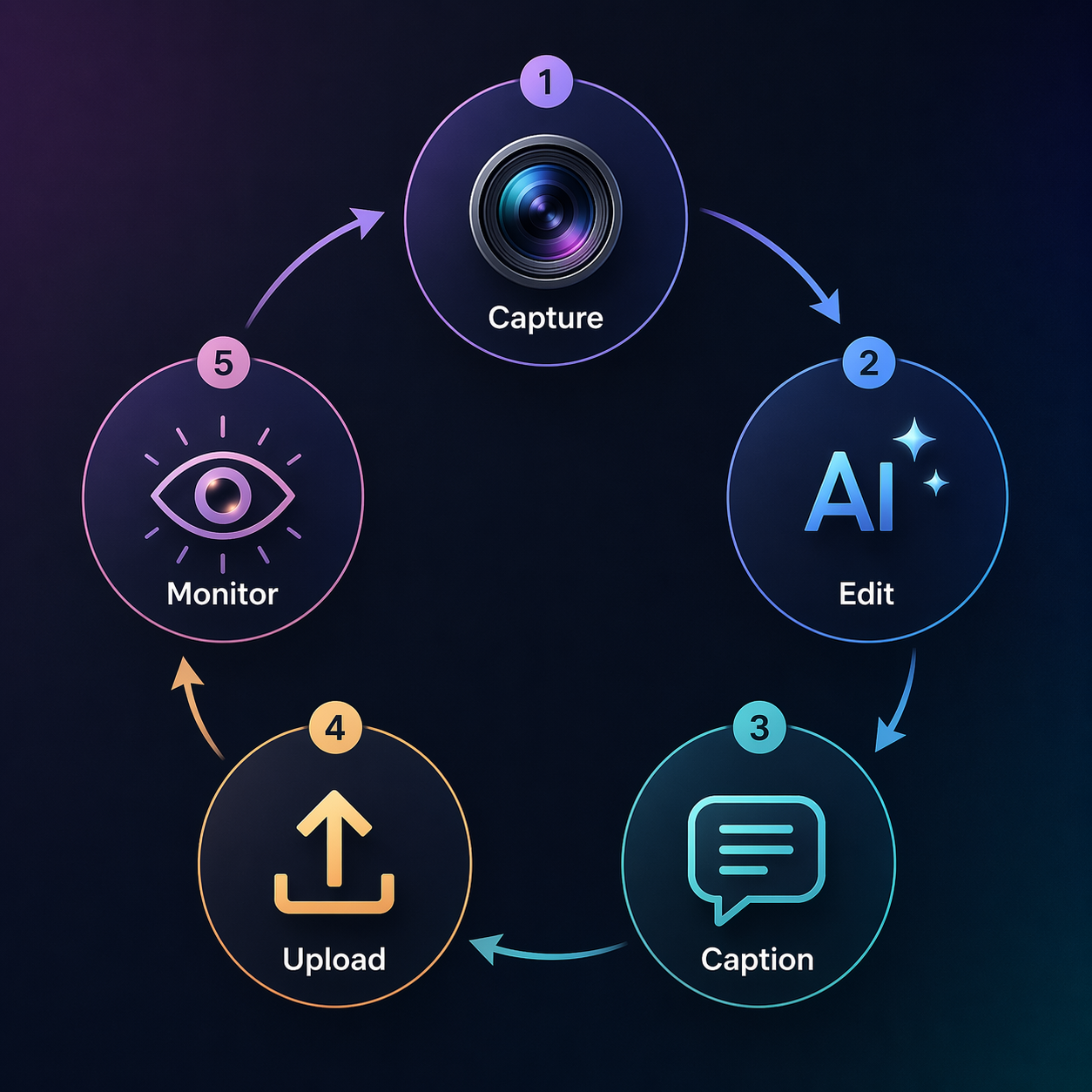
| Workflow stage | Pixel 11 piece | Why it matters |
|---|---|---|
| Capture | Ultra Low Light video; 100x ML zoom [1] | Keeps event footage and rapid product shots usable when the light is bad |
| Edit | Video Generative ML; Speak-to-Tweak; Sketch-to-Image [1] | Lets a marketer fix or reframe content on the phone instead of exporting to a laptop |
| Caption | Gemini app [3] | Drafts copy, summaries, and image prompts from the field |
| Upload | Tensor G6 with MediaTek M90 modem [2] | Improves the odds that large video files leave the location quickly |
| Monitor | Pixel Glow; Gemini Spark [4] | Keeps campaign activity visible while a background assistant stays ready to watch and act |
The upload side matters more than it usually gets credit for. Android Central's pre-release reporting says Tensor G6 should bring a 15% CPU gain and 30% better power efficiency, while the MediaTek M90 modem is expected to deliver 12Gbps downloads, 20% faster uploads, and 18% lower power use.[2] For a marketer pushing a reel from a trade show floor or a retail pop-up, that is not a vanity spec; it is the difference between publishing while the room is still warm and waiting for Wi-Fi that never quite stabilizes.
The copy side is just as practical. Google's Workspace marketing materials describe Gemini as a tool that can draft marketing copy, summarize research, generate images, and analyze data, which is exactly the sort of assist a social manager needs after filming but before posting.[3]
Pixel Glow and Gemini Spark push the idea further. Pixel Glow gives campaign monitoring a more immediate notification layer, while Gemini Spark is described as a persistent 24/7 personal AI agent that can keep working in the background on Pixel 11.[4] That is less about a flashy demo and more about keeping campaign awareness alive while you are still on the move.
Where the line stays
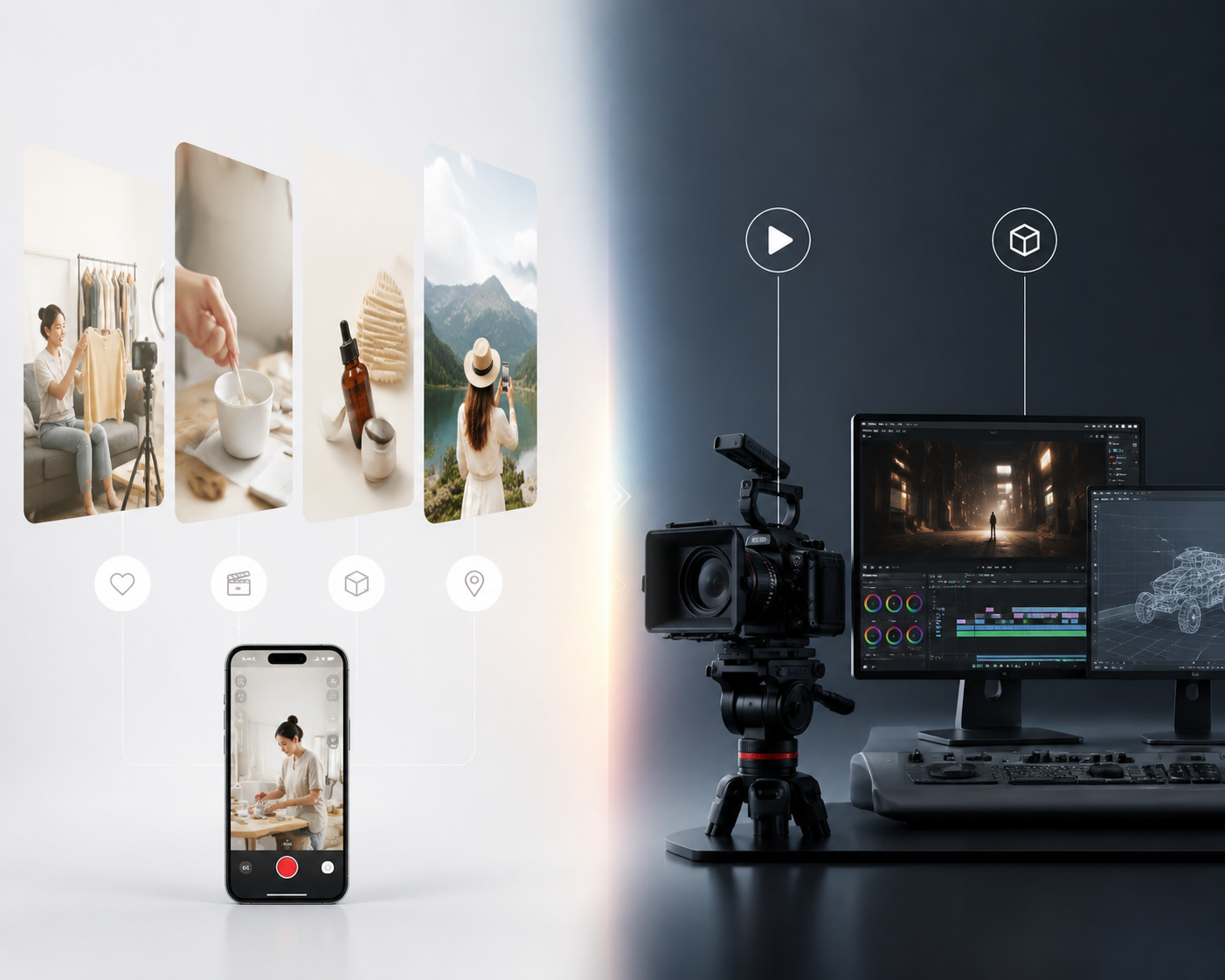
The boundary still matters. Android Central's reporting says the Tensor G6 keeps an aging PowerVR GPU architecture in the mix, which is the part that keeps the Pixel 11 out of the replacement-for-a-workstation category for heavy 3D rendering and high-end long-form video editing.[2] Android Authority also flagged the risk that some of the on-device features could shift to cloud processing after launch, which would matter a lot to anyone relying on a phone in a weak-signal venue.[1]
That is why the Pixel 11 reads as a mobile studio for a specific tier of marketing work, not a blanket substitute for every production setup. Social video, behind-the-scenes clips, rapid product shoots, location documentation, copy drafting, and light campaign monitoring fit the phone's strengths. High-end finishing work still belongs on dedicated hardware.
The buying context is straightforward too. Google is expected to announce the Pixel 11 on August 12, 2026, with a starting price of $899 for the 256GB model and no 128GB option.[2] If a workflow really depends on simultaneous capture, trimming, and review, the $1,899 Pixel 11 Pro Fold is the more obvious multitasking play because its split-screen layout is built for that kind of attention split.[2]
For social-first and field-heavy teams, the Pixel 11 looks credible because it compresses the whole loop from capture to edit to caption to upload to monitoring into one device. It still supplements rather than replaces dedicated gear for high-end video, 3D, or workflows that cannot tolerate cloud dependence, but for the daily tier of marketing content, it may be the first phone that genuinely earns the mobile studio label. Final verification has to wait for post-launch testing, especially around which AI features remain truly on-device.
References
- Google Pixel 10 and 11 could get these new camera and AI features — Android Authority, October 2024
- Google Pixel 11: Everything we know so far — Android Central
- AI Tools for Marketing ; AI Prompts for Marketing — Google Workspace
- 100 things we announced at Google I/O 2026 — Google Blog, 2026

Comments
Join the discussion with an anonymous comment.