

What Marketers Can Learn from the Flock Safety Privacy Crisis
The Flock Safety privacy crisis shows how a single AI brand failure can compound across civil liberties, data security, accuracy, and credibility fronts. This article breaks down the five interconnected risks and delivers crisis preparedness lessons for marketers managing AI brands or tools.
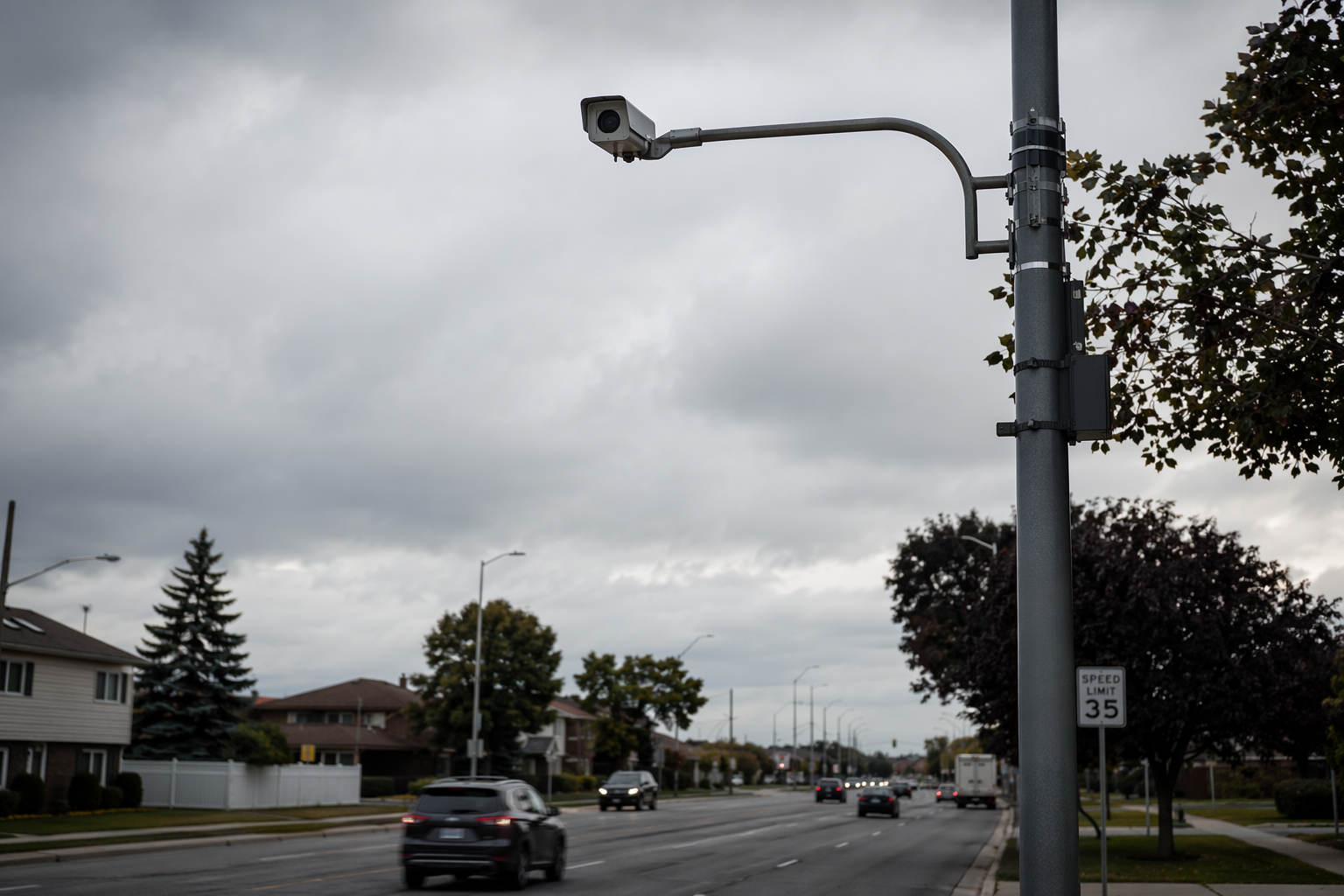
Flock Safety says its automated license plate reader network processes 20 billion plate reads per month and claims 99% accuracy. On paper, that sounds like a confidence line. At that scale, it also implies roughly 200 million monthly misreads if the company’s stated accuracy figure is applied directly to its stated volume.[1] That is the part marketers cannot smooth over with “responsible AI” language: the remaining error rate does not remain a percentage. It can become a driver surrounded by police.
The Drive’s first-person account of a Colorado stop describes exactly that kind of translation from system output to human consequence: a Flock misread led police to treat a car as stolen, boxing the driver in with four police vehicles before the mistake was resolved.[2] The marketing implication is not that every automated flag produces a wrongful detention. The narrower, more defensible point is sharper: when an AI-enabled surveillance product operates at enormous scale, even a small reported error rate can create enough real-world incidents to turn accuracy claims into public evidence against the brand.
That is why the marketing implications of Flock Safety’s AI privacy concerns are larger than a privacy story. Privacy is the first front people notice. It is not the only front they use to judge the company once the record opens.
A useful way to read the crisis is as a five-front trust stack:
- Civil liberties: who can search the system, what they search for, and whether surveillance reaches people who are not suspected of a crime.
- Accuracy and algorithmic harm: what happens when the system is wrong, and who absorbs that mistake.
- Data security: whether the cameras, hardware, and access controls are as controlled as the sales story implies.
- Federal enforcement access: whether local deployments become national enforcement infrastructure in practice.
- Brand credibility: whether the company’s own statements survive comparison with public records, audits, and city council proceedings.

The evidence available here comes mostly from journalism, watchdog reporting, audits, and public records, not from a settled academic literature on AI brand risk. That matters. It means this is an analytical lens for practitioners, not a theory pretending to have more institutional backing than it does. It also makes the public-record test more important, because the crisis has unfolded through documents, logs, audits, city decisions, and specific incidents rather than through abstract reputation polling.
The first breach in confidence came through search behavior
The civil-liberties front is the load-bearing part of the Flock story because it changes the perceived nature of the product. A camera network sold around public safety starts to look different when the question becomes: who searched the database, for what purpose, and with what safeguards?
The Electronic Frontier Foundation said it obtained datasets covering more than 12 million searches from more than 3,900 agencies between December 2024 and October 2025. Its review described searches connected to protesters, Romani people targeted with racial slurs, and women seeking abortion care. EFF also reported that San Jose’s Flock database was searched 3,965,519 times in a single year from June 2024 to June 2025.[3]
Those facts do not prove that every Flock customer misuses the system. They do something more damaging for a trust-based brand: they make the misuse question operationally specific. Once outsiders can point to search terms, agencies, time windows, and counts, the company can no longer answer only at the level of intent. The burden shifts to controls: who was authorized, who reviewed the searches, what policy was violated, what audit trail existed, and what consequence followed.
That is where a marketer’s usual “we take privacy seriously” sentence starts to collapse. It is not because the sentence is always false. It is because it is not responsive to the evidence. A public-facing claim about values does not answer a public-record claim about behavior.
Accuracy became a safety issue, not a product-quality issue
Accuracy claims are tempting in AI marketing because they sound clean. They compress a messy system into a number that sales teams, city officials, and procurement committees can repeat. But in policing infrastructure, an accuracy claim has a different burden than it would in ad targeting or image tagging. A false positive can summon armed response.
In July 2026, the Los Angeles Police Department suspended its Flock contract after an inspector general audit found 161 vehicles falsely flagged as stolen over two months and reported that 32.3% of alerts were inaccurate.[4] That audit matters because it moves the discussion away from hypothetical AI risk and into institutional review. It gives reporters, council members, and residents a number attached to a government customer’s actual use.
The Colorado incident reported by The Drive supplies the other half of the problem: the lived sequence after a bad read. A plate is misread. A system flags a vehicle. Police respond as if the vehicle may be stolen. The person stopped is left to wait inside the consequences of an upstream error they did not create.[2]
For AI marketers, the uncomfortable lesson is that model accuracy is not the same thing as outcome safety. A company can claim high technical accuracy and still face a credible harm narrative if the errors route into high-stakes decisions. The public will not evaluate the claim only by average performance; it will evaluate the claim through the worst documented handoff between machine output and institutional action.
Security and access widened the story
The data-security material does not need to carry the whole narrative to damage the brand. It functions as an accelerant. Once people already doubt the use of a surveillance system, evidence that the infrastructure may be exposed or hackable makes the concern feel less contained.
The Guardian reported that more than 60 Flock Condor cameras were exposed to the open internet, while The Drive reported that researchers demonstrated straightforward hardware hacks.[5][2] These reports do not establish that every deployed device was compromised. They do raise a more basic governance question: if a company’s product depends on public confidence in controlled access, what happens when the physical and network layers appear easier to reach than the positioning suggests?
This is where brand language often makes the problem worse. AI companies tend to separate privacy, cybersecurity, and product reliability into different pages, different committees, and different spokesperson lanes. The public does not. If the same system watches public roads, stores searchable location evidence, flags vehicles for police, and exposes hardware or feeds in ways outsiders can document, the story fuses.
Federal access turned local reassurance into a contested claim
Flock’s trust page has made reassuring claims about what the company says its technology does and does not do, including that it does not use facial recognition, cannot track individuals, and does not share data with Palantir.[1] Those claims may address specific fears, but the public controversy has not stayed inside the boundaries of those statements. The harder question has been whether local camera deployments can become available to agencies or enforcement purposes residents did not understand when their city approved the system.
EFF reported that records showed “Assist ICE” searches in system logs even after Flock denied having federal contracts.[3] The Guardian also reported that Mountain View disabled 30 cameras after discovering unauthorized federal access.[5] The distinction is important: a company can dispute the meaning of a federal contract while still facing public concern about federal use, indirect access, or search activity visible in logs.
For city-facing AI brands, this is a particularly brittle trust point. Local approval is often won with local use cases: stolen cars, neighborhood safety, faster investigations. If records later suggest broader enforcement reach, the issue is not just whether the original sales statement was technically worded carefully. The issue is whether decision-makers and residents feel they understood the real access architecture.
Credibility failed when statements met city records
The credibility front is where the other risks become harder to isolate. Privacy concerns can sometimes be answered with tighter policy. Accuracy concerns can sometimes be answered with audits, thresholds, or workflow changes. Security concerns can sometimes be answered with remediation. But when public records are used to argue that a company repeatedly misstated material facts, every later explanation arrives damaged.
In July 2026, the ACLU published a report titled “Flock Safety Credibility Lost as it Repeatedly Lies,” documenting five distinct cases in which it said Flock made materially false statements to city councils and the public. One of the clearest examples came from Oshkosh, Wisconsin, where officials approved and then revoked a Flock contract in a single day after catching the company lying about heat-map capabilities.[6]
That kind of reversal is the nightmare version of public-sector marketing. The sale does not merely stall. The approval itself becomes evidence. The meeting record, the claim, the correction, and the reversal give opponents a clean storyline that does not require them to win an abstract debate about surveillance. They can point to what was said, what was discovered, and what the city did next.
The ACLU report also cited CEO Garrett Langley calling the crowdsourced DeFlock camera mapping project “terroristic” and comparing activists to Antifa.[6] Whatever a company believes about activist tactics, language like that narrows the room for a trust repair. It tells skeptical audiences that criticism is being treated less as a governance signal than as an enemy action.
This is the point at which a communications team usually gets handed a draft statement full of verbs like clarify, reaffirm, and continue. The problem is that credibility crises do not respond well to verbs chosen for softness. If the record contains concrete contradictions, the response has to deal with the contradiction, not the emotional atmosphere around it.
The market consequence: partners inherit the unresolved stack
The Ring episode belongs near the end of the story because it shows how compound risk can travel through partnerships. Ring announced a partnership with Flock in October 2025, then canceled it in February 2026 after its Super Bowl LX “Search Party” ad triggered criticism and public fears about AI camera networks.[7][8]
A partnership can make strategic sense on a product roadmap and still become politically untenable once the partner’s trust stack is under pressure. That is the piece many brand teams underweight during AI vendor evaluation. They assess capability, cost, integration, and legal terms. They do not always ask whether a partner’s unresolved civil-liberties, access, accuracy, security, or credibility disputes will become their own campaign problem the moment an ad makes the relationship visible.
The sequence also shows why paid media can surface dormant risk. A product announcement may reach trade press and procurement audiences. A Super Bowl ad reaches everyone else. When mass awareness arrives before trust questions are settled, the campaign becomes a discovery mechanism for critics, customers, reporters, and public officials.
What marketers should pressure-test before the crisis
The wrong takeaway is that AI brands should say less about trust. Silence will not help when the product affects people outside the buying committee. The better takeaway is that trust claims have to be built as if someone will compare them against logs, audits, city minutes, incident reports, and customer behavior.
For marketers managing AI brands or buying AI tools, the pre-crisis review should not be a single privacy checklist. It should test the full stack at once:
- Privacy and civil liberties: What data can be searched, by whom, for what reasons, and under what review process?
- Accuracy and harm: What happens when the system is wrong, especially if the output routes into policing, finance, employment, housing, health, or other high-stakes decisions?
- Data handling and security: Are the hardware, feeds, APIs, logs, and retention practices defensible under outside scrutiny?
- Third-party and government access: Can data move beyond the original buyer or stated use case, directly or indirectly?
- Public credibility: Which sales claims, trust-page statements, council presentations, and executive comments would become liabilities if placed next to records?
The standard should be practical: if a watchdog files records requests, if a reporter asks for proof, if a customer asks what happened to their data, if a partner’s campaign draws national attention, can the brand answer without narrowing, revising, or walking back the original claim?
Flock’s crisis shows why a single-response playbook is too thin for AI. One exposed weakness can activate the rest of the trust stack. Privacy allegations make accuracy failures more alarming. Accuracy failures make access questions more urgent. Access questions make security lapses feel larger. Credibility disputes make every assurance sound conditional until proven otherwise.
That is the preparedness lesson: pressure-test privacy, accuracy, data handling, enforcement access, and credibility together before the market does it for you.
References
- Flock Safety Trust Center, Flock Safety
- The Drive first-person account of Flock misread, The Drive
- EFF's Investigations Expose Flock Safety's Surveillance Abuses: 2025 in Review, Electronic Frontier Foundation
- LAPD suspended its Flock contract after inspector general audit, Los Angeles Times, July 2026
- Guardian reporting on Flock Condor cameras and federal access, The Guardian
- Flock Safety Credibility Lost as it Repeatedly Lies, ACLU, July 2026
- CNBC reporting on Ring’s Super Bowl LX ad and Flock partnership, CNBC
- AP News reporting on Ring canceling Flock partnership, AP News, February 2026

Comments
Join the discussion with an anonymous comment.