

How DraftKings Recalibrated Its Bonus Bet Strategy for Profitability
Examines how DraftKings' bonus bet strategy evolved from a raw acquisition cost to a calibrated margin tool during the sportsbook industry's shift to profitability, offering transferable lessons for marketers running promotional-led acquisition in regulated markets.
The visible change in sportsbook marketing was not that operators suddenly stopped wanting customers. It was that they stopped buying attention as if every impression had the same payback window. From 2021 to 2024, sports betting TV ad volume fell 44%, and ad volume across all channels fell 27% from the 2021 peak. Yet category TV spend was up 1% in 2024, which points to a more selective media mix rather than a retreat from acquisition altogether.[1]
That distinction matters for understanding the DraftKings bonus bet marketing strategy. The company did not graduate into profitability by discovering that incentives were bad. Bonus bets remained part of the machine. What changed was the job they were asked to do: not simply create account openings, but bring in customers whose product mix, state economics, and retention path could support margin after the subsidy burned off.
The old media shorthand was the “bonus arms race”: bigger headline offers, louder NFL integrations, more affiliates, more urgency. There was truth in that description during the land-grab years. But it is not the useful part anymore. The useful part is the accounting underneath the same offer. A $200 bonus bet can be a disciplined acquisition instrument in one market and a margin leak in another. It can subsidize a player who quickly moves into higher-hold products, or it can pay for low-value activity in a state where the tax wedge leaves little room for error.
The legal and compliance edge of those promotions also did not disappear. Hidden exclusions, wagering requirements, VIP-host practices, and consumer interpretation remain central to how aggressive sportsbook promotions are judged. For that side of the system, Signal & Convert’s analysis of the marketing tactics getting DraftKings sued is the necessary companion. Here, the narrower question is commercial: how did the offer move from blunt CAC expense toward governed margin tool?
Fewer Ads Did Not Mean Less Acquisition Ambition
The 44% drop in TV ad volume is the cleanest public signal that the category changed behavior.[1] In a less mature market, the playbook is easy to recognize: use a large bonus to collapse hesitation, surround the event calendar with media, and let the finance team reconcile payback later. Once most valuable jurisdictions are live and major brands have already established awareness, that approach starts to punish the operators who keep treating reach as strategy.
The more interesting detail is that spend did not fall in lockstep with volume. Fewer ad units alongside slightly higher TV spend suggests operators were paying for scarcer, higher-quality moments rather than simply flooding the market.[1] That is what maturation often looks like from the outside: less noise, more expensive selectivity, and more scrutiny on what each promotional layer is supposed to accomplish.
For DraftKings, the implication is that bonus bets could no longer be evaluated as isolated conversion bait. They had to sit inside a wider acquisition stack: brand media, affiliates, direct response, sponsorship assets, product cross-sell, lifecycle messaging, and state-by-state economics. If the offer still looked generous at the top of the funnel, it needed tighter rules beneath the surface.
DraftKings’ Margin Story Is the Better Evidence
Ad volume shows that the market got quieter. DraftKings’ own margin movement shows why that quiet mattered. In Q4 2025, DraftKings reported a 17% adjusted EBITDA margin, up more than 1,000 basis points year over year. Net revenue margin moved from roughly 6.5% in early 2025 to more than 9% in Q4 2025.[2]
That is the line between a promotional business and a promotional-led business. In the first, the offer is the product’s oxygen. In the second, the offer buys entry into a customer relationship that can produce enough hold, frequency, and cross-sell to fund the acquisition cost. DraftKings’ improvement came while sales and marketing remained a large expense line, not after the company simply starved the funnel.
Scaleo, citing DraftKings’ SEC filings, puts 2024 sales and marketing expense at $1.2649 billion. That figure should not be mistaken for bonus-bet spend. It includes more than direct promotional liability: staff, legal, compliance, advertising infrastructure, and other go-to-market costs can sit inside the broader line. Still, directionally, the important point is that the line was declining as a percentage of revenue while remaining large in absolute dollars.[3]
This is why “DraftKings cut promotions” is too crude. A company can spend heavily and still become more disciplined if the spend is concentrated where the expected return is stronger, if low-payback offers are trimmed, if lifecycle rules move players out of subsidy faster, and if the product mix improves after acquisition. The budget is only half the question. The other half is what happens after the customer accepts the incentive.
The Hold Tailwind Cannot Be Ignored
The strongest version of the DraftKings case still needs a brake pedal. Q4 2025 benefited from favorable NFL hold, which management identified as a short-term tailwind. The quarter’s 17% adjusted EBITDA margin should not be treated as a clean normalized run rate.[2]
The structural part is more persuasive than the headline margin. DraftKings said parlay handle mix increased nearly 500 basis points in Q4 2025 and another 300 basis points in January 2026.[2] Parlays typically carry higher hold than straight bets, so a customer base that shifts toward parlay-heavy behavior can support richer economics than one dominated by lower-hold activity. For promotion strategy, that changes the acquisition math. The bonus bet is no longer judged only by first deposit or first wager; it is judged by whether the acquired user migrates into the product behaviors that make the subsidy rational.
That does not mean every parlay-driven margin gain is permanent. Mix can move, sports results can swing, and customers can respond differently as offers tighten. But it does explain why DraftKings could still run incentives while improving margin. The company was not merely paying less for customers. It was trying to pay for customers whose downstream behavior had a better chance of absorbing the cost.
The Same Bonus Bet Is Not the Same Economic Object in Every State
The most transferable lesson in DraftKings’ evolution is not “offer less.” It is “stop pretending the same offer has the same unit economics everywhere.” Sportsbook marketers work inside tax regimes that can turn an attractive response rate into a weak contribution margin. The state matters before the creative does.
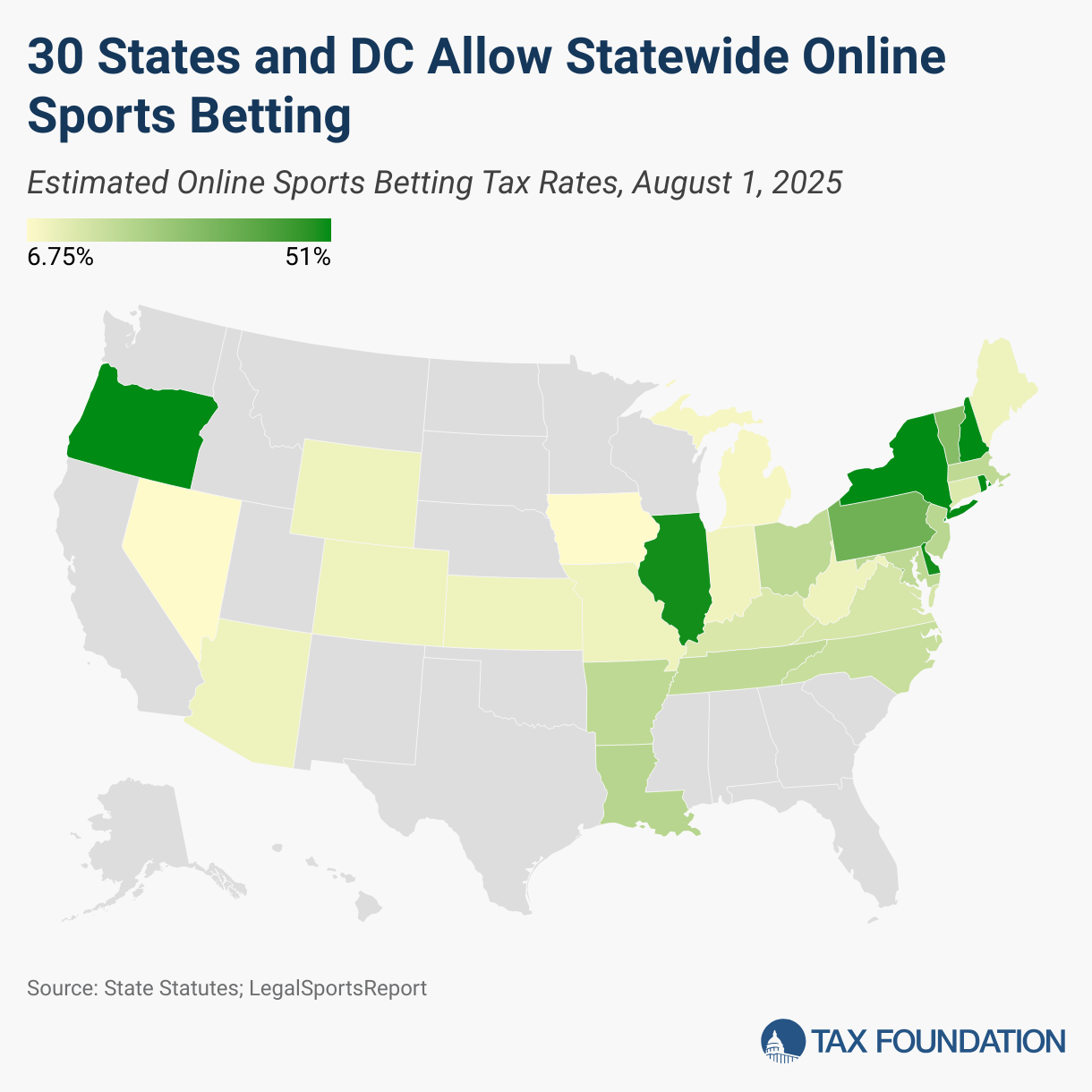
Track360’s state economics table shows the spread clearly: New York taxes gross gaming revenue at 51%, Illinois uses a tiered progressive structure near 40%, Ohio is at 20%, Colorado is at 10%, and Tennessee applies a 1.85% tax on handle.[4] Those are not small local adjustments. They change the ceiling on allowable promotional spend per acquired customer.
| Market | Tax structure cited in research | What it does to bonus-bet design |
|---|---|---|
| New York | 51% GGR tax | Forces stricter payback logic; weak customers become expensive quickly. |
| Illinois | Tiered progressive structure near 40% | Makes scale itself a tax consideration, not just an acquisition goal. |
| Ohio | 20% GGR tax | Leaves more room than New York but still requires disciplined offer targeting. |
| Colorado | 10% GGR tax | Allows more flexibility for acquisition tests and longer payback windows. |
| Tennessee | 1.85% tax on handle | Changes the modeling basis because the levy is tied to handle rather than GGR. |
A $200 bonus bet headline can be identical in the ad and materially different in the P&L. In New York, a large share of gross gaming revenue is taxed away before the operator can recover media, affiliate, risk, compliance, payment, and retention costs. In Colorado, the tax wedge is lower, so the same customer behavior can leave more room for promotional payback. Tennessee complicates the comparison because the tax is on handle, not GGR, which changes how volume and hold interact in the model.[4]
This is where bonus-bet strategy becomes more like pricing than advertising. The offer’s face value is only one variable. The real design includes eligibility, minimum deposit, expiration window, bet-type restrictions, CRM follow-up, state availability, fraud controls, and the next offer a player sees after the first subsidy. Two users can receive the same headline promotion and produce very different economics because their state, sport, product selection, and retention path are different.
For marketers outside sports betting, the analogue is any regulated or cost-variable market where CAC is not portable across geographies. Insurance, credit, energy, healthcare, and real-money trading products all have versions of the same problem. If the cost to serve, compliance burden, tax treatment, default risk, or revenue cap varies by region, a national incentive grid can quietly overpay in the wrong places.
Affiliate Economics Became Part of the Same Cleanup
Affiliate marketing was one of the loudest pipes in the land-grab phase because it translated operator appetite into visible bonus comparison pages, signup funnels, and “best offer” rankings. But affiliate economics also had to mature once operators became less willing to pay for undifferentiated accounts.
Track360 describes DraftKings-related affiliate economics using industry-estimated CPA bands and RevShare ranges, not confirmed DraftKings disclosures.[4] That caveat matters. These numbers are useful for understanding the broader acquisition market around DraftKings, but they should not be treated as the company’s exact contracted economics.
The strategic direction is still clear enough. When paid media is expensive and state economics vary sharply, affiliate quality matters more than affiliate volume. A publisher who can deliver funded accounts with strong retention and product fit is different from one that can only route bonus hunters into the top of the funnel. The same logic that tightens bonus-bet design also tightens partner selection: source quality has to be measured after the promotional liability is recognized, not at registration.
That shift is uncomfortable for teams used to celebrating blended CAC. Blended CAC can hide too much. It can average a profitable Colorado cohort with a weak New York cohort, or combine loyal daily fantasy cross-sell users with one-and-done incentive shoppers. A mature bonus strategy needs cohort-level accounting that follows the customer beyond the first funded event.
Sponsorship Discipline Sent the Same Message
The sponsorship layer moved in the same direction as performance marketing. The NFL opened April 2026 without an official sportsbook after its exclusive sponsorship arrangement with DraftKings, FanDuel, and Caesars expired without renewal, according to Sports Business Journal.[5]
The long-term impact of that expiration was still uncertain at the time of reporting, so it should not be overread as a permanent withdrawal from league-level marketing. But as a signal, it fits the broader pattern. Operators were reassessing expensive visibility layers that made obvious sense during market formation and less obvious sense once awareness was no longer the binding constraint.
A sponsorship can still be rational if it lowers trust friction, improves conversion in valuable states, or supports retention around major event calendars. What changed is the burden of proof. Brand presence has to justify itself against the same contribution-margin logic as the bonus bet. If it cannot help produce better customers or defend profitable customers, the logo placement becomes an expensive habit.
The Guidance Detail Matters Because It Shows Behavior
One of the more revealing details in DraftKings’ Q4 2025 call was not a margin percentage. It was CEO Jason Robins saying the team “went back and made it lower” when setting 2026 revenue guidance of $6.5 billion to $6.9 billion, because they wanted to avoid missing targets.[2]
That is not a media-plan tactic. It is operating behavior. Companies that are still psychologically trapped in land-grab mode tend to overpromise the top line and let acquisition teams stretch to make the story work. A more disciplined operator makes the revenue plan absorb uncertainty before the campaign calendar starts spending against it.
The connection to bonus bets is direct. Promotional offers are often used to close the gap between an ambitious forecast and organic demand. If the forecast is set too high, promotions become a pressure-release valve: bigger offer, wider eligibility, more channels, looser payback. If guidance is set with more conservatism, acquisition teams have more room to choose profitable growth over cosmetic volume.
What DraftKings Actually Recalibrated
The easiest mistake is to look for a single lever: lower bonus amount, fewer ads, less affiliate spend, less sponsorship. DraftKings’ improvement is better understood as a set of connected recalibrations.
- Offer design became more accountable to state economics, rather than only to response rate.
- Acquisition value depended more on product migration, especially whether customers moved into higher-hold behaviors.
- Sales and marketing spend remained substantial, but the test shifted from volume generation to revenue quality.
- Affiliate and media channels had to prove downstream customer quality, not just funded-account delivery.
- Forecasting discipline reduced the need to use promotions as a last-minute top-line patch.
This is a more useful model for growth teams than a generic lesson about cutting spend. In regulated markets, promotions often remain necessary because friction is real. Customers need a reason to switch, deposit, verify, and learn a product. The question is whether the promotion is designed around the economic constraints that govern the relationship after conversion.
A sharper operating review would not ask only, “Which offer converts best?” It would ask: which offer converts in the states where we can afford the payback period, through channels that produce retained users, into products with enough margin to recover the subsidy, under terms compliance can defend, without training the customer to wait for the next bonus?
That review is less glamorous than a bigger headline bonus. It is also how promotional-led acquisition stops being a liability handed from growth to finance.
The Part Other Marketers Should Not Copy Too Literally
DraftKings has an advantage many promotional businesses do not: a daily fantasy sports base that can be cross-sold into sportsbook products. That does not make acquisition free, and it does not eliminate promotional waste. But it gives the company a customer-data and brand-familiarity asset that a newer entrant cannot assume.
That structural advantage matters when translating the case. A challenger in a regulated market cannot simply copy the DraftKings bonus bet marketing strategy and expect DraftKings-like payback. The transferable piece is not the exact incentive level or channel mix. It is the discipline: localize the offer to the economic regime, measure cohorts after the subsidy, separate reported tailwinds from normalized margin, and make every acquisition layer compete against contribution economics.
The same caution applies to favorable hold periods. If a strong quarter is partly helped by sports outcomes, a growth team should not use that quarter to justify permanently looser promotions. Windfall margin can make a sloppy offer look smarter than it is. The durable question is whether the offer still works when hold normalizes and the tax bill arrives.
DraftKings’ case is valuable because it shows a promotion-heavy business becoming more profitable without pretending incentives no longer matter. Bonus bets did not disappear. They were forced to answer harder questions. That is the lesson worth copying: promotional-led acquisition can work in a regulated market when the offer is managed as a margin instrument, not when generosity is treated as the strategy.
References
- 2024 Sports Betting Advertising Trends — American Gaming Association / Nielsen Ad Intel
- DraftKings (DKNG) Q4 2025 Earnings Call Transcript — The Motley Fool, February 13, 2026
- How Much Sportsbooks Spend on Marketing (2026 Updated Stats!) — Scaleo
- DraftKings Affiliate Program: 2026 Operator Review — Track360
- NFL opens April without an official sportsbook — Sports Business Journal, April 1, 2026

Comments
Join the discussion with an anonymous comment.