
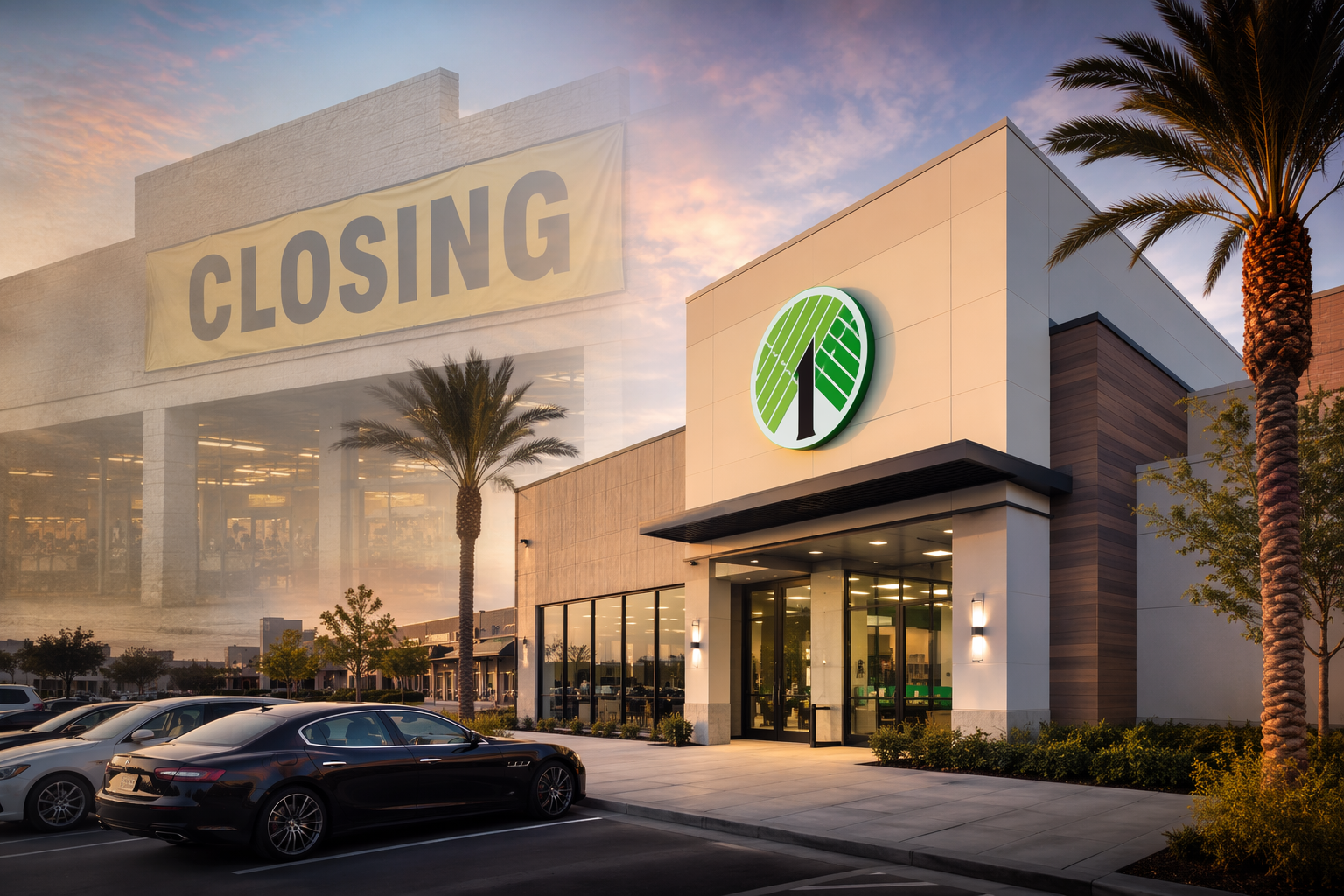
How Dollar Tree uses store closures as a marketing strategy
Dollar Tree is closing 75 stores in 2026, but the move is part of a deliberate brand repositioning that includes 400 new openings, a multi-price rollout, and a shift toward higher-income shoppers. This article explains why the closures signal portfolio optimization, not retail decline, and what marketers can learn from managing a price-point identity transition.
Dollar Tree is closing 75 stores in 2026, which is the kind of number that travels well in a gloomy retail headline. It is also opening 400 stores in the same year, which makes the headline much less useful as a diagnosis of the business. Read together, the store count points to a company editing its footprint while still expanding it, not a retailer quietly backing out of the market.[1]
That distinction matters for anyone studying Dollar Tree’s store closures as a marketing strategy. The closures are not the strategy by themselves. They are one visible part of a broader repositioning: remove weak or brand-damaging locations, separate the stronger Dollar Tree banner from the Family Dollar drag, open in better-fit trade areas, and widen the price architecture so the chain can capture bigger baskets without fully surrendering its value identity.
The footprint is being edited, not abandoned
A closure count only tells you which doors are going dark. It does not tell you whether the chain is shrinking, relocating demand, trading up its real estate, or pruning stores that no longer support the proposition. In Dollar Tree’s case, the 75 closures sit against 400 planned openings, so the net message is expansion with select removal.[1]
The more interesting question is where the new stores are going. Bloomberg reported that 49% of Dollar Tree stores opened in the previous six years were in wealthier metro areas, up from 41% in the prior six-year period. Its reporting also highlighted a Plano, Texas, location near luxury retail and a Ferrari dealership, a detail that is almost too neat as a symbol but still useful: this is not the old stereotype of a dollar store looking only for distressed trade areas.[2]
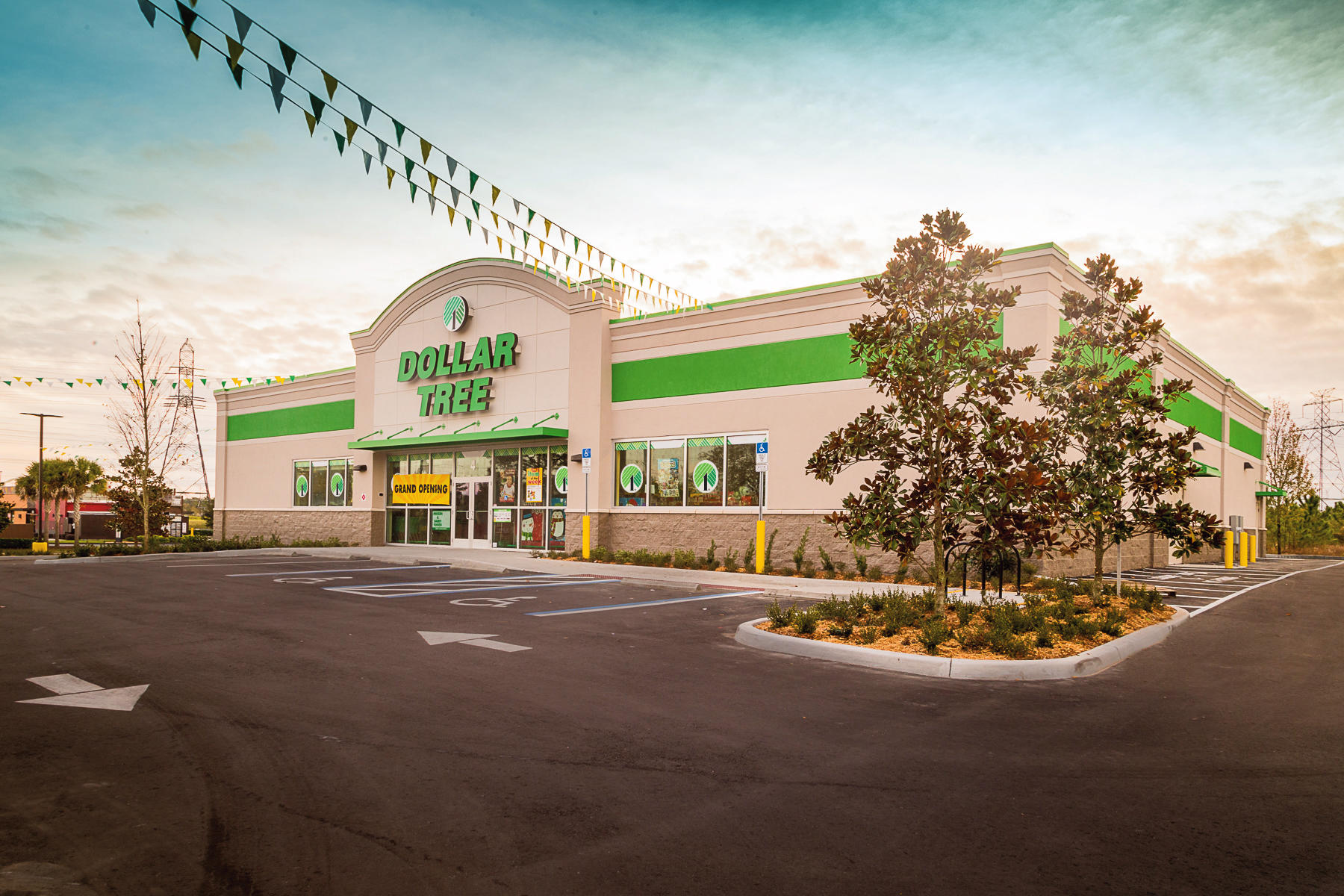
The Plano store should not be treated as proof that Dollar Tree has suddenly become an upscale retailer. It is better read as a vivid example of a quieter portfolio shift. Dollar Tree is trying to keep its value cue while placing that cue in shopping patterns where higher-income customers are already willing to use discount formats selectively: party supplies, seasonal goods, pantry fill-ins, cleaning products, craft items, and impulse purchases that do not require a full grocery or mass-merchant trip.
Family Dollar explains why simplification had to come first
The closure story also looks different once Family Dollar is separated from Dollar Tree. Dollar Tree acquired Family Dollar in 2015 for about $9 billion and sold it in March 2025 for about $1 billion, according to Umbrex’s business model analysis.[3] That is not a rounding error in corporate history. It is the kind of expensive lesson that usually forces a company to decide which banner deserves capital, management attention, and brand clarity.
Family Dollar and Dollar Tree may both live under the value-retail umbrella, but they solve different customer jobs and carry different store-quality associations. Placer.ai’s analysis of planned Family Dollar closures found that the closures across 2024 to 2026 disproportionately affected lower-income urban neighborhoods, while Dollar Tree banner openings were more focused on wealthier suburbs.[4] That split is uncomfortable, but strategically legible: the company is not merely reducing exposure to bad stores; it is reallocating exposure toward a different customer mix.
For marketers, this is the portfolio part that gets flattened when every closure is treated as a collapse signal. A store can be revenue-producing and still be wrong for the brand’s next chapter. If it reinforces poor standards, sits in a trade area that no longer matches the target economics, or consumes capital that would perform better elsewhere, keeping it open can be the less disciplined choice.
The real repositioning is happening in the price architecture
Dollar Tree has a constraint most retailers never have to manage: the brand name itself is a price promise. When a supermarket adds a premium private-label line, customers may notice. When a dollar store breaks the dollar threshold, the change challenges the name, the memory structure, and the reason many shoppers first trusted the chain.
That is why the multi-price rollout is not a merchandising footnote. Supermarket News reported that Dollar Tree had expanded its multi-price format to 5,900 of 9,382 stores, or roughly 63% of the fleet. The same report linked the format to sales gains, including average ticket growth of 6.3% in Q4 2025 and 4.5% in Q1 2026, along with Q4 gross margin expansion of 150 basis points to 39.1%.[5]
| Move | What it changes | Marketing implication |
|---|---|---|
| Close 75 stores | Removes weaker locations from the footprint | Reduces exposure to stores that may dilute the value experience |
| Open 400 stores | Expands the net footprint | Signals growth while shifting the location mix |
| Sell Family Dollar | Simplifies the portfolio after a costly ownership period | Lets Dollar Tree concentrate capital and attention on the cleaner banner |
| Roll out multi-price formats | Expands basket potential beyond the legacy price point | Tests whether the brand can mean value rather than literally one dollar |
| Enter wealthier trade areas | Changes the customer mix | Positions the chain as a convenient value stop, not only a low-income necessity |
The operating logic is clear enough. A strict one-price model gives a retailer sharp positioning, but it also caps assortment quality and basket size. Multi-price merchandising gives Dollar Tree room to sell products that cannot work economically at the old threshold. It can add slightly better goods, larger pack sizes, and categories with more margin flexibility. The catch is that every red sticker above the expected price is also a small brand negotiation with the shopper.
That negotiation is easier with some customers than others. A higher-income shopper may treat Dollar Tree as a smart stop for specific categories and accept a few higher price points if the trip still feels efficient and cheap relative to alternatives. A legacy shopper under more budget pressure may experience the same change as a broken promise. Both reactions can be rational. The brand has to make the new architecture easy enough to understand that customers do not feel tricked at the shelf.
Why higher-income shoppers are attractive without being a free lunch
Higher-income trade areas give Dollar Tree several advantages. Store standards can matter more. Convenience can command more trips. Seasonal and discretionary categories can perform better. A shopper with more spending flexibility may be willing to add unplanned items if the store feels clean, quick, and still meaningfully cheaper than the alternatives.
But the chain cannot simply trade one audience for another without consequences. Placer.ai’s analysis of Family Dollar closures points to a real geographic and income mix issue: lower-income urban neighborhoods bore a disproportionate share of those planned closures, while Dollar Tree openings leaned toward wealthier suburbs.[4] Even if the Dollar Tree banner is the cleaner growth vehicle, the company still operates in a value-retail category where trust is built through access, predictability, and the feeling that the store is on the customer’s side.
This is where the strategy can go wrong. If the repositioning is experienced as better stores, clearer assortments, and useful new price tiers, it can strengthen the brand. If it is experienced as fewer nearby options, more confusing shelves, and a steady retreat from the lowest price expectations, the company risks making its original customer feel like the funding source for someone else’s upgraded experience.
Closures can be a marketing tool when they change the promise customers actually encounter
Marketers often talk about repositioning as if it happens mainly through messaging. In store-based retail, the store portfolio is the message. A shopper does not experience the brand through a strategy deck. She experiences it through the parking lot, the checkout line, the shelf condition, the price labels, the surrounding co-tenants, and whether the trip solved the problem she came in with.
That is why Dollar Tree’s closures deserve to be read operationally, not just financially. Closing a weak store can remove a recurring negative impression. Opening in a stronger trade area can put the brand into new weekly routines. Selling a troubled banner can reduce strategic noise. Expanding multi-price can improve the economics of the trip. None of these moves alone proves a successful repositioning. Together, they show a company trying to change what the brand can credibly offer.
The best version of this strategy makes Dollar Tree less dependent on the literal meaning of “dollar” and more dependent on a broader value equation: the trip is convenient, the products are useful, the prices still feel low, and the occasional higher price point feels justified. That is a harder promise to manage than a single-price concept, but it is also a more flexible one.
The practical lesson is not that closures are secretly good. Many closures are exactly what they appear to be: demand weakness, cost pressure, or failed execution. Dollar Tree’s case is different because the closures are paired with net expansion, portfolio simplification, a measurable multi-price rollout, and a deliberate shift in trade-area targeting. The closure count is the least interesting number unless it is connected to those choices.
Dollar Tree’s strategy is strongest if “more than a dollar” can still feel like “worth the trip.” If higher-income growth comes at the cost of alienating legacy value shoppers, the same repositioning that looks disciplined in 2026 could become a trust problem later.
References
- Dollar Tree to shutter 75 stores while growing overall footprint, Fox Business, April 2026
- Dollar Tree Expands Into Wealthier Areas, Attracts Higher-Income Shoppers, Bloomberg, February 10, 2026
- Dollar Tree, Umbrex, 2026
- Dollar Tree: A Deeper Look Into The Planned Family Dollar Store Closures, Placer.ai
- Multi-price strategy drives Dollar Tree sales gains, Supermarket News, March 2026

Comments
Join the discussion with an anonymous comment.