
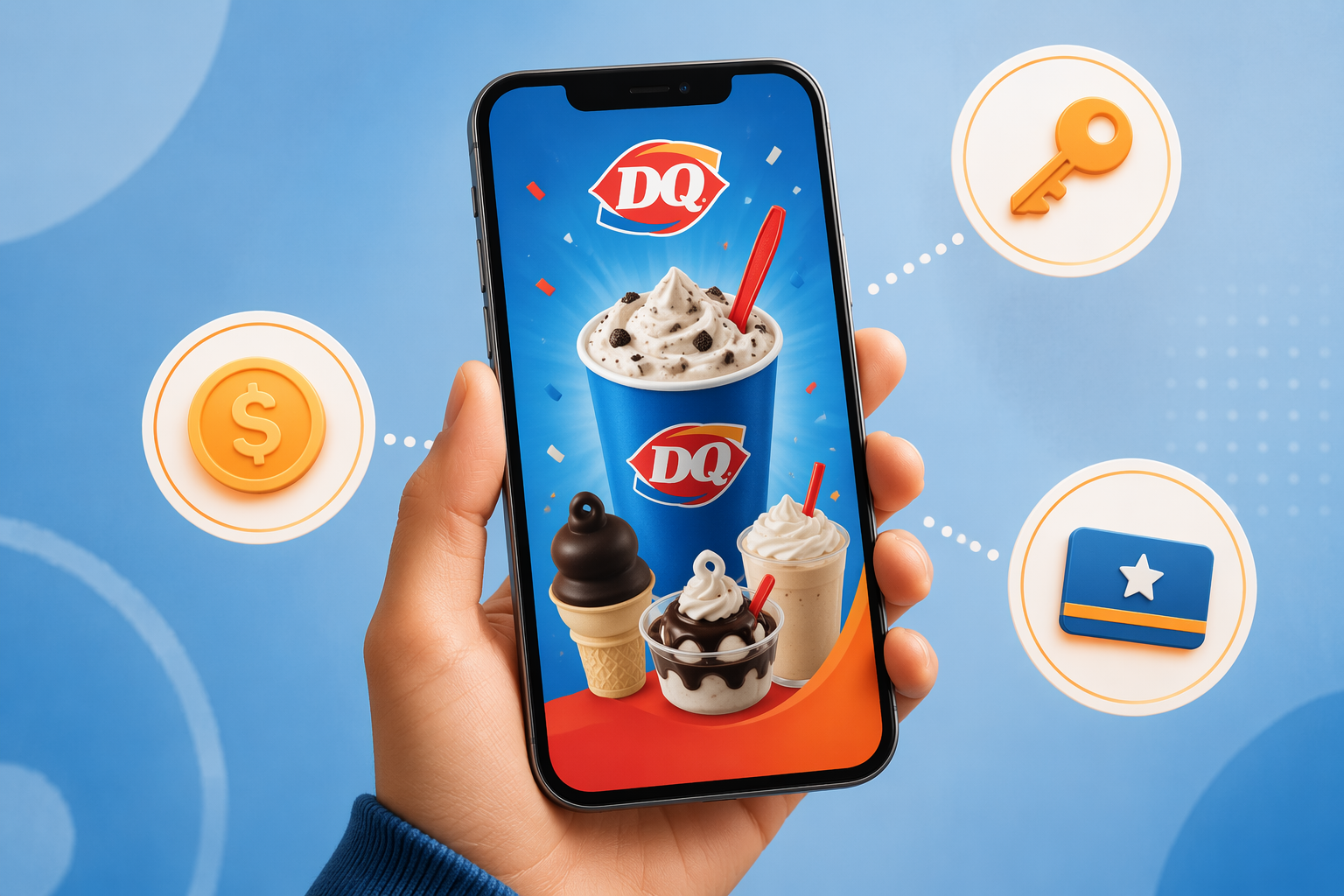
How Dairy Queen's National Ice Cream Day Promotion Drives App Growth
Analysis of Dairy Queen's National Ice Cream Day promotion reveals a three-component playbook — low purchase threshold, app-exclusive access, and loyalty gating — that has driven a 138% CRM revenue lift and 2.2M app downloads in similar campaigns. Marketers can adapt this structural model for their own app acquisition and loyalty strategies.
A useful Dairy Queen National Ice Cream Day promotion analysis starts with the fine print, not the free Dilly Bar. For 2026, DQ is offering a free Dilly Bar with a minimum $1 purchase, but only through the DQ app, only for DQ Rewards members, and across a week-long redemption window rather than a single holiday rush.[1]
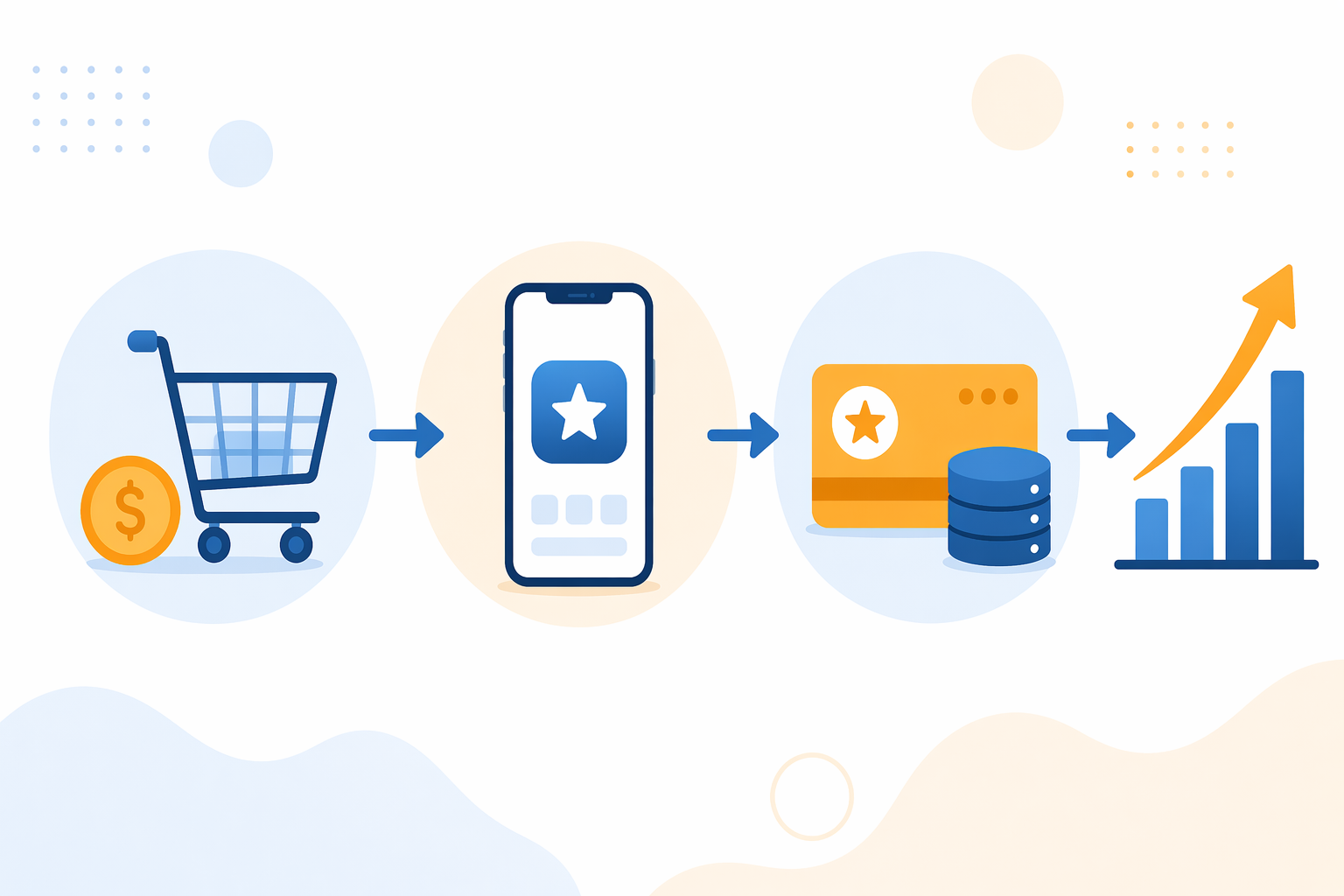
That structure matters more than the item. A no-strings giveaway creates traffic and leakage. This offer creates a basket event, an app session, and a loyalty identity. Once those three things happen together, the promotion stops being a holiday stunt and starts looking like a reusable acquisition system.
The Offer Is Free, But the Customer Still Has to Buy
The $1 minimum purchase is doing quiet work. It keeps the headline simple enough for the customer — free Dilly Bar — while preventing the promotion from becoming pure product handout. The customer still enters a transaction, the store still records a basket, and DQ gets a cleaner read on whether the offer can move someone from interest to purchase.
That threshold is low enough not to kill trial. It is also high enough to change the economics of the visit. The customer may add a drink, fries, a cone, or a meal; the exact mix will vary by location and occasion, but the important point is that the promotion asks for a purchase behavior, not only a coupon claim.
For marketers trying to adapt the model, this is the first filter: the threshold cannot feel like a trick. A $1 requirement is easy to understand. A complicated basket rule would turn the promotion into a checkout puzzle, and checkout puzzles are where acquisition campaigns lose the users they paid to attract.
App-Only Access Turns Seasonal Demand Into Owned Reach
The app requirement is the second piece of the machine. National Ice Cream Day already creates a reason to pay attention. DQ uses that attention to move the customer into an owned channel where it can send offers, observe redemption behavior, and connect future campaigns to a known user.
The best public benchmark for how powerful that mechanic can be is not the 2026 Dilly Bar offer, because standalone results for that promotion are not yet publicly available. It is DQ’s April 2023 85¢ Blizzard campaign. Appfigures reported that the campaign drove 2.2 million app downloads, peaked at 174,000 downloads in a day, and produced 10x download growth; the analysis also noted that the campaign nearly matched all of DQ’s 2022 downloads combined.[2]
That distinction is important. The 2.2 million downloads belong to the 85¢ Blizzard campaign, not the 2026 National Ice Cream Day offer. They are still useful because the mechanics are similar: a time-bound, high-recognition treat offer available through the app. The number is a historical benchmark for what this kind of structure has done before, not a forecast for what this specific July 2026 promotion will deliver.
The Loyalty Gate Is Where the Promotion Becomes a CRM Asset
The app download is not the finish line. A download without enrollment, permissioning, and a next action is a soft vanity metric. DQ’s offer requires DQ Rewards membership, which means the redemption path can create or activate a loyalty identity instead of leaving the brand with anonymous holiday traffic.[1]
This is where the Braze 85¢ Blizzard case study becomes the load-bearing evidence. Braze reported that American Dairy Queen tested four welcome offers, found that the 85¢ Blizzard performed best, then scaled it nationally. The campaign produced a 138% increase in CRM revenue, a 310% lift in loyalty signups, and accounted for 20% of all year-to-date CRM revenue in the reported period.[3]
Those figures should be read as vendor-reported directional evidence, not as a guaranteed outcome for every QSR or retail app. They are still unusually useful because they connect the promotion to CRM revenue and loyalty signup behavior. Most holiday promotions can show impressions, redemptions, or social chatter. This one has a public case tying the offer structure to the part of the business that has to keep working after the holiday ends.
| Promotion Component | Customer Action | Growth Function |
|---|---|---|
| Low purchase threshold | Makes a small purchase to unlock the free item | Reduces pure giveaway leakage and creates a basket event |
| App-exclusive access | Downloads or opens the DQ app | Moves seasonal demand into an owned channel |
| Loyalty gating | Joins or uses DQ Rewards | Creates a CRM identity for follow-up, segmentation, and future offers |
The Plumbing Has to Be Ready Before the Spike Arrives
A campaign like this only looks simple from the outside. The customer sees a free Dilly Bar. The operator sees POS rules, app eligibility, loyalty account status, store redemption, offer suppression, and post-redemption messaging. If those systems do not line up, the campaign creates support tickets instead of usable customers.
TELUS Digital’s Dairy Queen case study helps explain why DQ is better positioned than many brands to keep repeating this model. TELUS reported 19.2 million loyalty accounts since the 2022 launch, a 234% annual increase in signups, and a 472% annual increase in loyalty transactions. It also describes integration across POS, web, and app experiences for more than 7,000 locations, with release cycles reduced from three months to two weeks.[4]
Those are not National Ice Cream Day ROI numbers. They are infrastructure numbers. That makes them more relevant to marketers planning replication, not less. The offer can create demand, but the infrastructure determines whether that demand becomes a clean enrollment, a redeemed offer, a recorded purchase, and a customer record that the CRM team can actually use.
Why DQ Can Repeat Treat Promotions Without Making Them Feel Disposable
The risk with repeated free-item or low-price campaigns is training customers to wait. DQ has some protection here because its promotions are built around treat occasions, not only price relief. Chief Marketer’s profile of the brand describes DQ’s emphasis on marketing to “fans,” not merely “customers,” and notes that DQ has used weather-triggered BOGO offers when temperatures deviate by six degrees through a Weather Channel partnership.[5]
That fan framing can sound soft until it changes behavior. In DQ’s case, it helps explain why a Blizzard anniversary offer, a National Ice Cream Day Dilly Bar, and weather-triggered treat pushes can sit inside the same loyalty strategy. The customer is not being asked to compare unit economics. The customer is being given a reason to treat the app as the place where DQ moments show up first.
This does not eliminate discount fatigue. It does make the promotion less nakedly transactional. The offer is attached to a familiar ritual — ice cream, weather, holidays, limited-time treats — which gives CRM follow-up more to work with than another percentage-off code.
What Marketers Can Borrow, and What They Cannot
The replicable lesson is the sequence, not the exact item. A brand does not need a Dilly Bar to use this model. It needs an offer that is familiar enough to create immediate motivation, inexpensive enough to support broad redemption, and valuable enough that app download and loyalty enrollment feel like fair exchanges.
- Start with a low-friction purchase action, not a fully free anonymous claim.
- Make the app the access point only if the app experience can handle discovery, eligibility, redemption, and post-purchase messaging.
- Require loyalty enrollment only when the value exchange is obvious and the account can feed real CRM follow-up.
- Measure the campaign past downloads: enrollments, first purchase, repeat purchase, offer-triggered revenue, and suppression logic for users who already converted.
The outcomes are not automatically portable. DQ has brand recognition, treat frequency, a national footprint, and a loyalty infrastructure that many operators do not. QSR Magazine reported that Dairy Queen had $6.4 billion in global sales in 2024, $4.909 billion in U.S. sales, and a stated target of $10 billion by 2030.[6] A smaller brand can copy the mechanics, but it cannot copy that context.
The better benchmark is operational: did the campaign create a known user, a completed transaction, and a legitimate next message? If the answer is yes, the free item did its job. If the answer is only that downloads spiked, the CRM team is still waiting for the part that matters.
DQ’s 2026 National Ice Cream Day offer is worth watching because it reuses a proven structure: low-barrier purchase, app-exclusive access, and loyalty capture. Marketers can borrow that architecture. They should be much more cautious about borrowing the expected results without the same offer fit, technical integration, CRM discipline, and brand permission to make a promotion feel like a fan benefit rather than a one-off discount.
References
- DQ Celebrates National Ice Cream Day All Week Long with Free Dilly Bars, Dairy Queen, 2026.
- Dairy Queen's Current Promotion Nets Massive Results, Appfigures.
- American Dairy Queen Corporation Increases Revenue by 138% Within CRM Using $.85 BLIZZARD Treat Campaign, Braze.
- 19.2M New Loyalty Members for Dairy Queen, TELUS Digital.
- DQ's Marketing to 'Fans,' Not 'Customers,' Pays Off, Chief Marketer.
- Dairy Queen Targets $10 Billion by 2030 as Global Growth Continues, QSR Magazine.

Comments
Join the discussion with an anonymous comment.