
ChatGPT for Marketers: Adapting Your Content Strategy for AI Discovery
ChatGPT has evolved from a writing assistant into a dual-threat distribution channel: an AI answer engine and a new advertising platform. This article explains how marketers must adjust their content strategy for AI-driven search and conversational ads, with specific tactics for extractability optimization and honest caveats about attribution and cost.
For years, most searches for chatgpt for marketers led to the same set of use cases: write a blog outline, generate ad copy, summarize a webinar, repurpose a white paper into LinkedIn posts. Useful, yes. Strategic, only up to a point.
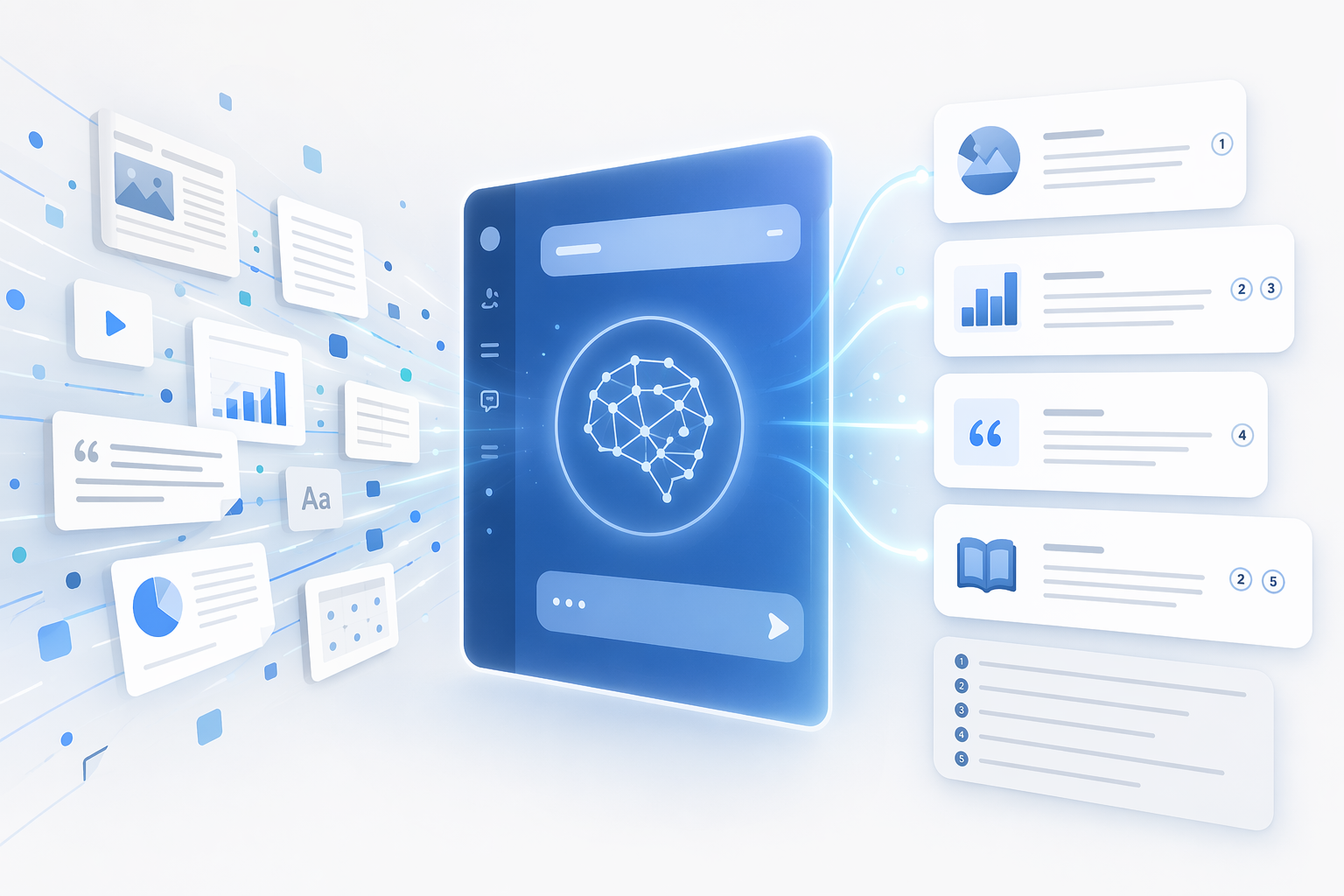
The more important change in 2026 is not that ChatGPT can help marketers produce content. It is that ChatGPT has become one of the places where buyers may discover, compare, and evaluate that content before they ever land on a website.
That matters because the scale is no longer theoretical. First Page Sage reported ChatGPT at roughly 900 million weekly active users and 851 million monthly users in June 2026.[1] IMPACT, citing Search Engine Land, also reported that AI search accounts for about 56% of global search volume, while 95% of Americans still use traditional search.[2] Those two facts belong in the same sentence. AI discovery is now too large to treat as a side experiment, but traditional search is still too deeply used to abandon.
The practical question is narrower than the usual hype cycle allows: how should content strategy change when ChatGPT becomes both an answer engine and an advertising surface?
The Mental Model Has To Move From Production To Distribution
Using ChatGPT to draft a landing page is a workflow decision. Being visible inside ChatGPT answers is a distribution problem. The first affects how content gets made. The second affects whether a buyer sees the brand at all.
That distinction changes the work. A content team optimizing for AI discovery is not merely asking whether an article ranks in Google or earns a featured snippet. It is asking whether the article contains passages an answer engine can safely extract, summarize, and cite without stripping away the point.
This is why generic advice like “publish better content” is not enough. A thoughtful essay can be excellent for human readers and still be awkward for AI systems to use. If the definition is implied three paragraphs after the heading, if the supporting statistic has no visible source, if the answer depends on context scattered across the page, the content may be harder to reuse in an AI-generated response.
| Old ChatGPT Question | 2026 Content Strategy Question |
|---|---|
| How can we use ChatGPT to write faster? | How do we make our expertise easier for AI systems to find, extract, and cite? |
| Can it generate campaign ideas? | Which buyer questions should we answer clearly enough to appear in AI-generated research journeys? |
| Can it repurpose existing content? | Which existing pages need structure, attribution, and answer blocks so they can survive outside the page? |
| Can it write ad copy? | Should we test paid conversational placements, and what would count as a useful signal? |
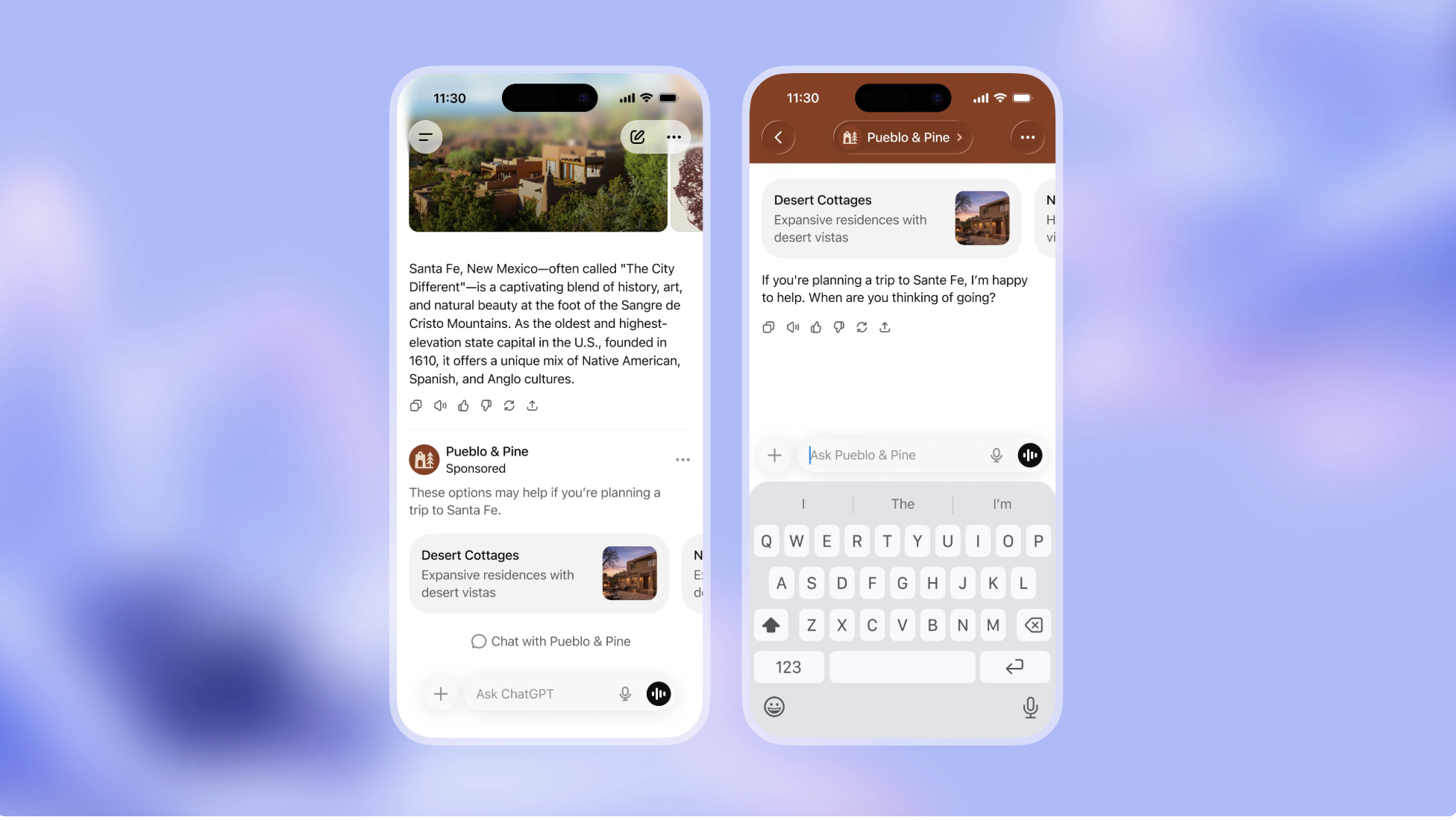
The last row is new. In January 2026, ChatGPT Ads entered the conversation as an actual media channel, not just a hypothetical monetization story. Forbes described the launch as introducing sponsored placements into the ChatGPT experience, and JumpFly reported that ads appear below organic answers rather than replacing them.[3][4]
Two Channels Now Sit Inside The Same Interface
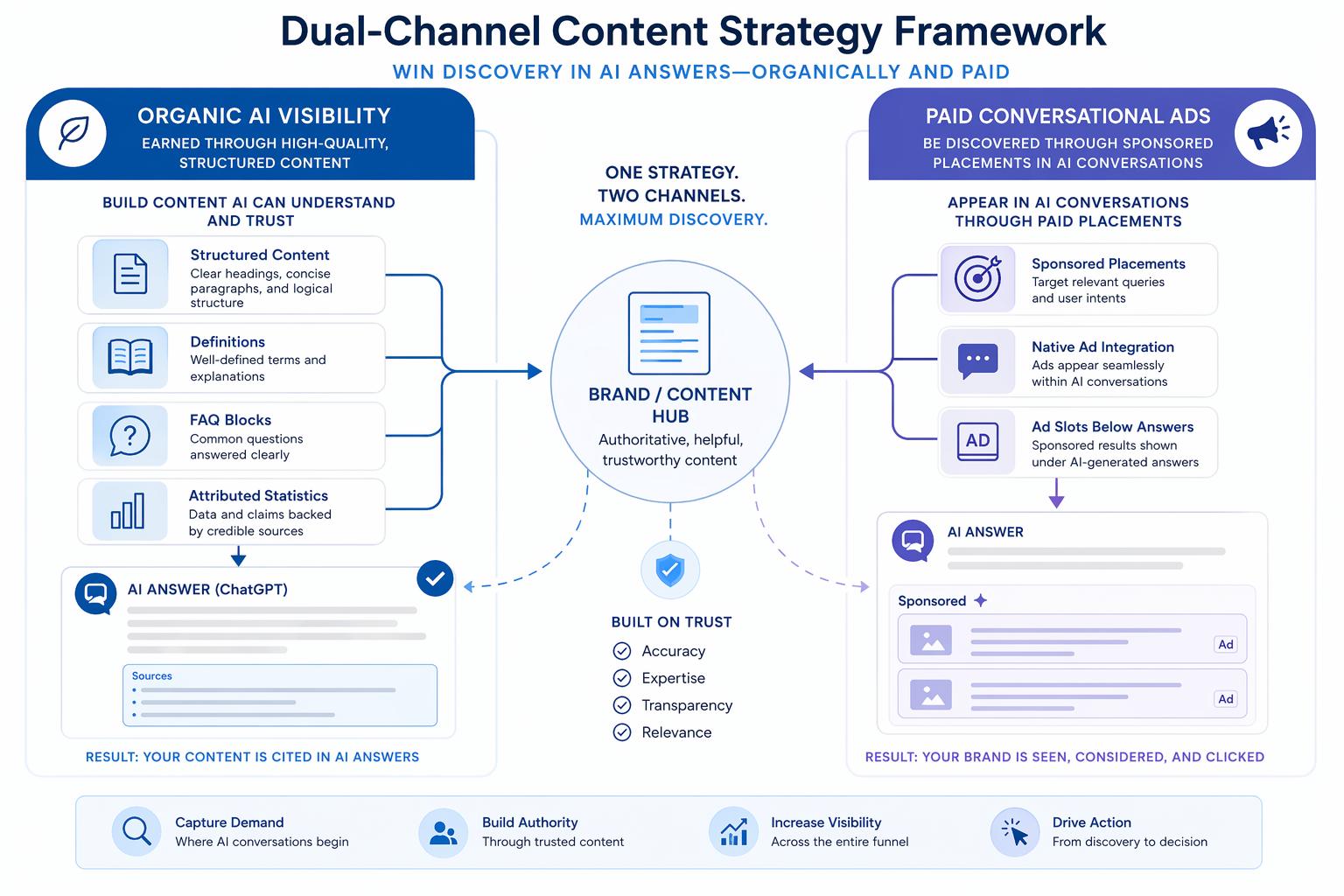
ChatGPT now matters to marketers in two separate ways, and mixing them together leads to bad planning.
- Organic AI visibility: content may be summarized, cited, or used as supporting material in an AI-generated answer.
- Paid conversational advertising: sponsored placements may appear inside the conversational experience, including below organic answers.
The first channel belongs primarily to content architecture. The second belongs to media testing. They may support the same business goal, but they do not have the same maturity, cost profile, or measurement standards.
Organic visibility is the place most content teams should start, because the work overlaps with good editorial hygiene: clearer definitions, better structure, visible sources, and pages that answer buyer questions directly. Paid ChatGPT placements deserve attention, but they are still early. JumpFly reported CPMs around $60, and also noted the lack of granular attribution available to marketers at launch.[4] That combination makes this a test-and-learn surface, not a channel anyone should be forecasting with the confidence of mature paid search.
What AI-Extractable Content Actually Looks Like
Generative engine optimization, or GEO, is still emerging. The available guidance does not amount to a confirmed ranking algorithm. It is more honest to say that certain content patterns appear more likely to help AI systems understand and cite a page, not that they guarantee visibility.
Heyy.io and IMPACT both point toward a practical set of extractability signals: direct answers, explicit definitions, attributed statistics, clean headers, FAQ-style sections, and content that can stand alone when pulled into an AI response.[6][2] None of that requires a team to throw away SEO. It does require editing pages for machine-assisted reuse, not only for human browsing.
Start important pages with answerable units
A page written for AI discovery should make its core answer available early and cleanly. That does not mean flattening the article into a dictionary entry. It means each major section should contain at least one passage that answers a specific buyer question without requiring the reader, or an AI system, to reconstruct the argument from five surrounding paragraphs.
For example, a software company writing about customer data platforms might include a concise definition near the top of the page, then a short passage explaining when a CDP is appropriate, then a separate passage comparing it with a CRM. Those blocks can still sit inside a more sophisticated article. The point is that the useful parts should not be buried inside narrative transitions.
| Weak For AI Extraction | Stronger For AI Extraction |
|---|---|
| “This is where many teams get confused.” | “A customer data platform unifies customer data from multiple systems into profiles that marketing, sales, and service teams can activate.” |
| “The results were meaningful.” | “In the company’s published benchmark, conversion rate increased by X over Y period.” |
| “There are several reasons this matters.” | “The three operational risks are duplicate records, consent gaps, and inconsistent audience definitions.” |
| “As mentioned earlier…” | “For B2B teams, the main selection criterion is whether sales and marketing both need the same account-level data.” |
The table uses hypothetical examples. The editing principle is what matters: replace vague connective tissue with passages that carry meaning on their own.
Make definitions explicit instead of implied
Human readers are good at inferring definitions from context. AI answer systems may still benefit from direct language. If a page targets a concept, define it plainly before debating edge cases.
That matters most for terms that are fashionable, overlapping, or vendor-shaped: revenue intelligence, agentic AI, first-party data, lifecycle marketing, conversion intelligence. If every paragraph assumes the reader already knows what the term means, the page gives an answer engine less clean material to use.
A good definition block usually does three things: names the thing, states what it does, and sets a boundary. The boundary is often what keeps the answer from becoming generic.
- Name: “Conversational advertising is…”
- Function: “It places sponsored messages inside an interactive answer or chat experience…”
- Boundary: “It is different from paid search because the user may not be choosing from a list of links.”
Attach statistics to visible sources
A sourced statistic is more useful than an impressive statistic floating in the copy. If a page says a market is growing, a buyer wants to know who measured it, when, and what the number actually counts. AI systems have the same basic problem: unsupported figures are harder to trust and easier to ignore.
That does not mean every sentence needs a citation. It means claims that carry weight should be attributable. A benchmark, survey result, market share estimate, adoption number, or platform launch detail should travel with its source. This is especially important in AI-related content, where vague claims have a short shelf life and a long habit of being repeated after they are no longer true.
Use headers as retrieval cues, not decoration
A clever header can work for a human reader who is already inside the article. It is less helpful when the section needs to be recognized as an answer to a specific query. Headers should make the section’s job obvious.
“The attribution problem with ChatGPT Ads” is more useful than “The missing piece.” “How to structure content for AI citations” is more useful than “Make it easier to find.” The second version may sound neater in a deck. The first version helps the page announce what it contains.
Add FAQ passages where buyers actually ask discrete questions
FAQ formatting is not a magic GEO switch. It is useful when the topic naturally breaks into answerable questions: pricing, implementation, comparisons, definitions, risks, integration requirements, compliance boundaries, and role-specific use cases.
The best FAQ passages do not repeat the article in miniature. They answer questions that would otherwise interrupt the reader’s progress. For a page about ChatGPT Ads, useful questions might include whether ads appear above or below organic answers, which subscription tiers see them, whether advertisers receive granular attribution, and how CPMs compare with other paid media.
Audit existing pages before commissioning a new content calendar
Most teams do not need a separate “AI content” calendar before they have repaired the pages that already carry authority. The better first move is an extractability audit of high-intent pages: category pages, comparison pages, glossary entries, buying guides, research pages, and problem-aware blog posts that already attract qualified traffic.
- Does the page answer the main query in the first few paragraphs?
- Are key terms defined directly?
- Can important passages stand alone without “as noted above” or “this approach” references?
- Are statistics, case claims, and benchmarks visibly attributed?
- Do headers identify the question or decision the section addresses?
- Would a buyer still understand the quoted passage if it appeared outside the page?
This is unglamorous work, which is usually why it gets postponed. It is also the part of AI discovery strategy that a content team can change this week without waiting for a platform dashboard to mature.
ChatGPT Ads Are Real, But The Measurement Is Not Mature
The paid side of ChatGPT deserves attention for a different reason: it changes where sponsored discovery can happen. Instead of competing only on a search results page, brands can appear in a conversational environment after a user asks for help, options, or recommendations.
The early details are specific enough to plan around, but not mature enough to overpromise. Forbes reported that ChatGPT Ads launched in January 2026.[3] JumpFly reported an initial rollout for Free and Go users, with the Go tier priced at $8 per month, and described placements as appearing below organic answers.[4] OpenAI’s own advertising announcement framed the approach around expanding access to ChatGPT while introducing advertising carefully.[5]
That below-answer placement matters. It suggests the organic answer still owns the primary informational moment, while the ad enters as a follow-on option. For marketers, that makes the environment closer to sponsored consideration than a simple replacement for search ads.
| ChatGPT Ads Detail | Marketing Implication |
|---|---|
| January 2026 launch | Early enough that benchmarks, norms, and playbooks are still forming. |
| Free and Go tier rollout | Reach may skew toward non-enterprise end users rather than paid business seats. |
| Placements below organic answers | Organic AI visibility and paid placement should be planned together, not as substitutes. |
| CPMs around $60 | Budgeting looks closer to premium attention than cheap programmatic scale. |
| No granular attribution yet | Testing should focus on learning signals, assisted impact, and audience fit rather than clean last-click ROI. |
The CPM is the first reality check. At around $60, this is not an easy recommendation for small teams trying to stretch awareness dollars.[4] That price sits closer to premium inventory than the kind of low-cost display most marketers use for cheap reach. A high CPM can still make sense if the audience is valuable and the placement is contextually strong. It just cannot be treated as a bargain channel.
The attribution gap is the second reality check. Without granular attribution, teams cannot yet evaluate ChatGPT Ads the way they evaluate mature paid search campaigns.[4] That does not make the channel useless. It changes what a responsible test looks like.
A responsible early test has a narrow job
A ChatGPT Ads test should not begin with a spreadsheet pretending to know revenue impact three quarters out. It should begin with a specific learning goal: whether the audience is present, whether the context fits the offer, whether message framing changes downstream behavior, and whether the brand can tolerate measurement ambiguity.
- Good test fit: enterprise or high-LTV offers where premium attention can be justified.
- Weak test fit: low-margin offers that need inexpensive, tightly attributed acquisition.
- Good test fit: categories where buyers ask comparison, recommendation, or evaluation questions.
- Weak test fit: campaigns that require precise keyword-level reporting to survive budget review.
The enterprise-first posture also matters. Early access, premium pricing, and incomplete attribution usually favor teams with experimentation budgets, media sophistication, and enough deal value to absorb uncertainty. A lean content team should not be embarrassed to prioritize organic extractability first.
Do Not Optimize Only For ChatGPT
There is a second overcorrection worth avoiding: turning ChatGPT into the new Google in every planning meeting. AI discovery is broader than one interface, and traditional search remains heavily used.
The 95% traditional-search figure is the brake pedal.[2] It does not cancel the importance of AI search, but it does make replacement language sloppy. Buyers are not moving in a single file from Google to ChatGPT. They are using overlapping discovery behaviors: traditional search, AI answers, social search, review sites, communities, analyst content, vendor pages, and direct referrals.
There is also platform risk inside AI search itself. Marketing LTB reported ChatGPT’s AI search market share declining from 74.8% to 61.8%, while Claude grew from 3.2% to 21.1%.[7] A single market-share snapshot should not drive an entire strategy, but it is enough to make “optimize only for ChatGPT” look fragile.
The safer habit is to optimize for answer engines as a class. Clear definitions, sourced claims, structured comparisons, and stand-alone passages help across more than one AI interface. They also tend to improve the page for human readers, which is a useful sign that the work is not just platform chasing.
What Changes In The Content Operation
The work does not need to become mystical. It does need to become more disciplined. AI discovery rewards the parts of content operations that many teams already know they should be doing and often rush past: source tracking, crisp section architecture, expert review, fact freshness, and answer-level editing.
| Content Operation Habit | What Changes For AI Discovery |
|---|---|
| Briefing | Include the exact questions the page should answer, not only the target keyword. |
| Drafting | Require direct answer blocks for high-intent questions. |
| Editing | Check whether key passages make sense outside the full page. |
| Fact-checking | Record source, date, and measurement type for every important claim. |
| SEO review | Review headers and schema-adjacent structure for clarity, not only keyword placement. |
| Content refresh | Update AI, platform, and market statistics more frequently than evergreen advice. |
| Paid media planning | Treat ChatGPT Ads as a separate experiment with its own assumptions and limitations. |
The highest-leverage change is usually at the editing stage. Writers often produce useful arguments that are too diffuse for extraction. Editors can turn those arguments into quotable sections without making the article feel robotic: define the term, answer the question, cite the claim, then continue with nuance.
That is also where brand expertise becomes easier to preserve. If the only extractable sentence on a page is generic, the brand has done the hard work of publishing without giving AI systems a reason to prefer its perspective. A strong answer block should carry the company’s actual judgment: who the advice applies to, when it does not apply, and what tradeoff the buyer should understand.
A Layered Strategy For 2026
The useful answer to “ChatGPT for marketers” is no longer a prompt list. It is a channel strategy with three layers.
- Keep traditional SEO strong because traditional search still reaches a large share of users.
- Build GEO habits into content operations so existing expertise is easier for answer engines to extract, summarize, and cite.
- Treat ChatGPT Ads as an early paid experiment when the budget, audience value, and tolerance for unclear attribution make sense.
That layering is less exciting than declaring search dead. It is also more useful. Content teams do not need another replacement cycle dropped on the same people with a new acronym attached. They need their best material to remain discoverable as buyer research spreads across search pages, AI answers, and conversational ad surfaces.
References
- ChatGPT Usage Statistics: June 2026 — First Page Sage, June 2026.
- AI for Marketing in 2026: What To Use, What To Skip, and What To Watch Next — IMPACT.
- ChatGPT Ads Just Changed The Rules Of Marketing Forever — Forbes, January 26, 2026.
- ChatGPT Ads Are Here: What Marketers Need to Know — JumpFly.
- Our Approach to Advertising and Expanding Access to ChatGPT — OpenAI.
- 12 Ways to Use ChatGPT for Marketing in 2026 — Heyy.io.
- ChatGPT Statistics 2026: 95+ Stats & Insights — Marketing LTB.

Comments
Join the discussion with an anonymous comment.