
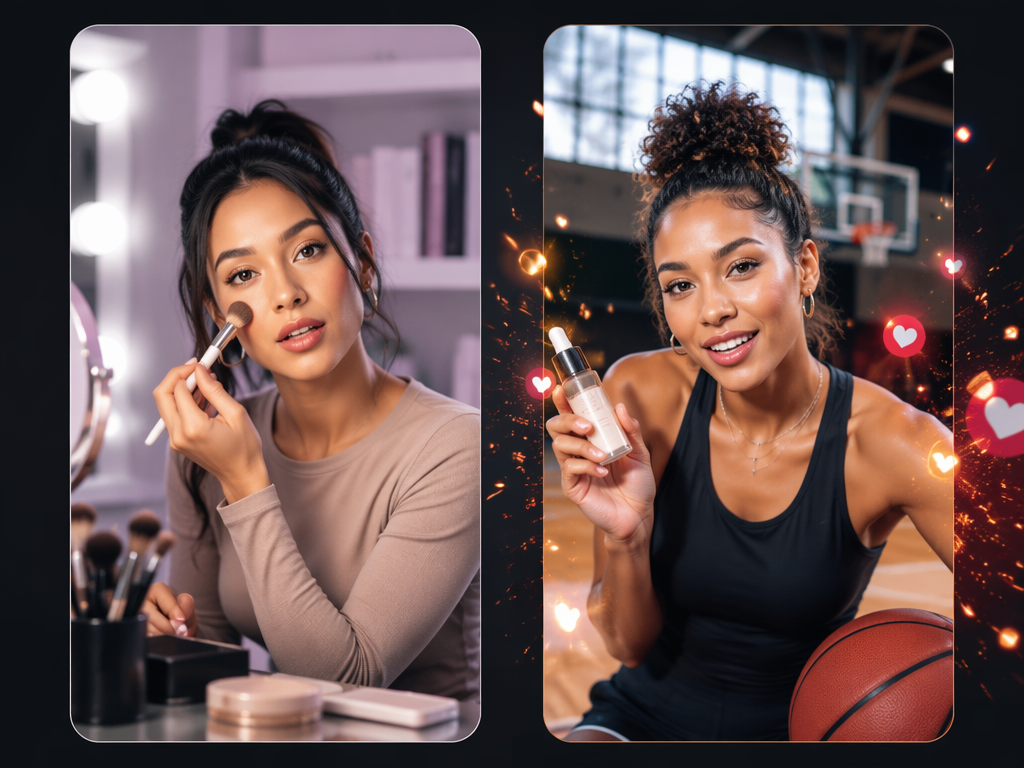
How Athlete TikTok Beauty Challenges Outperform Influencer Marketing
Athletes drive 2.2x more engagement than traditional influencers on beauty content, and TikTok challenge formats amplify that effect. This playbook breaks down the data, real brand examples, and a step-by-step framework for structuring your first campaign.
The budget case for athlete-led TikTok beauty challenges starts with a simple comparison: athlete-sponsored content averaged 10.97% engagement, while traditional influencer-sponsored content averaged 4.92%, according to OpenSponsorship’s platform analysis of more than 14.9 million posts across more than 25,000 athletes.[1] That is a 2.2x engagement premium, large enough to deserve a separate line in the influencer plan rather than a footnote inside “experimental creators.”
The useful interpretation is not that beauty brands should fire their GRWM creators. Good beauty creators still know lighting, texture, shade payoff, pacing, and the difference between a product that photographs well and one that survives a close-up. The stronger argument is that athletes behave like a distinct creator class. Their content can bring sweat, routine, fandom, rivalry, team identity, and performance pressure into a category that often over-relies on the same vanity-table script.
That matters because the first internal objection is usually not creative. It is budget. If an athlete activation is treated like a celebrity sponsorship, it will sound expensive and hard to test. OpenSponsorship’s reported average athlete deal size was $5,147 in 2025, up 100% year over year, which makes the category neither pocket change nor Super Bowl money.[1] For a beauty team already spending on creators, paid social, seeding, and affiliate incentives, this is a testable allocation question.
What the athlete engagement benchmark actually proves
The OpenSponsorship benchmark is the load-bearing statistic, but it needs to be handled cleanly. The 10.97% athlete engagement rate and 4.92% traditional influencer engagement rate come from OpenSponsorship’s own marketplace and data environment, not from a neutral census of every sponsored post on TikTok, Instagram, and YouTube.[1] The underlying sample is large, but the platform’s athlete pool may skew toward professional and college athletes with unusually concentrated fan communities. The comparison may also reflect differences in audience size, content category, platform mix, creative format, and deal structure.
Even with those caveats, the number is useful because it compares sponsored content classes at campaign-planning scale. It gives a beauty marketer permission to stop treating athletes as a PR garnish and start modeling them alongside creators by engagement, cost, audience overlap, and content role.
| Planning signal | What the number says | How to use it |
|---|---|---|
| Engagement gap | Athlete sponsored content averaged 10.97% engagement versus 4.92% for traditional influencer sponsored content.[1] | Use it to justify a controlled athlete test, not a wholesale influencer replacement. |
| Sample scale | OpenSponsorship cites more than 14.9 million posts and more than 25,000 athletes in its analysis.[1] | Treat it as a meaningful marketplace benchmark, while noting it is still platform-originated data. |
| Purchase intent | Athlete endorsements were associated with an 87% purchase-intent lift in OpenSponsorship’s report.[1] | Present this as an intent signal, not proof of incremental sales. |
| Average deal size | The average athlete deal was $5,147 in 2025.[1] | Build a first test around a small portfolio instead of assuming only famous athletes are viable. |
| Female-athlete share | Female athletes represented 75% of athlete marketing deals in OpenSponsorship’s data.[1] | Prioritize women’s sports and female-athlete communities where beauty behavior and fandom can overlap naturally. |
The purchase-intent figure is tempting, especially in a leadership deck. It should still be labeled correctly. An 87% lift in purchase intent is not the same as verified sales lift, retail sell-through, or TikTok Shop conversion.[1] It is a signal that athlete endorsement can move attitudes closer to buying. A campaign brief should pair that attitudinal upside with trackable commerce mechanics: links, codes, TikTok Shop attribution where relevant, landing-page behavior, and post-exposure lift studies if the budget allows.
Why beauty is a credible category for athletes, not a novelty
Beauty does not need athletes because it lacks creators. It needs athletes because the category is crowded with competent sameness. A lipstick reveal, slick-back bun tutorial, nail transition, or post-gym skincare routine can be beautifully made and still feel interchangeable when it comes from the same pool of lifestyle creators.
Athletes change the setting before the product even appears. A pre-game routine has stakes. A post-practice reset has a reason. A team-color manicure has an audience beyond nail-art TikTok. The athlete does not have to pretend beauty is separate from life; the product can sit inside training, recovery, school, travel, locker-room prep, or fan identity.
The platform context helps. WeArisma’s State of Influence Index for Beauty 2026 identifies TikTok as a major beauty influence environment, with beauty earned media value growth on the platform giving brands a reason to keep testing formats there rather than treating TikTok as only an awareness channel.[5] Sprout Social’s 2026 influencer marketing statistics also reinforce the broader point that influencer marketing remains a mainstream brand investment, not an experimental side channel.[6] The athlete opportunity sits inside that existing behavior; it does not require a new consumer habit from scratch.
The wording still matters. Many athlete beauty posts are not formal TikTok “challenges” with a branded hashtag, duet mechanic, or branded effect. The sourced examples include GRWM, reveal-style, ambassador, and challenge-style content rather than a clean library of documented hashtag challenges.[2] A sharper campaign plan should define “challenge” as a participatory creative mechanic the brand is designing, not retroactively label every athlete beauty video a challenge because it performed well.
The brand examples worth copying are not all the same
The first wave of athlete beauty examples is useful for pattern recognition, not courtroom proof. Madison Reed x Paige Bueckers, Sally Hansen x Jared McCain, and L’Oréal x Cameron Brink each show a different way beauty can travel through sports culture, but the public numbers are mostly view or play counts. They do not, by themselves, prove incremental revenue.
Madison Reed and Paige Bueckers: co-created identity beats pasted caption
Madison Reed’s Paige Bueckers partnership is the example that should make beauty marketers sit up because it has a real creative hook. The activation generated 2 million TikTok views and centered on “UConnic Blonde,” a signature shade tied to Bueckers’ UConn identity.[2] That is not just a product held near a face. It connects hair color, athlete identity, school fandom, and a naming idea people can repeat.
The distinction is important. A standard paid beauty post often asks the creator to insert product into an existing content rhythm: “I’ve been using this,” “get ready with me,” “you need this shade.” Madison Reed’s stronger move was to make the athlete’s world part of the product language. The name “UConnic Blonde” gives the audience a reason to understand the shade through Bueckers rather than through generic blonde inspiration.
That kind of co-creation also gives the brand more than one asset. It can feed paid social hooks, landing-page copy, retail display language, creator briefs for secondary posts, and fan conversation. The risk is obvious: the idea has to be specific enough to feel earned and flexible enough not to trap the campaign inside one athlete’s biography. A signature shade works when the athlete’s visual identity is recognizable; forcing the same device onto every athlete would turn the trick into a template.
Sally Hansen and Jared McCain: category expansion without over-explaining it
Sally Hansen’s Jared McCain partnership works differently. Out2Win identifies McCain as the first male athlete nail polish ambassador and reports 1.3 million TikTok views for the activation.[2] The useful lesson is not simply “men can sell nail polish.” It is that athlete beauty content can widen who the category is allowed to come from without turning the campaign into a lecture.
Nails already have a visual language that fits short-form video: reveal, color payoff, close-up, transformation, gesture. An athlete adds a second visual code: hands that shoot, pass, train, celebrate, or show up in press photos. The product is still a beauty product, but the context changes the audience’s expectations.
L’Oréal and Cameron Brink: the format can travel beyond TikTok
L’Oréal’s Cameron Brink example matters because it keeps the strategy from becoming TikTok tunnel vision. The activation generated 5.5 million Instagram Reel plays, according to Out2Win.[2] For a beauty brand, that suggests athlete-led beauty content can be planned as a short-form visual system across platforms, with TikTok carrying participatory mechanics and Instagram Reels carrying reach, polish, and portfolio value.
That does not mean every TikTok challenge concept should be copied onto Reels. TikTok may reward imitation, response, remix, and creator-to-creator participation; Instagram may reward a more finished visual asset. The campaign architecture should let the athlete’s core idea move across channels without pretending every platform wants the same cut.
A 90-day athlete beauty test that a brand can actually budget
The first test should be big enough to create pattern recognition and small enough to survive a miss. NetInfluencer’s coverage of a 5WPR report argues that beauty brands need large-scale creator programs on TikTok Shop and uses a 1,000-creator idea as the competitive frame.[4] That is better read as an agency-prescriptive stacking concept than a hard benchmark. The practical takeaway is that one athlete post is too fragile to judge a channel; a sequenced pool of athletes and secondary creators gives the brand more shots at format learning.
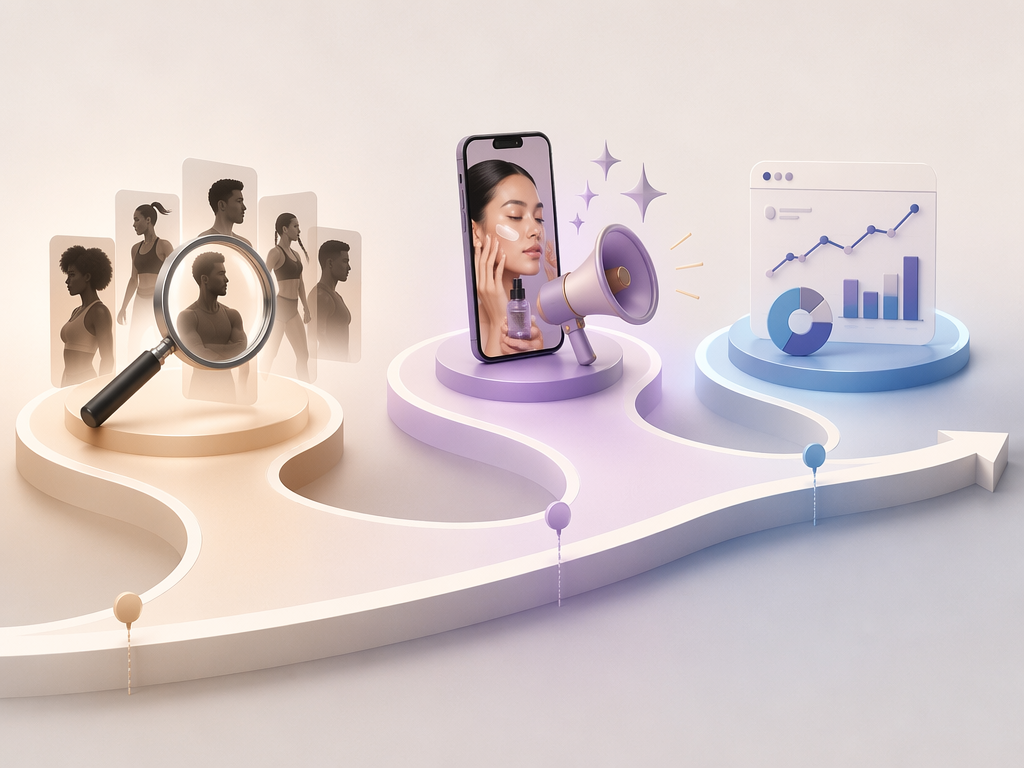
A 90-day athlete beauty challenge test can run in three overlapping motions: select athletes with credible beauty adjacency, seed the challenge-style behavior before the main reveal, and measure engagement and conversion separately. The sequence matters because athlete content usually carries more context than a standard product demo. The audience needs to understand why this person, why this product, and why now.
| Window | Primary action | What the brand is trying to learn |
|---|---|---|
| Days 1-21 | Build the athlete roster, product fit matrix, usage claims, and measurement plan. | Which athletes have enough beauty relevance, fandom intensity, and content discipline to justify paid activation. |
| Days 22-45 | Seed products, collect organic-feeling prep content, and test hooks with a small set of athlete posts. | Which settings, rituals, and product angles earn saves, comments, shares, and qualified traffic. |
| Days 46-75 | Launch the challenge-style creative mechanic with paid usage rights and secondary creator amplification. | Whether athlete-led behavior can spread beyond the contracted posts. |
| Days 76-90 | Read results by athlete tier, content format, audience segment, and conversion signal. | Whether the next budget should scale athletes, refine the concept, or return spend to traditional creators. |
Choose athletes by context, not follower count
The most expensive mistake is buying an athlete’s audience and then giving them a generic influencer script. Athlete selection should start with the product’s natural scene of use. A sweat-resistant base product needs different proof than a hair-color campaign. A nail polish launch can lean into hand visibility, tunnel fits, game-day rituals, or personality. A recovery skincare product can sit inside travel, late nights, practice, and reset routines.
- Beauty adjacency: The athlete already shows hair, nails, skincare, makeup, fashion, or self-presentation in a way fans recognize.
- Ritual credibility: The product can appear inside a real routine, not as a random object before practice.
- Audience texture: The comments show fandom, identity, and imitation behavior, not only passive admiration.
- Content reliability: The athlete can deliver usable video, respond to direction, and maintain posting cadence during training or competition.
- Brand safety and rights: The deal accounts for school, league, sponsor, team, NIL, exclusivity, and usage-right constraints before creative is approved.
Female athletes deserve particular attention in beauty planning, not as a diversity checkbox but because the market activity is already there. OpenSponsorship reports that female athletes represented 75% of athlete marketing deals in its data.[1] That deal share does not prove female athletes always outperform male athletes for beauty, but it does suggest brands are finding commercial fit in women’s sports audiences.
Design the challenge around a behavior fans can copy
A beauty challenge should not begin with “use our hashtag.” It should begin with a behavior that makes sense when repeated by athletes, teammates, fans, and regular creators. The Madison Reed example points toward naming and identity. Sally Hansen points toward visual reveal and self-expression. L’Oréal points toward polished short-form reach. None of those require a gimmick, but all of them can become more participatory if the brand designs a repeatable action.
For a hair-color brand, the mechanic might be a team-identity shade reveal, with athletes and fans showing the color language that represents their school, city, or season. For nails, it might be a game-day hand check built around color, movement, and close-up gesture. For skincare, it might be a post-practice reset where the athlete shows what comes off, what stays on, and what gets reapplied. These are hypothetical formats, but the common requirement is the same: the audience should understand how to participate without needing a paragraph of instructions.
The brand should also decide early whether it wants a formal challenge or challenge-style content. A formal challenge needs a name, participation rules, a hashtag strategy, creator briefing, moderation, and a paid amplification plan. Challenge-style content can be looser: a repeatable reveal, ritual, or prompt that multiple athletes interpret. The second option is often easier for a first test because it lets the brand learn which behavior audiences actually pick up before overinvesting in infrastructure.
Use cost tiers to keep the first test honest
OpenSponsorship’s cost guide places micro athlete sponsorships at $200 to $1,500 per post, mid-tier athletes at $1,500 to $10,000, and macro athletes at $10,000 to $50,000.[3] Those ranges are broad, but they are enough to keep a test from drifting into vague enthusiasm. A brand can model several roster shapes before contacting anyone.
| Roster shape | Best use | Budget logic |
|---|---|---|
| Micro-heavy | Testing product fit across sports, schools, cities, or beauty rituals. | Lower per-post cost creates more learning surface, but quality control and coordination take more work. |
| Mid-tier anchor | Building a recognizable creative idea around several athletes with engaged fan communities. | Balances reach, credibility, and manageable contracting for a first 90-day test. |
| Macro-led | Launching a high-visibility moment with paid media, press, and retail support. | More expensive and less forgiving; better after the brand knows which athlete beauty behavior performs. |
The average $5,147 athlete deal size reported by OpenSponsorship is useful here because it sits inside the mid-tier planning conversation.[1] A brand does not need to start with the most famous athlete in the sport. It needs enough contracted content, enough usage rights, and enough variation in athlete context to determine whether the engagement premium shows up for its own product.
Measure the athlete effect separately from the TikTok effect
The measurement plan should protect the campaign from its own best-looking posts. A 2 million-view TikTok is exciting; it is not automatically a business result. The brand should separate content diagnostics, audience behavior, and commercial signals before launch.
- Content diagnostics: View-through rate, average watch time, replays, saves, shares, comment quality, and completion by creative hook.
- Audience behavior: Follower overlap, new audience reached, fan comments, creator-to-creator responses, duet or stitch behavior if used.
- Traffic signals: Link clicks, landing-page sessions, TikTok Shop visits, code use, and email or SMS capture.
- Conversion signals: Purchases, add-to-cart rate, cost per acquisition, first-time customer share, and repeat purchase if the window allows.
- Brand lift or intent: Surveyed awareness, favorability, and purchase intent when the campaign is large enough to justify the research cost.
This is where the OpenSponsorship purchase-intent figure belongs in the proposal: as a reason to include intent measurement, not as a substitute for it.[1] If leadership asks whether athletes sold product, the answer should not be hidden inside engagement rate. The campaign needs trackable commerce paths from the beginning, even if the first test is primarily designed to validate content performance.
Where traditional beauty influencers still belong
A strong athlete program still needs beauty-native creators. Athletes can open a different door, but they may not explain shade range, ingredient feel, undertone, wear test, brush shape, or removal experience as precisely as a creator who lives in the category every day. The cleanest structure is not athletes versus influencers. It is athletes as the attention and identity layer, with beauty creators translating the product experience for shoppers who want detail before buying.
That pairing also helps with amplification. An athlete can launch the ritual. Beauty creators can test it, remix it, compare shades, show application mistakes, and answer comments. Fans can participate with lower production value. Paid media can then boost the versions that prove they can hold attention outside the athlete’s existing audience.
The budget shift should therefore be partial and explicit. Move a controlled share of influencer spend into athlete-led TikTok beauty content, define the challenge mechanic before contracting, and judge the test against both engagement and conversion signals. If the athlete cohort beats the brand’s creator benchmark on qualified engagement and shows a credible path to purchase, scale the roster. If it only produces pretty reach, keep the lesson and do not call it community.
References
- OpenSponsorship 2026 State of Athlete Marketing Report, OpenSponsorship, https://opensponsorship.com/learn-more/state-of-athlete-marketing-2027
- Beauty Brand Partnerships Are Taking Over Athlete Marketing, Out2Win, https://out2win.io/blog/beauty-brand-partnerships-are-taking-over-athlete-marketing
- How Much Does Athlete Sponsorship Cost?, OpenSponsorship, https://opensponsorship.com/blog/how-much-does-athlete-sponsorship-cost
- Beauty Brands Need 1,000-Creator Programs To Compete On TikTok Shop In 2026, Report Says, NetInfluencer, https://www.netinfluencer.com/beauty-brands-need-1000-creator-programs-to-compete-on-tiktok-shop-in-2026-report-says/
- State of Influence Index - Beauty 2026, WeArisma, https://www.wearisma.com/all-resources/state-of-influence-index-beauty/
- 32 Influencer Marketing Statistics 2026, Sprout Social, https://sproutsocial.com/insights/influencer-marketing-statistics/

Comments
Join the discussion with an anonymous comment.