

How Apple's AI marketing strategy drove its $5 trillion valuation
Apple reached a ~$5 trillion valuation despite spending just 2.5% of sales on AI capex—far less than hyperscalers. This case study analyzes the specific marketing decisions—privacy framing, human storytelling, strategic hires—that fueled that narrative, offering a transferable playbook for brand marketers navigating the AI transition.
The useful question is not whether Apple suddenly became the most technically aggressive AI company in the market. It did not. The sharper question is how a company widely read as late to generative AI could trade as if its AI future were increasingly believable while spending far less visibly on AI infrastructure than the companies trying to win through scale.
That contradiction was unusually clean by July 2026. HSBC’s methodology put Apple’s AI capital expenditure at 2.5% of 2026 sales, versus roughly 39% for hyperscalers, while the firm upgraded Apple to Buy with a $366 price target; Apple’s stock had also surged 22% in Q2 2026, according to reporting on the note.[1] At the time of research, Apple had not officially crossed a $5 trillion market capitalization. With the stock around $333-$335 in late July 2026, the point was that analyst targets from BofA, Melius, and HSBC implied a path toward that threshold, not that the company had already arrived there.[1]
That distinction matters. Valuation is not a marketing trophy, and stock price movement should not be laundered into proof that a campaign worked. Apple had enormous enabling conditions: $111 billion in Q1 2026 revenue, $133 billion in cash reserves, and 2.5 billion active devices.[2] A company with that distribution does not need the same story as a startup, and it does not face the same burden of proof. Still, those assets do not explain the whole reaction. The market also needed a reason to interpret Apple’s slower, more selective AI posture as discipline rather than drift.
Apple Sold Restraint Before It Sold AI Superiority
In most AI launch rooms, the safest-looking message is abundance: more models, more compute, more agents, more automation, more features with names that sound like they were approved five minutes before the keynote. Apple chose a more constrained route. It did not try to sound like a hyperscaler. It tried to make the absence of hyperscaler behavior feel native to the brand.
The first pillar was privacy, although “pillar” makes it sound tidier than it is. At WWDC 2026, Apple mentioned “privacy” 21 times during the keynote, according to Barron’s.[3] That repetition was not ornamental. It gave investors and customers a familiar interpretive frame for why Apple might be moving more slowly in AI: not because it lacked ambition, but because its version of AI had to fit the operating system of the brand.
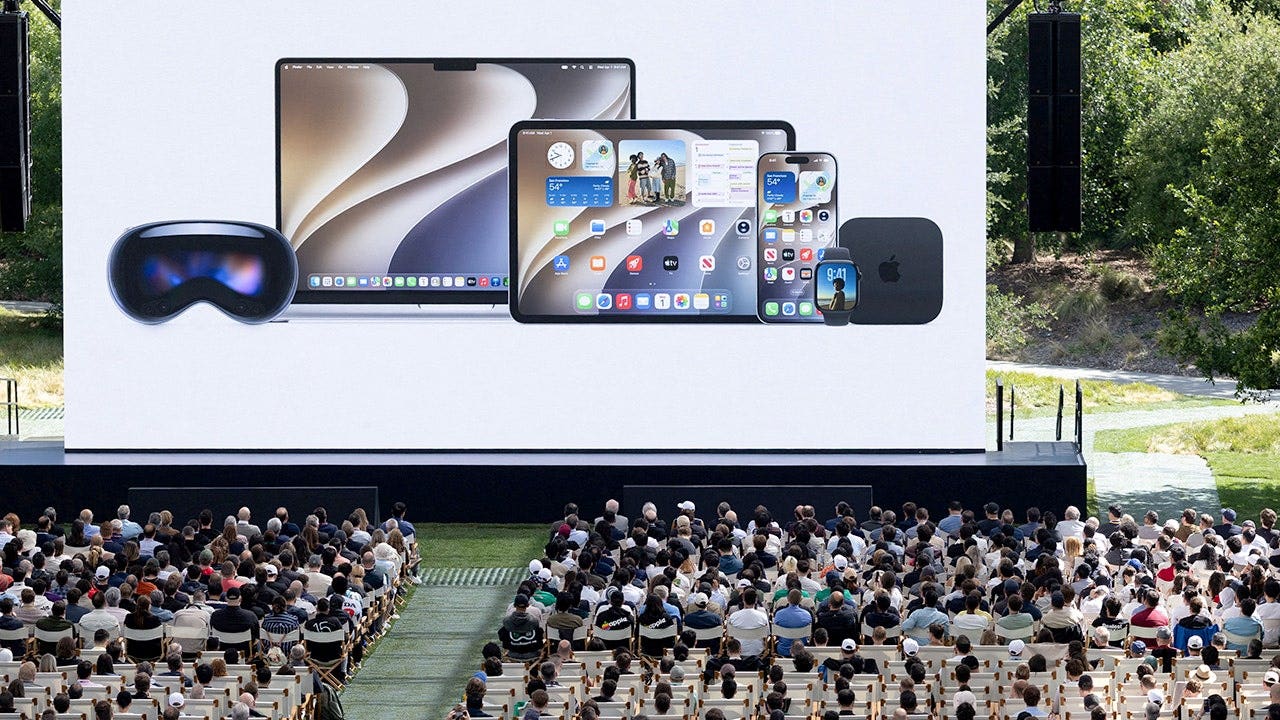
Privacy did several jobs at once. It reassured users that AI would not automatically mean handing more intimate data to distant systems. It gave developers a boundary for what Apple wanted its ecosystem to become. It also gave analysts a story that could reconcile low AI capex intensity with brand strategy. If Apple was not spending like the infrastructure giants, the message said, that was partly because Apple’s competitive claim sat closer to the device, the user relationship, and the trust layer.
This is the kind of move marketers are often asked to make after the technical roadmap has already created a disadvantage. The product is late, the comparison charts are unflattering, and the organization wants messaging to make the gap disappear. Apple did not make the gap disappear. It changed what the gap meant.
Human Creativity Was Not a Side Message
The second move was to protect Apple’s creative mythology from being swallowed by automation rhetoric. At Cannes Lions in 2025, Apple VP of Marketing Communications Tor Myhren said, “AI won’t save advertising,” a line reported by Marketing Brew in coverage of his appearance.[4] The quote worked because it refused the easiest industry posture of the moment: pretending every creative problem could be solved by adopting the newest model.
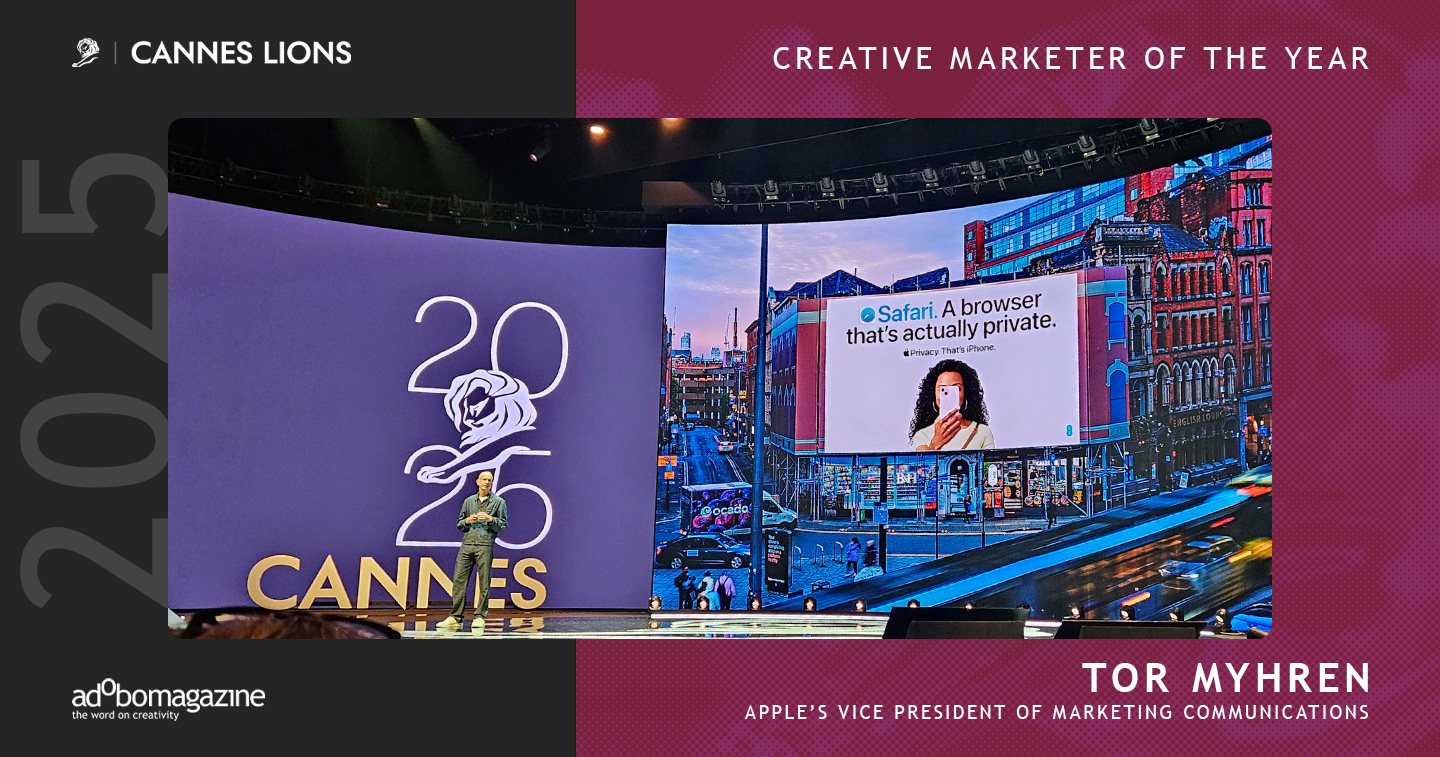
That mattered because Apple’s brand value has never come only from technical capability. Kantar BrandZ put Apple’s 2025 brand value at $1.3 trillion, up 28% year over year, making it the only trillion-dollar brand in that ranking and accounting for 12% of the top 100 brands’ total value.[4] A brand with that much symbolic capital has something to lose if it starts speaking like every other AI vendor.
The Cannes message did not deny AI’s usefulness. It drew a boundary around what Apple wanted to be admired for. The company could integrate AI into phones, assistants, apps, and workflows without telling artists, filmmakers, designers, and agencies that machines were now the hero of the story. For a company whose advertising has long treated creative people as protagonists, that restraint was not nostalgia. It was brand continuity under technological pressure.
This is where Apple’s AI marketing strategy became more interesting than another privacy campaign. Privacy explained why Apple would not behave like a data-maximizing AI platform. Human creativity explained why Apple would not behave like a company eager to replace the people who historically made its products desirable. Together, those messages made a narrower technical story feel emotionally and commercially coherent.
The Gemini Partnership Needed Narrative Control
Partner reliance is usually where “strategic discipline” starts to look like dependency. If a company has to lean on another company’s model, especially in a category as status-heavy as generative AI, the market can read that as a concession. Apple’s handling of its Gemini relationship tried to prevent exactly that reading.
Arcadian Digital’s analysis described the Gemini partnership as being framed around user choice and expanded capability rather than as a technical concession.[5] That framing is doing more work than it first appears. “We are giving users access to more capability” is a very different market sentence from “we could not build enough ourselves.” The underlying fact may still contain dependency, but the commercial meaning changes.
There is a lesson here that is easy to overstate. Messaging cannot make a weak partnership strong. It cannot turn another company’s model into your moat. But it can decide whether the partnership enters the market as an apology, a bridge, or a deliberate architecture of choice. Apple chose the third.
The harder tension is Google. Apple’s reported $20 billion-per-year search deal with Google means Apple profits substantially from the data-driven advertising economy it often positions itself against.[6] That does not invalidate Apple’s privacy message, but it does make the message more delicate. Apple is not operating outside the data economy; it is trying to own the higher-trust interface above it.
Hiring Made the Story Operational
The most underrated signal was not a keynote line. It was an org chart move. In March 2026, Apple hired Lilian Rincon, formerly associated with Google Shopping and Google Assistant, as its first VP of Product Marketing for AI, according to reports on the appointment.[7] That role said something Apple’s public messaging could not say by itself: AI positioning had become a dedicated product marketing function, not a temporary communications problem.
For marketers, this is the difference between a narrative and a system. A narrative lives in launch copy, executive quotes, and analyst briefings. A system changes who sits in product reviews, who arbitrates naming, who decides which capabilities are ready to promise, and who keeps partner messaging from undermining brand control. The Rincon hire was evidence that Apple recognized AI marketing as its own strategic discipline.
That recognition matters because AI is unusually good at creating incoherence. Product teams ship features at different levels of readiness. Legal teams worry about data exposure. Brand teams worry about sameness. Sales teams want proof points. Executives want to avoid sounding behind. Without a dedicated function tying those pressures together, AI messaging tends to become either vague reassurance or feature sprawl.
| AI pressure | Apple’s marketing response | What the response changed |
|---|---|---|
| Lower visible AI infrastructure spend | Repeated privacy as a core AI condition | Made restraint look consistent with the brand rather than merely late |
| Fear that AI would commoditize creativity | Defended human storytelling at Cannes | Protected Apple’s creative identity while still leaving room for AI features |
| Dependence on external models | Framed Gemini as user choice and expanded capability | Shifted the partnership from weakness toward optionality |
| Need to prove AI was not just launch messaging | Created a dedicated AI product marketing leadership role | Turned the narrative into an organizational responsibility |
Why the Market Could Accept the Story
The valuation story only works because Apple’s narrative sat on top of a business that could plausibly monetize even incremental AI improvements. BofA projected that a Siri AI upgrade could generate $65 billion in additional revenue by 2030 and roughly $2 billion more earnings over four years, according to reporting summarized by Intellectia.ai.[1] That is not proof that Apple’s marketing created the revenue. It is evidence that analysts could imagine AI improvements flowing through an installed base large enough to matter.
The device footprint is the enabling fact. With 2.5 billion active devices, Apple does not need every AI interaction to become a separate product line.[2] A better Siri, more useful on-device intelligence, stronger app-level AI hooks, and smoother cross-device behavior can show up as retention, upgrade motivation, services attachment, and ecosystem stickiness. Those are less dramatic than building frontier infrastructure, but they are very legible to investors who already understand Apple’s economics.
This is also why the capex comparison is powerful but should be handled carefully. HSBC’s 2.5% versus 39% comparison reflects its methodology, not Apple’s own definitive classification of AI investment.[1] It is a market signal about visible investment intensity. It does not mean Apple is spending almost nothing on AI, and it does not mean hyperscaler spending is wasteful. It shows that Apple was being evaluated on a different strategic theory.
That theory had three parts. Apple had the cash to wait, the device base to distribute, and the brand permission to define AI as personal, private, and assistive rather than maximalist. The marketing job was to make those conditions visible enough that lower infrastructure spending did not read as a lack of seriousness.
What Marketers Should Take From Apple’s AI Valuation Story
The wrong lesson is that companies can spend less on AI if they tell a better story. Most cannot. Apple’s story was believable because it had cash, distribution, services economics, deep customer trust, and a long-standing brand association with controlled experiences. Without those conditions, restraint can look like evasion.
The transferable lesson is narrower and more useful: in an AI transition, the market punishes incoherence faster than it punishes selectivity. If a company cannot win by infrastructure scale, it needs a credible reason for choosing a different battlefield. That reason has to show up in product language, executive language, partner language, hiring, and investor framing. One campaign cannot carry it.
Apple’s advantage was not that every AI proof point was stronger than competitors’. It was that the proof points pointed in the same direction. Privacy made selective investment understandable. Human creativity kept the brand from sounding like an automation vendor. The Gemini framing reduced the reputational cost of partner reliance. The Rincon hire suggested the company was building a permanent muscle around AI product marketing. Analyst projections then had a narrative container in which delayed capability could still become future cash flow.
That is the real case study. Apple’s AI marketing strategy did not magically create a $5 trillion valuation, and at the time of research the company was still approaching or projected toward that mark rather than officially across it. What the strategy did was make Apple’s slower AI path feel intentional enough for investors and customers to keep believing in the next curve of the business.
References
- HSBC July 2026 analyst note and BofA Siri AI projection reporting, Intellectia.ai, July 2026.
- Apple Q1 2026 revenue, cash reserves, and active device base reporting, Apple Newsroom, 2026.
- WWDC 2026 privacy messaging coverage, Barron’s, 2026.
- Tor Myhren Cannes 2025 comments and Kantar BrandZ 2025 Apple brand value coverage, Marketing Brew, 2025.
- Gemini partnership analysis, Arcadian Digital, 2026.
- Google pays Apple $20 billion a year for search placement reporting, Bloomberg, 2024.
- Lilian Rincon AI product marketing hire reporting, Bloomberg, March 2026.

Comments
Join the discussion with an anonymous comment.