
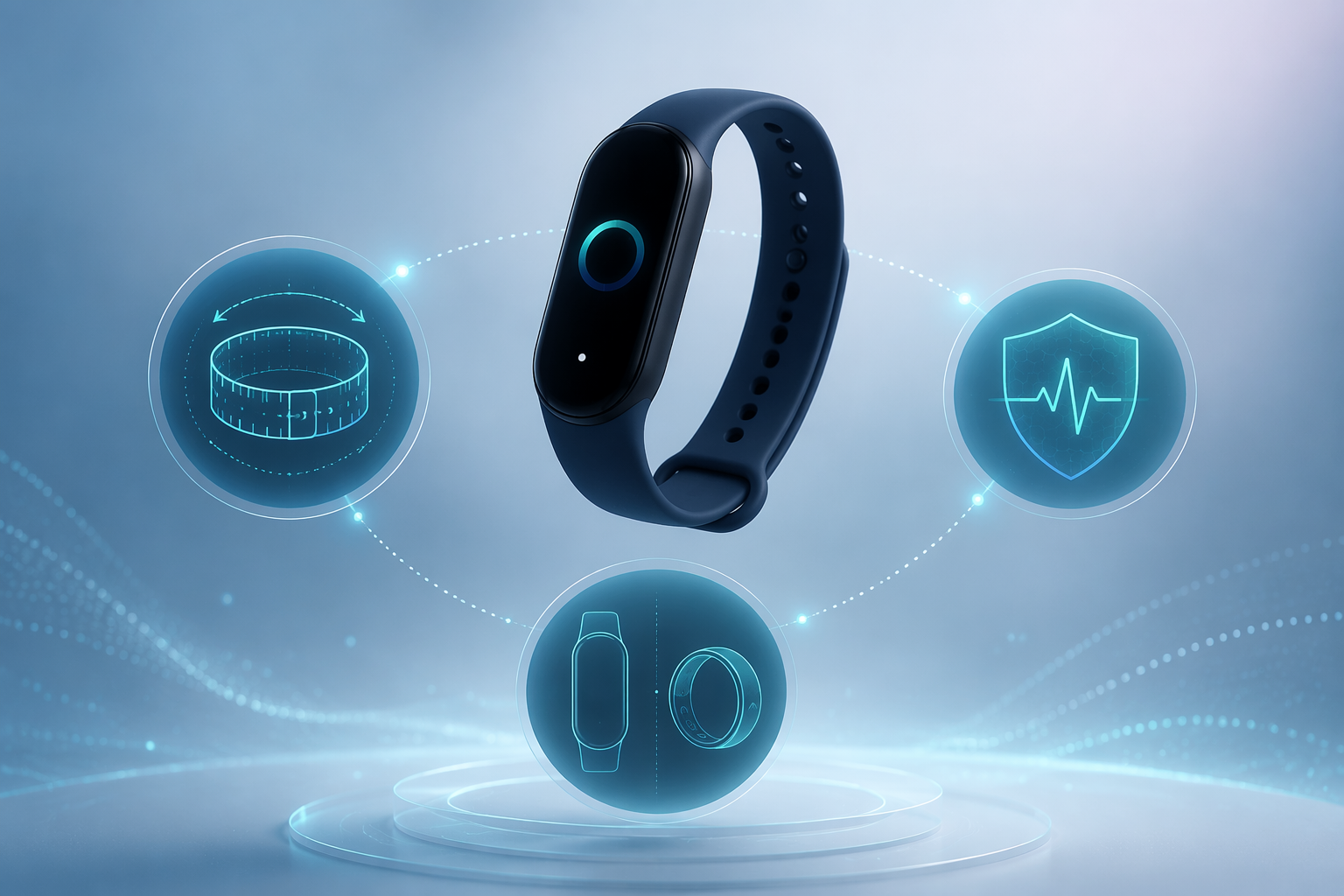
A Step-by-Step AI Playbook for Smart Band Launches
A tactical guide showing how to integrate AI across the full smart band launch lifecycle — predictive audience segmentation before launch, AI-powered community seeding on launch day, and retention automation post-launch — using 2026 market data from IDC and Circana plus benchmarks from agency case studies.
The launch window is crowded before the first ad goes live
IDC says 145.7 million wearable units shipped in Q1 2026 and still projects only 2.6% CAGR through 2030, which is what a crowded category looks like when launches keep arriving faster than buyers can sort them out [1]. Circana’s Jan–Jul 2025 U.S. retail tracker adds the sharper warning: it covers U.S. retail only, not the global market, yet fitness tracker spending was up 88% year over year, smart rings were up 195% year over year, and rings accounted for 75% of tracker revenue versus 46% a year earlier [2]. For a smart band launch, the problem is not raw awareness. It is making the band legible enough that the shopper does not buy the wrong form factor, doubt the health language, or drop off at the sizing step.
AI has to map to the friction, not just the calendar
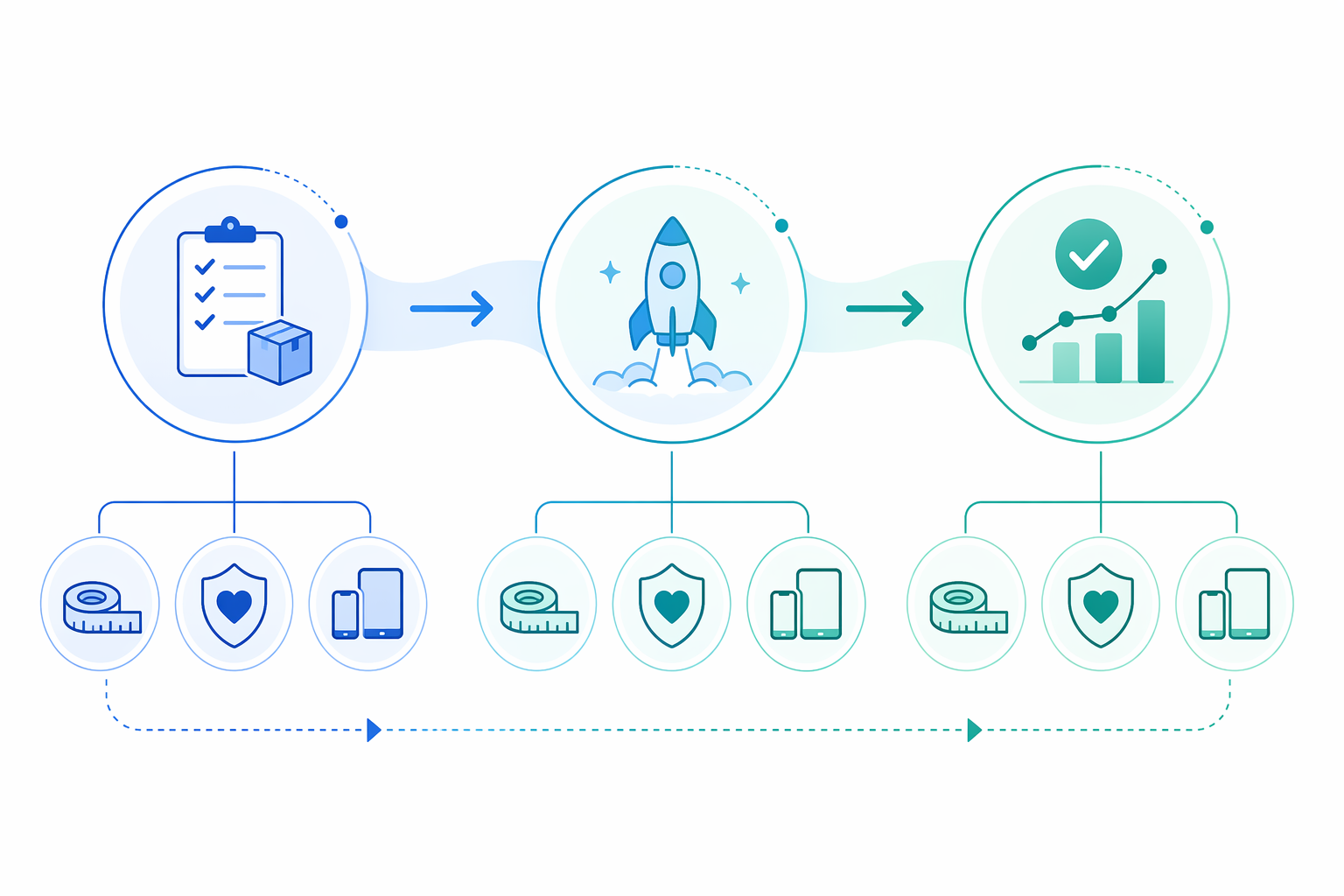
The cleanest way to plan AI marketing for a smart band launch is to treat AI as a sequence of problem solvers across the launch cycle. Each phase should answer a different hesitation: who is most likely to buy this band, how do we show fit before checkout, how do we explain health outputs without overclaiming, and how do we stop post-purchase confusion from turning into returns or support backlog.
| Phase | What AI should do | What it removes | Risk to avoid |
|---|---|---|---|
| Pre-launch | Score likely buyers, predict which creative variants will resonate, and tailor landing-page proof points by audience segment. | Wasted spend, wrong-click traffic, and early confusion about who the band is for. | Do not optimize only for clicks. |
| Launch day | Route community posts, FAQs, and creator content by question type; surface sizing-confidence and comparison content fast. | Comparison paralysis and “what is this actually better than?” hesitation. | Do not let AI improvise health claims. |
| Post-launch | Detect onboarding drop-off, claim misunderstanding, comfort complaints, and support triggers; route users to the right education or human help. | Support overload, avoidable returns, and quiet churn. | Do not use automation as a substitute for product fixes. |
Pre-launch is where predictive targeting earns its budget
Blazon Agency’s 2025 product launch report says AI-driven predictive targeting delivered up to 36% higher conversion rates in early launch phases and 30% faster market adoption [3]. First Launch’s 2026 AI marketing report adds 22% higher ROI, 32% more conversions, and 29% lower CAC [4]. Those numbers are directionally useful, but they come from different agency methods and baselines, so they should be read as evidence that better audience modeling and creative testing can matter, not as guarantees that any single smart band launch will replicate them.
This is also where a 42DM-style demand-generation structure helps, as long as it is adapted to the product reality [5]. For a smart band, the point of segmentation is not to make a prettier media plan. It is to separate buyers who care about comfort, buyers who care about recovery data, and buyers who are still deciding whether a band or a ring is the better fit for their wrist, routine, and budget. That gives the launch team a practical way to vary creative, proof points, and landing-page messaging without drifting into generic personalization.
The useful work here is straightforward: test audience-model outputs against the actual objections that appear in sales calls, pre-order questions, and site behavior. If one segment keeps asking whether the device is comfortable enough to wear all day, the creative should answer that directly. If another segment keeps comparing the band with a ring, the ad and landing page should explain the difference before the shopper has to do it alone. AI is most valuable here when it reduces the number of people who reach checkout with the wrong expectation.
Sizing confidence has to show up before checkout
Oura’s marketing use of AR try-on and sizing-confidence content shows how a physical hesitation can be translated into a digital proof point before purchase [6]. That transfer matters for smart bands because fit is not a decorative detail. A shopper who is unsure about comfort, width, or wrist feel is not asking for more brand poetry; she is asking whether this device will be tolerable after the first week. The best use of AI in that moment is not a bigger claim. It is better creative variants, cleaner comparison pages, and sizing content that makes the device legible on a real wrist.
That is also why launch messaging should stay practical about form factor. Circana’s revenue shift toward smart rings is not a reason to copy ring marketing. It is a sign that the buyer is actively weighing categories, which means the band launch has to explain why a band is the right shape for this person’s routine. If the market is already confused, the campaign should reduce the ambiguity rather than pretend it does not exist.
Launch day should route questions, not improvise promises
Launch-day community seeding works best when it answers the questions buyers are already asking: how does it fit, what do the health scores mean, and why choose a band instead of a ring. That usually means the same approved explanations need to show up across creators, social posts, paid placements, and support macros so the message does not fragment the minute traffic spikes. AI is useful here as a routing layer. It can match a shopper’s intent to the right explanation quickly, but it should not be asked to invent the explanation from scratch.
The health-claim line matters most in this phase. A smart band team can use AI to personalize education around sleep, recovery, or readiness, but the model should stay inside approved language and should never be the source of new medical certainty. The value is in helping more people understand what a score means and when to escalate a question to human support. That is a much more durable launch-day win than squeezing another point of CTR out of vague benefit copy.
Post-launch retention carries the same frictions forward
Post-launch automation should watch for the same frictions that hurt the first sale. If onboarding drops off, if a user keeps opening the help center around the same claim, or if comfort complaints start to rise, the system should route that person toward clearer education or a human response before the issue becomes a return or a public complaint. That is where retention stops being a CRM abstraction and becomes a protection layer for the launch itself.
Oura’s women’s health AI model, introduced in February 2026, and WHOOP Coach on GPT-4 in May 2026 show the useful version of AI-assisted health guidance: it stays bounded, it helps users interpret the device, and it does not pretend to replace regulated medical claims or professional judgment [7][8]. For a smart band team, the lesson is narrow but important. Let AI explain, summarize, and triage. Do not let it drift into diagnosis, invented benefits, or comfort promises that the product cannot keep.
That discipline is what separates a useful launch system from a hype cycle. AI earns its place when it helps the buyer choose the right device, trust the claims attached to it, and keep using it after the novelty fades. Once it is being used as a shortcut around fit, clarity, or compliance, it stops being launch infrastructure and becomes another source of confusion.
References
- IDC Q1 2026 wearable shipment data
- Circana fitness tracker and smart ring spending tracker, Jan–Jul 2025
- Blazon Agency 2025 product launch report
- First Launch 2026 AI marketing report
- Blazon Agency 42DM demand-generation framework
- Brand Vision analysis of Oura’s marketing strategy and AR try-on
- The Momentum coverage of Oura’s women’s health AI model, February 2026
- The DataStory coverage of WHOOP Coach on GPT-4, May 2026

Comments
Join the discussion with an anonymous comment.