
Why AI Merchandise Backlash Follows a Predictable Pattern
AI merchandise controversies are not random. This article identifies a predictable pattern—brand identity, product tangibility, quality failures, and internal dissent—that explains when and why backlash occurs, and why disclosure alone rarely neutralizes it.
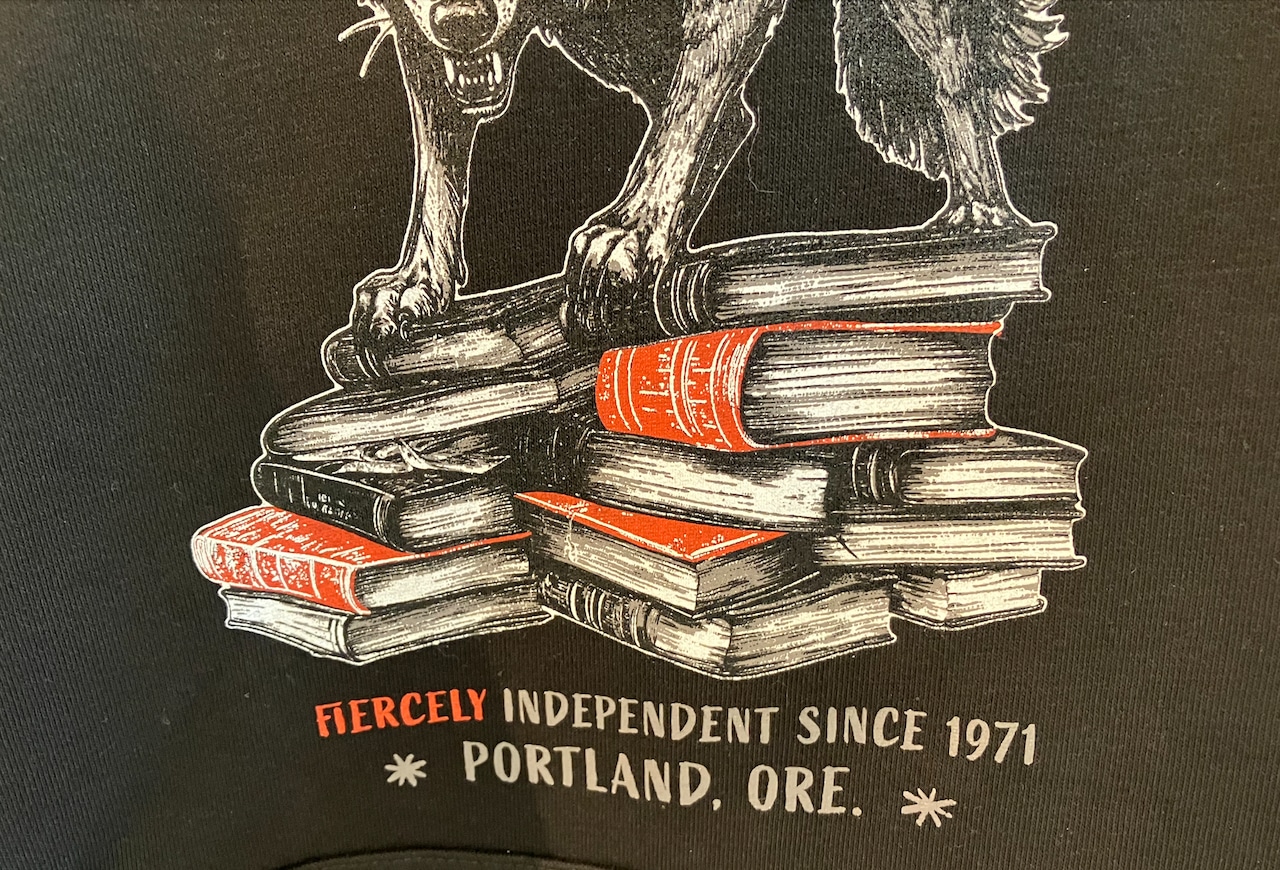
Powell’s Books did not step into the AI merchandise controversy with a faceless one-click gimmick. The Portland bookstore hired a local artist for T-shirt designs. The problem was that the artist used Adobe AI tools, the shirts went on sale, and the community that cares most about books, illustration, labor, and cultural credibility started inspecting the artifact in front of them. Within hours, customers on Reddit were pointing to visual tells they believed came from AI assistance: distorted bodies, odd proportions, and the general texture of an image that looked less drawn than assembled.[1][2]
That is the first marketing implication hiding inside the Powell’s case: AI merchandise is not judged like a temporary social post. A shirt sits on a rack. A customer can pick it up, zoom in with their eyes, compare it with what the brand usually celebrates, and decide whether the object belongs in that world. For a bookstore known for human authorship, independent literary culture, and local creative identity, the question was never only whether AI had been disclosed. It was whether the product contradicted the role customers thought Powell’s played.
The backlash became harder to dismiss because employees had reportedly seen the issue coming. ILWU Local 5 said Powell’s workers had raised concerns about AI-assisted merchandise for months and had been ignored. The union framed the objection in terms that should make any brand manager pause: “a company whose entire business model is dependent on human creativity should be safeguarding against any technology that exploits, devalues or displaces it.”[1][2]
That line matters because it moves the incident out of the familiar bucket of internet pile-ons. This was not simply a dispute over taste. It was a governance failure visible at retail scale: the people close enough to the brand promise to notice the contradiction said they warned leadership before customers did. By the time the public explanation arrived, the story had already become larger than a few awkward figures on a shirt.
The Powell’s problem was brand fit before it was image quality
There is a tempting, comfortable reading of the Powell’s controversy: the design was not polished enough, the AI use was not handled clearly enough, and better process would have kept the shirt from becoming a story. Some of that is true. Visible defects gave customers something concrete to point at. The artist’s use of AI tools gave critics a cleaner target. The delayed public reckoning made the company look reactive.
But image quality was only the surface. The deeper risk came from a mismatch between what Powell’s sells commercially and what it represents culturally. A bookstore does not merely sell bound paper. It benefits from the belief that writing, editing, illustration, bookselling, and reading are human creative acts worth protecting. When that kind of brand sells AI-assisted merchandise, the product is read as a small policy statement, even if no one in marketing intended it that way.
The local artist credit did not solve the problem because the objection was not only “who made this?” It was also “what production logic is this company normalizing?” The shirt collapsed several anxieties into one object: labor displacement, artistic devaluation, synthetic-looking output, and a beloved cultural institution appearing casual about all three.
That is why this case is more useful than a generic warning about AI marketing backlash. It shows the sequence marketers need to test before launch: the brand identity sets expectations, the merchandise makes the AI decision ownable, visible flaws make the decision undeniable, and internal dissent turns the launch from a creative judgment into a leadership judgment.
AI ad backlash is a useful contrast, not the same category
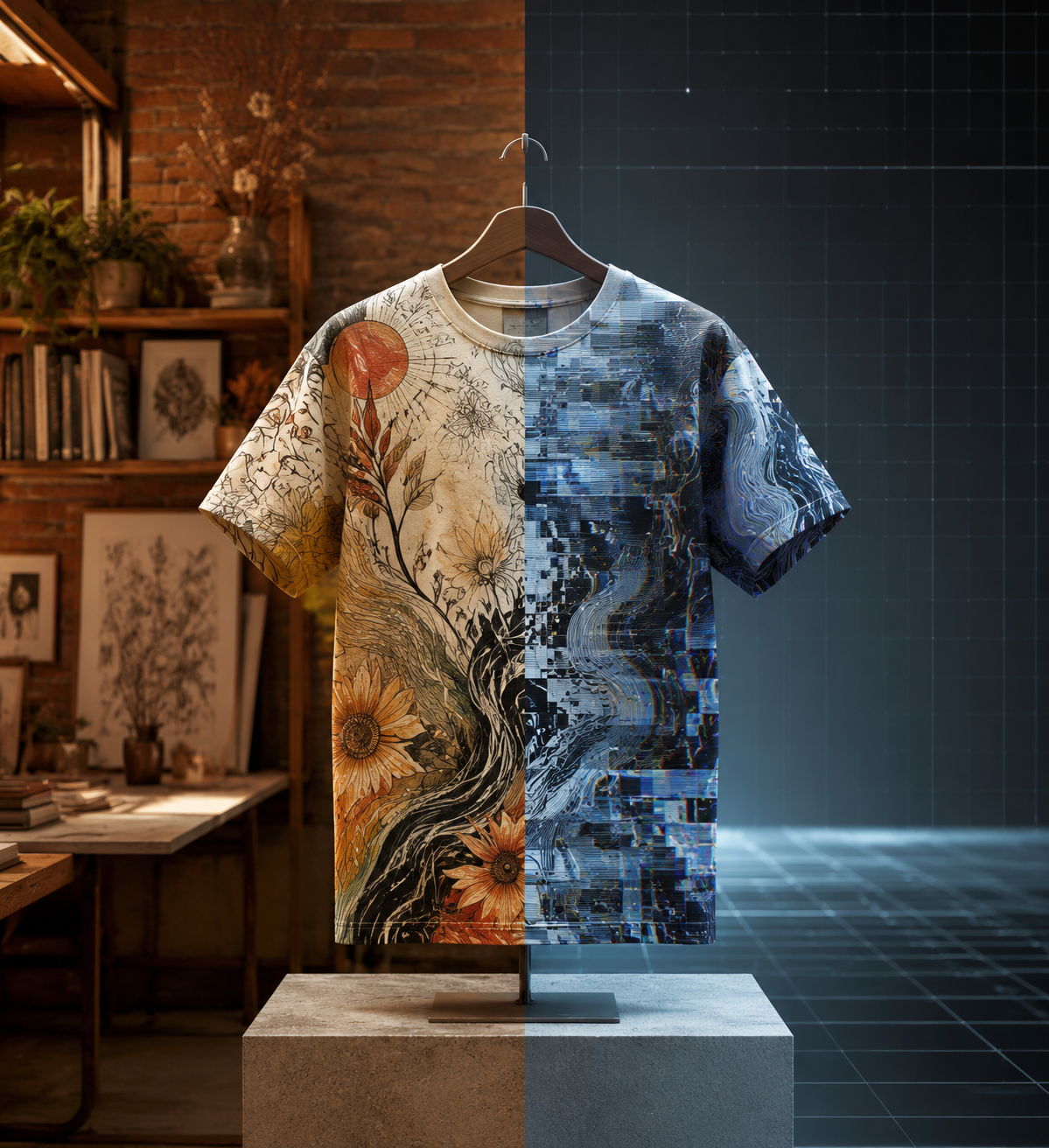
Most of the better-known AI creative flare-ups have involved advertising, not merchandise. That distinction is not a settled research finding; it is an operating pattern visible across recent cases. Ads can still damage trust, especially when they come from brands associated with craft or emotion. But an ad usually passes through a feed, a screen, or a campaign cycle. Merchandise asks the customer to buy the decision, wear it, gift it, keep it, and let it stand in for affiliation.
Gucci shows the creative-company paradox clearly. In early 2026, AI visuals connected to Milan Fashion Week were criticized as “cheap” and “lazy,” language that cut directly against a luxury house built on Italian craftsmanship.[4] The complaint was not just that AI appeared in a fashion context. It was that a brand whose margin depends on the aura of skilled human making seemed to be reaching for a shortcut in the very place where craft is supposed to be most visible.
Valentino adds a second lesson: disclosure is not a force field. Its December 2025 AI-generated DeVain handbag video was clearly labeled as AI, yet backlash still followed.[5] A label can prevent one kind of deception claim. It cannot make the audience admire the choice. If people believe the brand’s value comes from human taste, hand, and judgment, “AI-generated” may function less like transparency and more like an admission.
Coca-Cola’s holiday ads show the limits of staffing and technical improvement. The 2024 AI holiday ad involved five AI specialists generating about 70,000 clips and roughly 100 staff, yet critics still called the result “soulless” and “creepy.” A 2025 version was technically improved but continued to draw criticism.[6] That case is not a merchandise example, and the distinction matters. Still, it is a useful warning against assuming that more people, more renders, or smoother motion automatically resolves the audience’s underlying objection.
The shared pattern is not that every consumer hates every use of generative AI. The shared pattern is narrower: when AI is visible in a context where the brand has taught customers to value human imagination, the audience often judges the production method as part of the message. A luxury campaign, a handbag video, a holiday ad, and a bookstore T-shirt do not carry the same risk profile. But they all expose the same weak approval habit: treating AI as a production detail after the brand has made human creativity part of the product promise.
Why merchandise raises the stakes
A campaign image can be forgotten. A shirt is inventory. It has a SKU, a price, a return path, a staff member at the register, and a customer who may have bought it as an expression of loyalty. That physicality changes the review standard.
For marketing teams, the practical difference is uncomfortable but simple. Merchandise turns brand values into an object that can be audited by the public. If the artwork contains warped anatomy, illegible details, suspicious repetition, or other AI tells, the quality issue does not remain inside a creative review deck. It becomes part of the thing the customer paid for.
| Approval question | Why it matters more for merchandise |
|---|---|
| Does the brand depend on human creativity for trust? | Customers may treat AI use as a contradiction rather than a production choice. |
| Will the customer own or wear the output? | The product becomes a lasting artifact, not a passing impression. |
| Are AI tells visible at normal inspection distance? | Defects give critics concrete evidence and make explanations less persuasive. |
| Have employees, artists, or community stakeholders objected? | Ignored warnings turn a creative risk into a governance story. |
| Would disclosure improve trust or simply confirm the concern? | Transparency helps only if the underlying choice still fits the brand. |
This is where internal dissent deserves more weight than many approval processes give it. Staff, artists, store teams, and loyal customers often understand symbolic risk earlier than leadership because they are closer to the brand’s daily social contract. They hear the jokes, the hesitation, the small betrayals people mention before they become public posts. If those groups object before launch, the useful response is not to file the concern under resistance to innovation. It is to ask what they know about the audience that the production plan is missing.
The trust climate is already unfavorable
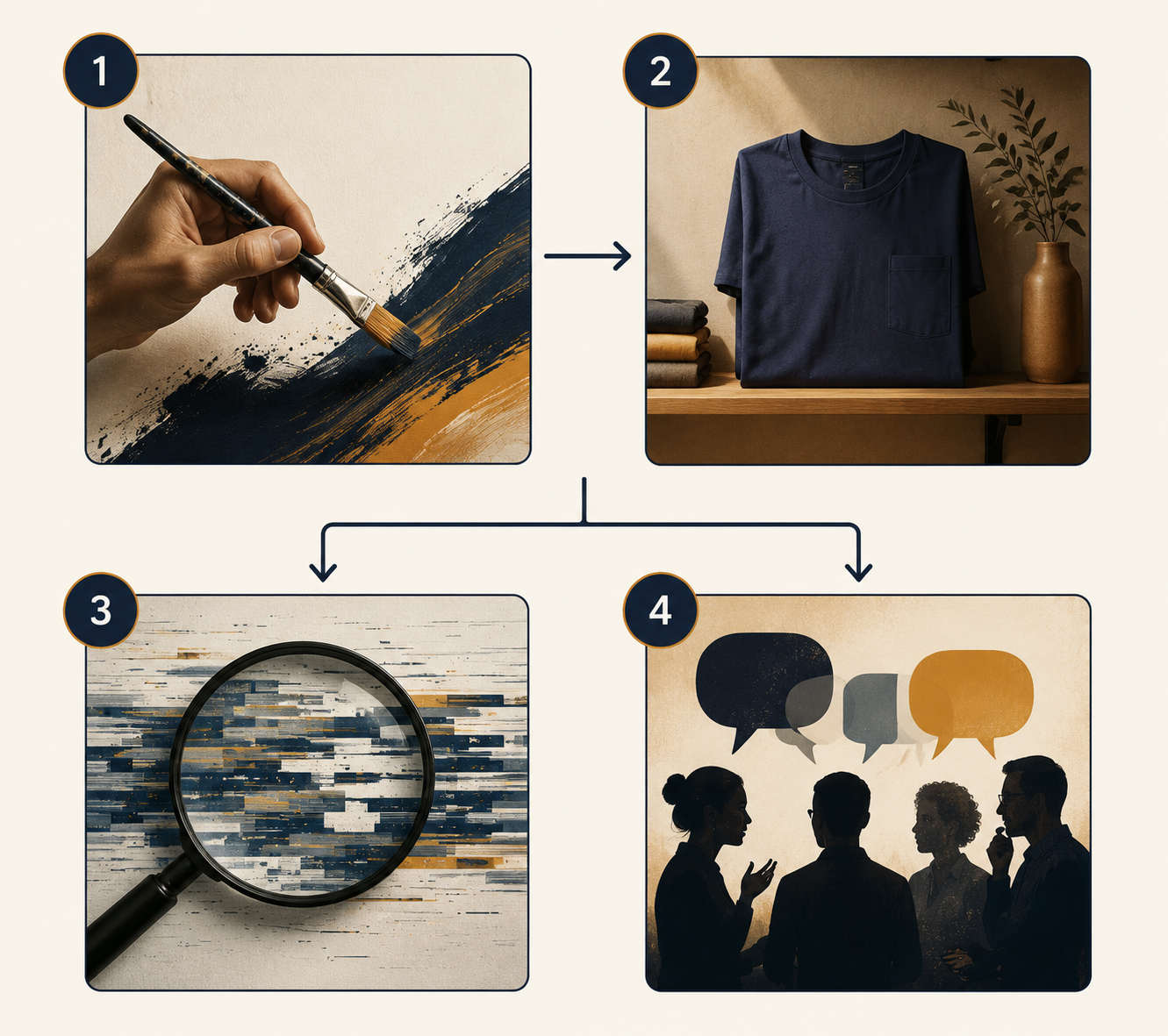
The broader data does not prove that any specific AI-assisted merchandise launch will fail. It does show that visible AI in consumer-facing creative starts from a trust deficit. In a December 2025 Klaviyo and Datalily survey of 8,000 consumers, only 7% said they trusted brands more for visible AI-generated marketing, while 31% said they trusted them less.[7]
Gartner’s 2026 findings point in the same direction. In March 2026, Gartner reported that 50% of consumers preferred brands to avoid using generative AI in consumer-facing content. In June 2026, Gartner reported that 49% of consumers said generative AI had worsened content quality.[8][9] These numbers measure attitudes and perceptions, not guaranteed buying behavior. Still, they describe the room marketers are walking into: suspicion is already present before the product appears.
That matters because a brand does not get to introduce its AI use on neutral ground. Customers may arrive primed to look for shortcuts, sameness, errors, or disrespect toward creative labor. If the object then gives them evidence, the brand’s explanation has to work against both the artifact and the climate around it.
This is also why “we used humans too” is a weaker defense than many teams expect. Coca-Cola’s holiday ad involved substantial staffing, and it still drew “soulless” and “creepy” criticism.[6] Powell’s hired a local artist, and the local artist credit still did not contain the backlash.[1][2] The public often judges the final relationship between brand, method, and output, not the internal labor chart.
Disclosure answers the wrong question if brand fit is broken
Disclosure is still necessary in many contexts. It can prevent consumers from feeling tricked. It can clarify the role of an artist, agency, model, or tool. It can also keep legal, platform, and partner discussions from becoming worse than they need to be.
But disclosure does not answer the question that drives the harshest reactions: why did this brand choose this method for this object? Valentino’s labeled AI video still faced backlash.[5] Powell’s local artist relationship did not eliminate the concern that a bookstore had allowed AI-assisted work into branded merchandise.[1][2] Once the audience believes the method conflicts with the brand’s stated or implied values, the label can make the contradiction easier to identify.
A better approval conversation separates four issues that are too often blended together:
- Disclosure: Will customers know where AI was used, and will that knowledge feel honest rather than grudging?
- Quality control: Can the work survive close inspection by people who are motivated to find AI tells?
- Stakeholder review: Have employees, artists, unions, community partners, or loyal customers raised objections that leadership has not resolved?
- Brand fit: Does the use of AI make sense for the role customers believe the brand plays in culture?
Only the first item is solved by a label. The others require judgment before the product is approved, not messaging after the screenshots start circulating.
A practical risk frame for AI-assisted merch
For teams already using AI in ideation, mockups, personalization, or production workflows, the point is not to ban the tool. It is to stop approving merchandise as if the audience will evaluate only the finished visual. They will also evaluate what the method says about the brand.
The highest-risk launches tend to combine four conditions. The brand depends on human creativity for its authority. The AI-assisted output becomes a tangible product customers buy or wear. The work contains detectable quality failures. People close to the brand raise concerns before or during launch. Powell’s had all four conditions in view, which is why the controversy carried more force than a routine design complaint.
A lower-risk use case would look different. For example, a hypothetical operations team might use AI to generate internal layout options for a staff-only event shirt, then commission a human illustrator for the final artwork and run stakeholder review before production. That example is not a claim that such a process is automatically safe. It shows the difference between using AI as a hidden accelerator in a controlled workflow and placing AI-visible creative labor at the center of a product customers are asked to value.
Marketing teams that want a broader operating model for AI can connect this merchandise review to existing work on brand voice and ROI, such as keeping AI marketing content from blending in and building an AI marketing ROI stack. The merchandise question adds a harder approval layer: even if AI saves time or money, does the saving show up in a place where customers expected care?
Before shipping AI-assisted merchandise, the final approval question should be blunt: if customers treat this product as evidence of what the brand values, are disclosure, quality control, stakeholder review, and brand fit strong enough to survive that reading?
References
- Powell’s Books faces backlash for AI-assisted merch designs, sparks union concerns, KATU
- AI Use In Famous Bookstore’s Merch Sparks Controversy, PPAI
- Everything you need to know about the Powell’s AI slop snafu and what we can all learn from it, Literary Hub
- AI Image Brand Backlash, Rolling Stone
- When Consumers Rage Against AI Imagery, The Cut Fashion Academy
- AI as a UX Assistant: Lessons from Coca-Cola’s AI Holiday Ads, Nielsen Norman Group
- Consumer Trust in AI, Klaviyo
- Half of consumers prefer brands don’t use generative AI, CX Dive
- Shoppers aren’t impressed by AI-generated marketing, eMarketer

Comments
Join the discussion with an anonymous comment.