
Why AI-Driven Labor Strikes Are a Marketing Problem Now
The 2024–2026 wave of AI-related labor strikes has turned automation decisions from operational issues into brand-reputation crises. This article explains why marketing leaders must factor labor sentiment, consumer backlash risk, and strike timelines into AI rollout plans, backed by recent data and case examples.
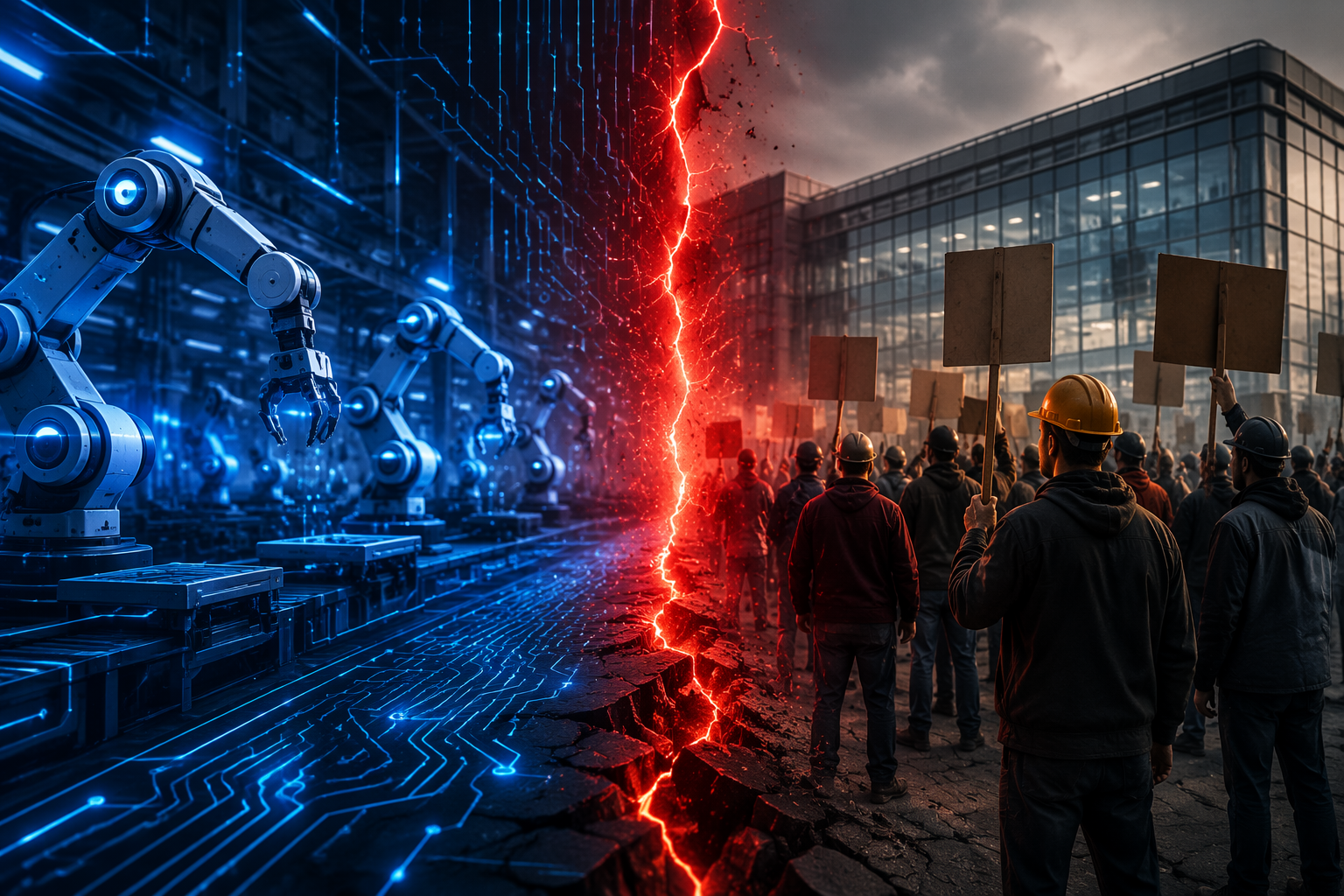
Automation becomes a marketing problem the moment workers, customers, or the press can point to a visible human function being replaced and ask whether the company has already made up its mind. That is what changed between 2024 and 2026. AI and robotics moved out of procurement decks and pilot-team language and into strike votes, picket lines, customer-service queues, and brand narratives about who gets removed from the experience.
The signals arrived close together. Video game performers in SAG-AFTRA ended an 11-month strike in July 2025 after members ratified, by 95%, a deal requiring consent, disclosure, and compensation when AI is used to replicate performances.[1] Dockworkers at major East and Gulf Coast ports shut down 14 ports in October 2024, with automated gate systems sitting at the center of a dispute affecting ports that handled more than half of U.S. containerized cargo.[2] Meanwhile, 71% of Americans told Reuters/Ipsos in 2025 that they feared AI would put too many people out of work permanently, and Gallup found in 2024 that three out of four Americans were concerned about automation-driven job loss.[3]
That does not mean every AI rollout is a labor crisis. It does mean the public timeline has changed. A company may believe it is announcing modernization, resilience, or better service coverage. Workers and customers may hear replacement. Once that interpretation takes hold, marketing is no longer polishing an operations decision. It is defending the perceived intent of the business.
The Strike Risk Is Now Part Of The Launch Calendar
The SAG-AFTRA video game actors’ strike matters because it did not end with a vague assurance that AI would be used responsibly. It ended with a negotiated structure: consent, disclosure, and compensation for AI performance replication.[1] For marketing teams, that is the useful part. The settlement translated a fear into operating terms. Who agrees? Who is told? Who gets paid when a human performance becomes reusable synthetic material?
Those questions are not limited to actors. A customer-service voice, a product demo script, a sales training library, warehouse workflow data, design work, troubleshooting transcripts, or technician expertise can all become training material, automation input, or synthetic output. The legal and contractual answers will vary by industry. The brand question is more consistent: can the company explain whose work is being transformed, who had a say, and what the company believes it still owes the people whose skill made the system useful?
The port strike is a different kind of warning. It was not primarily about a consumer-facing chatbot or a visible content replica. It was infrastructure. Yet automation still became public, political, and reputational because the operational change was tied to jobs, bargaining power, and national logistics.[2] Automated gate systems may sound like an internal efficiency issue until cranes are idle, cargo is delayed, and the public story becomes a fight over whether companies are using technology to reduce the role of union labor.
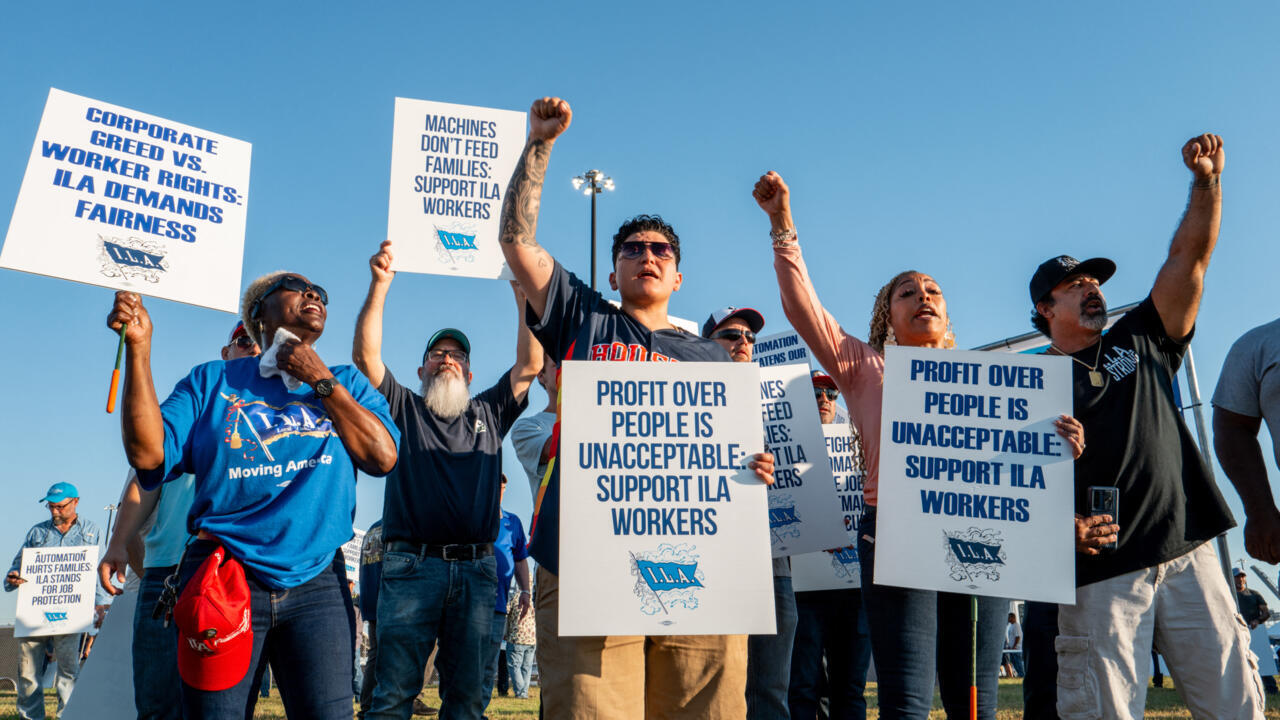
This is where the marketing implications of AI and robotics labor disputes become concrete. The marketing team needs to know more than the announcement date. It needs to know whether a union has already raised objections, whether employees discovered automation before leadership disclosed it, whether the pilot affects a symbolically important role, whether customers will encounter the change before staff can explain it, and whether the company has evidence that the system improves the experience rather than simply removing labor cost.
Perceived Replacement Can Move Faster Than Actual Displacement
There is an important counterweight here. Bridgewater argued in June 2026 that AI-driven labor displacement risks were likely to remain low in the near term.[3] That matters. The strike wave should not be read as proof that every sector is already experiencing mass AI job loss. In many companies, the fear is ahead of the replacement.
But brand risk does not wait for a labor economist’s clean displacement measure. It forms around expected displacement, visible intent, and symbolic cases. A company can create the reputational cost of replacement before it creates the productivity gain. A leaked slide that says AI will “free up capacity,” a hiring freeze paired with a chatbot launch, or a public statement about “doing more with less” can give employees and customers enough material to build the story themselves.
That is why the public fear numbers are not soft context. They are the market atmosphere into which every automation announcement now lands. If 71% of Americans already fear permanent AI-driven job loss, the burden is no longer on the audience to prove suspicion is reasonable.[3] The burden is on the company to show that its rollout is specific, bounded, accountable, and not quietly substituting machines for people while asking the brand team to call it progress.
The ROI Story Is Weaker Than The Layoff Story Suggests
The most uncomfortable data point for executives is not a union slogan. It is the reported Gartner finding that, among 350 executives at billion-dollar companies, 80% had cut headcount to fund AI initiatives, yet saw no detectable ROI advantage over companies that kept staff.[4] Because this finding is available here through Fortune and Futurism’s reporting rather than the original Gartner report, it should be treated with that attribution in mind. Even so, it punctures a familiar internal argument: absorb the pain now, explain the cuts later, and the payoff will justify the story.
Marketing teams hear that argument often, sometimes after the decision has already happened. The problem is that the public does not experience AI ROI as a spreadsheet. Customers experience longer escalation loops, colder service, fewer experienced employees, awkward synthetic content, and the feeling that the company made itself harder to reach. Employees experience the same decision as a signal about who is expendable. If the financial advantage is uncertain, the brand is taking reputational risk without a clearly proven offset.
Harvard Business Review framed the underlying executive behavior sharply in January 2026: companies are laying off workers because of AI’s potential, not its actual performance.[5] That distinction should make marketers uneasy. A layoff tied to demonstrated service improvement is hard enough to explain. A layoff tied to anticipated future capability asks the brand to borrow trust against a system that may not yet perform.
| Before AI rollout becomes public | Marketing needs to know |
|---|---|
| The business case is approved | Whether ROI assumptions include service degradation, reputational drag, labor disruption, and crisis-response cost |
| The pilot touches employee work | Which roles are affected, whether staff were consulted, and whether the change can be described without evasive language |
| The system reaches customers | What happens when automation fails, how quickly a human appears, and whether customers feel trapped |
| The announcement is drafted | Whether unions, frontline managers, CX leaders, legal, comms, and brand have seen the same risk picture |
Customers Notice Replacement When Service Gets Worse
AI replacement is not only judged through labor news. It is felt in customer experience. The Parola Customer Patience Index reported in 2026 that 61% of consumers had yelled at automated systems to reach a human, 55% gave automated CX tools three minutes before giving up, and 93% said IVR systems failed to resolve issues.[6] Those figures do not prove every AI service tool damages a brand. They do show that many customers approach automation with a short fuse and a ready-made suspicion: the company is saving money by making me do the work.
That suspicion matters because it connects labor replacement to everyday friction. The customer may not follow the details of a strike contract or a headcount plan. They do understand being unable to reach a person. They understand repeating an issue into a system that cannot solve it. They understand a brand that used to feel competent suddenly feeling cheaper.
For marketing leaders, this means customer-facing automation has to be evaluated as a brand experience, not only a containment channel. If the system reduces routine volume but increases anger among high-stakes customers, the dashboard can look better while trust gets worse. The “human fallback” is not a minor CX detail; it is part of the replacement story. When the customer can see that a person has been removed, the company needs to prove the experience has not been downgraded.
Labor Mood Is Becoming More Organized
The labor response is also becoming more coordinated. In January 2025, the “Making Tech Work for Workers” conference in California brought together more than 200 union members across more than 10 industries to strategize around AI job-threat negotiations.[7] That is not a forecast of strikes in every sector. It is evidence that workers are comparing notes before the next rollout reaches them.
Worker sentiment inside companies points in the same direction. A 2026 Udacity survey cited by CIO.com found that 91% of workers preferred human colleagues, while 62% said AI could not create the future products customers want.[8] Those are attitudes, not proof of lower AI performance. But attitudes shape adoption, internal advocacy, leaks, organizing energy, and whether employees believe the official story.
The mistake is treating employee sentiment as an HR side channel while the brand team works on external positioning. Employees are often the first credible narrators of what the company is really doing. If they believe leadership is using AI to devalue their work, the public message will have to compete with the people closest to the change.
Synthetic Backlash Belongs In The Risk Model Too
There is one more complication: not all backlash is cleanly organic. The Cracker Barrel rebrand episode has been cited in analyst discussions as a case where a brand reversed course after social outrage, with reports that a large share of hostile posts may have come from bot networks. The accessible sourcing around the bot-detection methodology is not strong enough to treat the precise share as settled fact, so the case is more useful as a warning than as a benchmark.
The warning is still real. AI-related labor narratives are unusually easy to amplify because they combine job fear, executive distrust, service frustration, and cultural anxiety about machines replacing people. A brand can face genuine worker anger, genuine customer frustration, and synthetic outrage at the same time. Treating every critic as a bot is reckless. Treating every spike in outrage as representative of the customer base is also reckless.
Marketing teams need escalation rules for both possibilities. If the backlash is real, the company needs substance: disclosure, changes to rollout, human escalation, bargaining updates, or compensation structures. If the backlash is being artificially amplified, the company still needs credible monitoring and a response posture that does not insult real customers or workers caught inside the same conversation.
What Marketing Has To Ask Before The Announcement
The practical change is straightforward: marketing cannot enter at the announcement stage. By then, the most important brand decisions may already be locked. The operating questions need to move upstream, while the pilot is still being designed and before employees discover the change through altered schedules, new monitoring tools, fewer shifts, or a customer-facing system that suddenly speaks for the company.
- What human work is being replaced, replicated, monitored, or converted into training material?
- Who has been asked for consent or input before the system becomes visible?
- Does the company have a compensation, disclosure, or role-transition position it can defend publicly?
- Could a union, employee group, creator group, or frontline team plausibly organize around this rollout?
- What customer failure modes will make the rollout feel like cost-cutting rather than improvement?
- What evidence supports the performance claim, and is that evidence stronger than the reputational risk being taken?
SHRM’s guidance on strikes in the age of automation and AI is aimed at HR preparation, but marketers should understand the adjacent logic: automation disputes need preparation before they become public conflicts.[9] The brand team does not need to run labor relations. It does need to know whether the labor-relations plan exists, whether it matches the external message, and whether the company can withstand questions from employees, customers, journalists, investors, and public officials at the same time.
The strongest AI rollout stories now have a different shape. They do not simply claim innovation. They explain boundaries. They show where humans remain accountable. They identify what customers gain. They avoid pretending that affected workers are invisible. They do not announce layoffs first and search for proof later.
AI adoption now needs labor sentiment checks, consumer trust assumptions, strike-risk timelines, CX failure planning, and bot-amplified backlash monitoring before rollout. If those inputs are missing, marketing is not being asked to launch a transformation story. It is being asked to inherit a risk decision someone else already made.
References
- Video game actors' strike officially ends after AI deal, BBC.
- Strike at U.S. Ports Brings Debate Over Automation Front and Center, SupplyChainBrain.
- AI-driven labor displacement risks to remain low in near term, Bridgewater says, Reuters, June 1, 2026.
- Large Study Finds That Replacing Workers With AI Is Backfiring Badly, Futurism.
- Companies Are Laying Off Workers Because of AI's Potential—Not Its Performance, Harvard Business Review, January 2026.
- 61% of consumers have yelled at automation to route them to a human, 360 Magazine, June 23, 2026.
- Fearing AI will take their jobs, California workers plan a long battle against tech, CalMatters, January 2025.
- Push to replace workers with AI faces backlash — even from management, CIO.com.
- Strikes in the Age of Automation and AI: How HR Can Prepare for the Future, SHRM.

Comments
Join the discussion with an anonymous comment.