
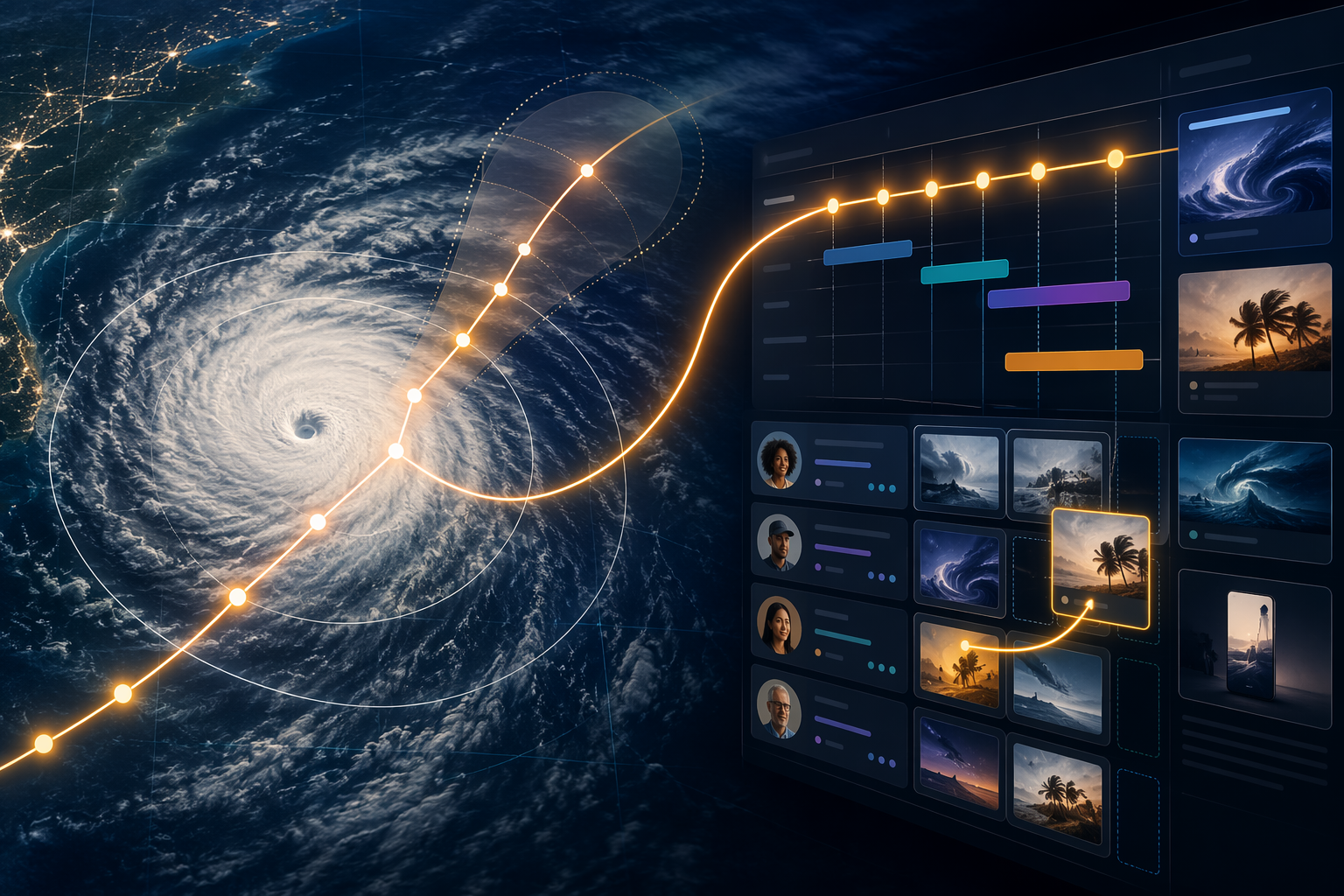
How reliable AI hurricane forecasts are reshaping marketing
The 2025 AI hurricane forecasting breakthroughs mean marketers can now plan campaigns around reliable weather predictions days in advance. This article examines the real evidence, the ROI from brands already using weather triggers, and why the shift from reactive to predictive weather marketing is genuine — with necessary caveats on attribution.
The practical question for marketers watching AI hurricane forecasts is not whether a model can draw a cleaner storm track on a map. It is whether the signal arrives early enough, and with enough confidence, for a marketing team to do something better than wait.
Weather-triggered marketing has never been short on imagination. Retailers have promoted seasonal inventory when temperatures rise. Beverage brands have changed creative when sunshine appears. Power, tool, home improvement, insurance, grocery, and travel marketers have all had reasons to care about local conditions. The harder part has been the planning window. A same-day trigger can swap creative or adjust bids, but it rarely gives ecommerce, paid media, email, merchandising, and operations enough time to coordinate around a high-stakes storm.
That is why the 2025 hurricane forecasting results matter commercially. Google DeepMind's WeatherNext was reported as the top-performing individual hurricane forecast model for both track and intensity across the full 2025 Atlantic season, based on National Hurricane Center verification data.[1] DeepMind also reported that WeatherNext predicted Hurricane Melissa would reach Category 5 intensity with 80% confidence five days in advance.[2] For a meteorologist, that is a model-performance story. For a marketer, it is a calendar story.
The new value is lead time marketers can use
Five days is not a lot of time in enterprise planning, but it is a different world from tomorrow morning. Five days can be enough to brief creative, suppress tone-deaf messaging, build a regional audience segment, check inventory exposure, prepare landing pages, route paid search spend, adjust email timing, and decide who needs to approve a storm-related message before it goes live.
The difference is especially sharp for hurricanes because the marketing action is rarely just a weather pun or a bid adjustment. A storm forecast may change whether a generator brand talks about backup power, whether a retailer promotes cleanup tools, whether a grocery chain protects delivery promises, or whether a travel company pauses acquisition spend in affected markets. Those choices require confidence before the storm is already obvious to everyone.
This is the reliability bottleneck that held weather marketing back. Marketers could already buy weather data, build triggers, and personalize creative. What they could not always do responsibly was commit meaningful budget at a planning horizon where the forecast still felt too uncertain. The WeatherNext result does not remove uncertainty. It changes the quality of the uncertainty soon enough for commercial action.
That distinction matters because official hurricane forecasting is not simply a contest between one AI model and one physics-based model. The National Hurricane Center still uses blended guidance from multiple models, including physics-based and AI systems, and official forecasts can outperform any single model. For marketers, the useful takeaway is not "use the AI model directly and ignore everything else." It is that stronger individual AI models can improve the forecast ecosystem that commercial tools, enterprise platforms, and decision workflows draw from.
What a five-day Category 5 signal changes inside a campaign
A high-confidence intensity forecast five days out changes the order of work. Instead of letting the media team watch conditions tighten while creative waits for approval, a brand can prepare a controlled activation and still hold final deployment until the forecast remains consistent.
| Marketing function | What earlier hurricane confidence can change |
|---|---|
| Paid media | Shift budget toward exposed regions, swap generic creative for preparedness or disruption messaging, and cap spend where logistics cannot support demand. |
| Email and CRM | Segment customers by likely impact area, adjust send timing, and avoid sending irrelevant promotions into markets preparing for severe weather. |
| Ecommerce | Move backup-power, cleanup, food storage, charging, or home-safety products into prominent placements before search demand peaks. |
| Creative and approvals | Prepare useful, restrained messaging early enough for legal, brand, and local-market review. |
| Operations | Coordinate campaign promises with inventory, fulfillment, store availability, customer service, and safety constraints. |
The responsible version of this is not to launch every storm campaign five days early. It is to move the work that benefits from lead time earlier, while keeping the final go/no-go tied to updated official guidance and local operating realities. That is a quieter claim than "AI forecasts drive ROI," but it is the claim the evidence can actually support.
The marketing playbook already exists
The clearest evidence that this can become commercially useful comes from brands that were already using weather signals before the 2025 AI forecasting breakthrough. These cases do not prove that AI hurricane forecasts caused the results. Most relied on standard weather data or weather-triggered advertising products. They do show that when weather is a relevant demand signal, marketers know how to turn it into creative, audience, and media decisions.
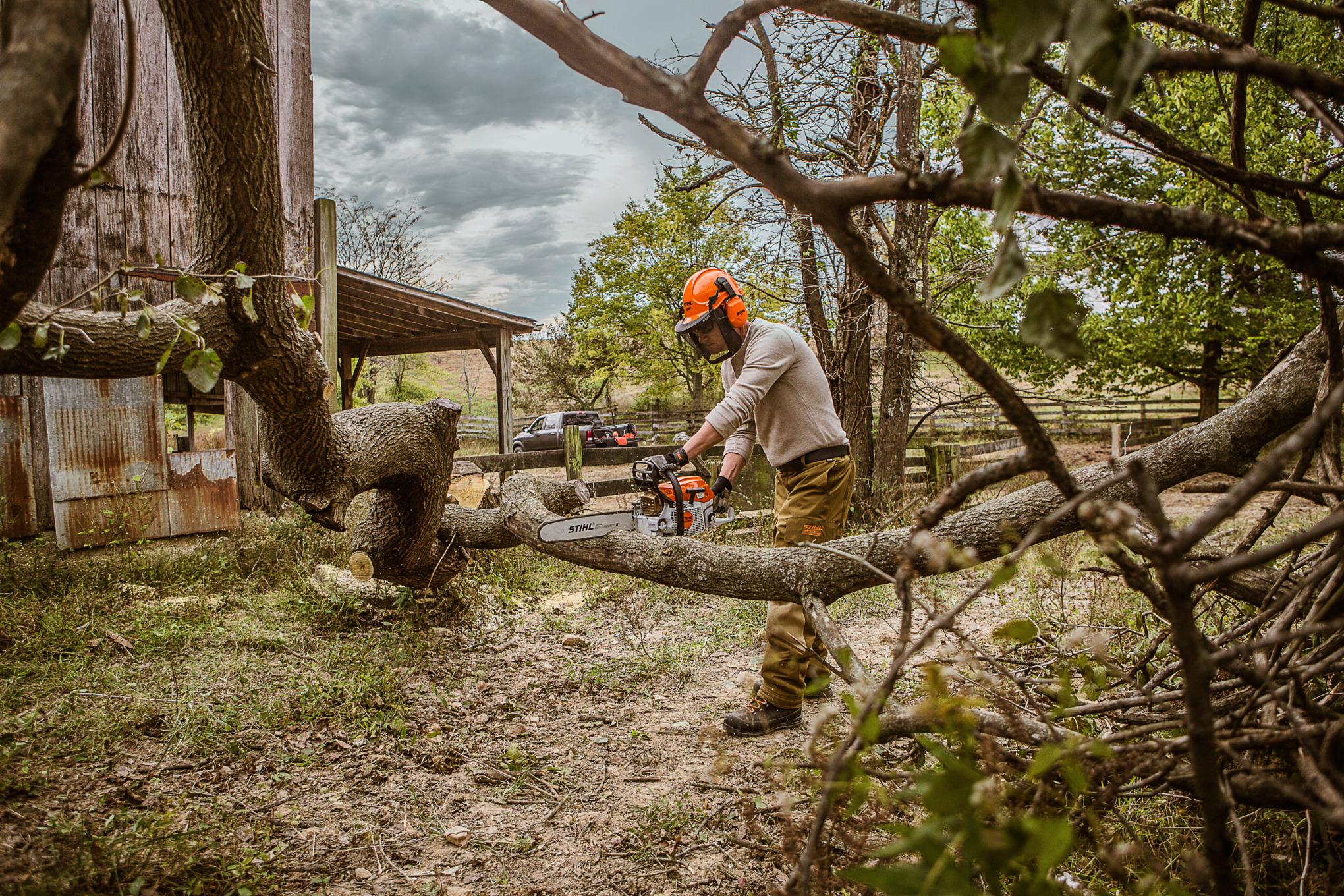
STIHL is the most direct example because its category fits the pre-storm and post-storm reality. A chainsaw is not an impulse accessory during hurricane season; it is tied to preparation, cleanup, and local disruption. In a Weather Company case study, STIHL used pre-storm weather triggers and reported 113% higher video completion rates and 320% more time on site.[3]
Those numbers are useful, but their shape matters more than the headline lift. Higher video completion suggests the message reached people when the content felt worth finishing. More time on site suggests the campaign did not merely catch attention; it moved some users into product consideration. The weather signal gave the brand a reason to show a relevant message in a local moment when the audience had a concrete job to do.
The caveat belongs right next to the result: this is a vendor-published case study, not an independently audited causal study. It also does not establish that AI forecasts created the lift. The stronger reading is that weather-responsive activation can outperform generic timing when the product is closely tied to the condition being forecast.
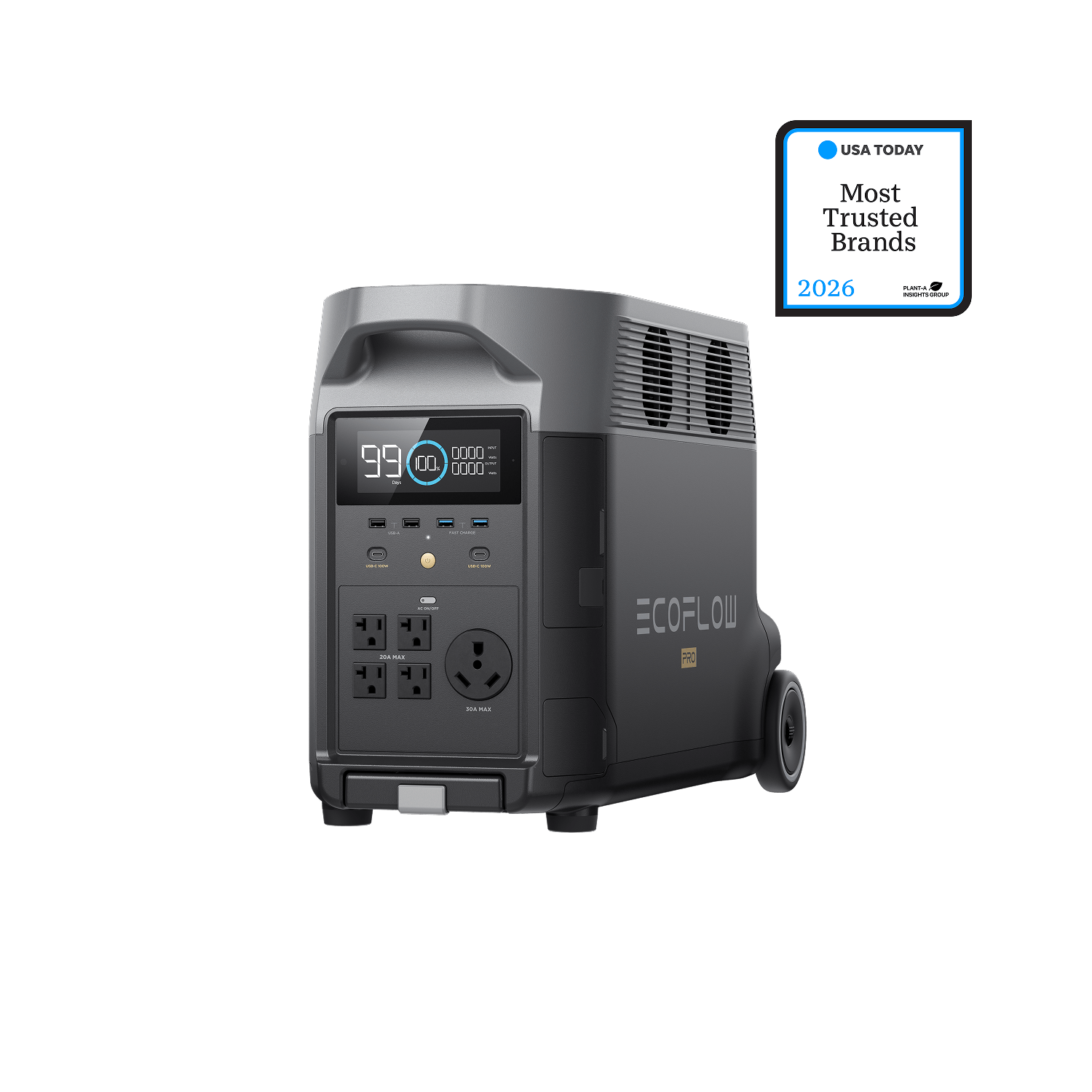
EcoFlow shows the same pattern from the backup-power side. In a Weather Company case study, the brand used Forecast Power Disruption signals during hurricane season and reported 14.7x ROI, along with an 8% brand awareness lift.[4] That is the kind of campaign result that makes weather data attractive to performance and brand teams at the same time: the message can be commercially urgent without being detached from the audience's actual concern.
Again, the attribution should stay narrow. The case supports the value of weather-linked disruption signals for a product that solves a weather-linked problem. It does not prove that a 2025 AI model, by itself, produced the ROI. But it helps explain why better hurricane lead times are so valuable. If a backup-power brand can act earlier with more confidence, it can move from last-minute demand capture toward preparedness messaging, inventory-aware promotion, and regional sequencing.
Weather triggers are broader than storm categories
Not every weather-triggered campaign is about hurricanes, and not every useful signal needs five days of intensity confidence. Bravissimo, for example, used weather-triggered PPC for swimwear and reported a 600% revenue increase and 103% higher conversion rate over three months, according to a WeatherAds case study.[5] Molson Coors used weather-specific ad creative and reported 67% lower CPC and an 89% higher likelihood of link clicks compared with generic ads, in ADWEEK-sponsored content with The Weather Company.[6]
These examples widen the pattern without carrying the main argument. They show that weather can be a practical segmentation layer across categories: swimwear in warm conditions, beverages in outdoor moments, tools before storms, power during disruption risk. But older and sponsored case studies should not be treated as current universal benchmarks. Platform mechanics, consumer behavior, privacy constraints, and auction dynamics have changed. The durable lesson is not the exact lift; it is the operational logic of matching weather-sensitive demand with weather-sensitive media.
Cheaper forecasting could make the signal more usable
Accuracy gets most of the attention, but cost matters too. NOAA's AI-GEFS has been described as using 0.3% of the computing resources of its physics-based counterpart.[7] If that kind of efficiency becomes part of enterprise forecasting workflows, it could make more granular, more frequent forecasting commercially accessible.
For marketers, cheaper forecast generation does not automatically mean better campaigns. It matters only if it reaches the tools teams actually use: demand forecasting systems, media platforms, CRM segments, retail media networks, supply-chain dashboards, and approval workflows. A better forecast that stays inside a research environment does not help a media buyer decide whether to move budget by market on Tuesday afternoon.
There is also a difference between enterprise weather intelligence and signals available inside standard ad platforms. Some private tools may offer longer-range planning products for industries such as insurance, but those lead times should not be assumed to be available to every marketer buying search, social, display, or retail media. The practical question is always: what forecast signal can the team access, how is confidence represented, and what business action is allowed at that confidence level?
How to use AI hurricane forecasts without overstating them
The cleanest operating model is to separate forecast confidence from campaign attribution. Forecast confidence answers, "Can we responsibly prepare or activate?" Attribution answers, "Did this campaign outperform what we would have done otherwise?" Mixing those two questions is how teams turn a real forecasting advance into a vague ROI story.
A disciplined hurricane-weather program should define actions by lead time rather than by excitement about the model:
- At longer lead times, prepare creative variants, audience segments, inventory checks, and approval paths without assuming deployment is certain.
- As confidence improves, adjust regional media weights, landing-page modules, product merchandising, and CRM timing.
- Near impact, prioritize usefulness, local relevance, and operational truth over aggressive promotional framing.
- After the event, compare exposed and holdout markets where possible, and separate weather-trigger performance from broader storm-driven demand.
That last point is not academic. A hurricane can increase demand for generators, batteries, chainsaws, bottled water, fuel, lodging changes, repairs, and insurance contact regardless of whether an ad campaign was good. If a campaign runs only in markets where demand was about to spike anyway, a simple revenue comparison can exaggerate marketing impact. Weather-triggered campaigns need incrementality discipline precisely because the external event is so powerful.
The better question is not "Did sales rise during the storm window?" It is "Did the weather-informed plan improve timing, audience selection, creative relevance, or spend efficiency compared with a credible alternative?" That is where AI hurricane forecast reliability can create real marketing value: by making the alternative less likely to be a scramble.
The real shift is from reactive triggers to planned activation
The 2025 WeatherNext evidence supports a meaningful shift in weather-based marketing, especially for categories tied to storm preparation, outage risk, cleanup, logistics disruption, and local safety. A model that can provide a high-confidence Category 5 signal five days ahead does not just make a forecast look smarter. It gives cross-functional teams a chance to act before the useful window collapses.
The evidence does not support a blanket claim that AI hurricane forecasts have already delivered the ROI figures attached to STIHL, EcoFlow, Bravissimo, or Molson Coors. Those cases mostly show that weather signals can improve campaign relevance and performance when they are matched to the right category and execution. The AI breakthrough strengthens the upstream signal; marketers still have to prove the downstream lift.
That is enough to take seriously. Weather marketing is no longer just a same-day personalization trick or a clever creative swap when the sun comes out. In hurricane-sensitive categories, better forecast reliability can become a planning input: earlier briefs, cleaner segmentation, less wasted spend, more useful messaging, and fewer decisions made after the moment has already passed.
References
- CNN article on DeepMind's 2025 hurricane forecast performance, CNN
- Google DeepMind blog on WeatherNext and Hurricane Melissa, Google DeepMind
- STIHL case study, The Weather Company
- EcoFlow case study, The Weather Company
- Bravissimo weather-triggered PPC case study, WeatherAds
- Molson Coors weather-specific creative sponsored content, ADWEEK / The Weather Company
- NOAA interview on AI-GEFS computing resources, South Carolina Public Radio / NOAA

Comments
Join the discussion with an anonymous comment.