
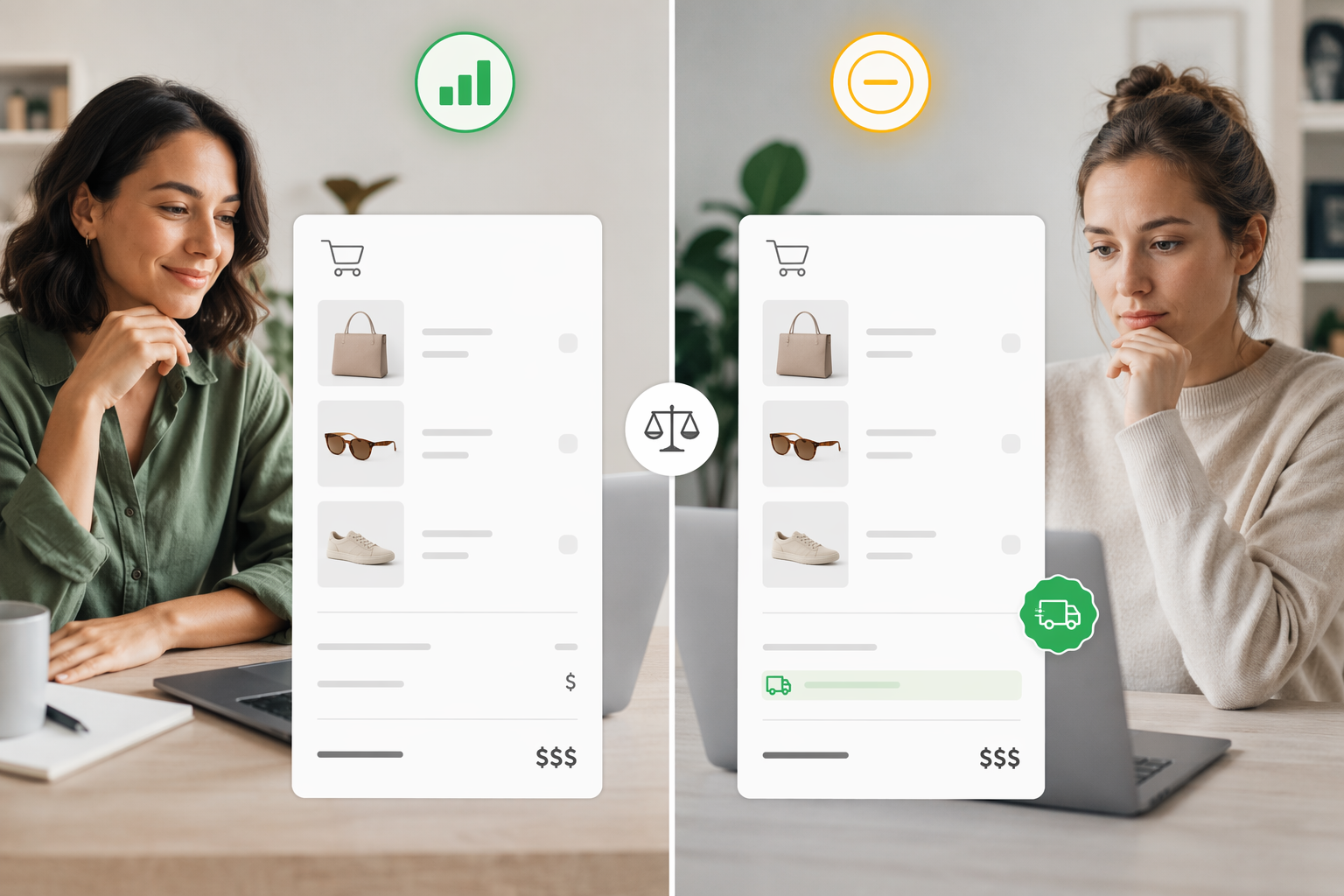
Use AI to offer free shipping only to on-the-fence shoppers
Sitewide free shipping promotions waste budget on shoppers who would convert anyway. Learn how AI-based purchase prediction can suppress offers for high-intent visitors and deploy them selectively to on-the-fence shoppers, saving up to 75% of promotional budget while still lifting conversion.
Sitewide free shipping looks generous on the banner and expensive on the ledger. The useful metric is not the conversion rate alone; it is how much margin had to be bought to get it. If a promotion is covering orders that would have converted anyway, the brand is paying for volume it did not need to purchase.
Adventure Media’s break-even example makes that tradeoff easy to see: at a $75 average order value, $12 shipping cost, and 35% gross margin, breakeven ROAS moves from 2.86x to 5.26x once free shipping is added [3]. That is a much harsher threshold than most promo dashboards imply, because the shipping subsidy changes the economics of every order, not just the ones that convert because of the offer.
The money is in suppressing the offer, not broadcasting it
In Session AI’s vendor material published around 2023, the company says brands can spend up to 75% of promotional budget on non-incremental conversions [1]. In the same set of materials, it reports a case where suppressing offers lifted conversion by 4.8% and revenue per visitor by 8.9%, while one clothier suppressed 870K offers in a single quarter [2]. Those figures are vendor-reported and should be read directionally, not as a universal promise, but the pattern is hard to ignore: the waste is often caused by showing the incentive to the wrong shopper.
| Order scenario | Break-even ROAS |
|---|---|
| Example order with $75 AOV, 35% gross margin | 2.86x |
| Same order after a $12 free-shipping subsidy | 5.26x |
That is why in-session purchase prediction matters. The model is not there to make free shipping “smarter” in a vague way; it is there to decide who should never see the offer at all. Within the first few clicks, it can separate visitors who are already likely to buy from the ones whose hesitation is real, then hold back the subsidy from the first group and reserve it for the second [1][2].
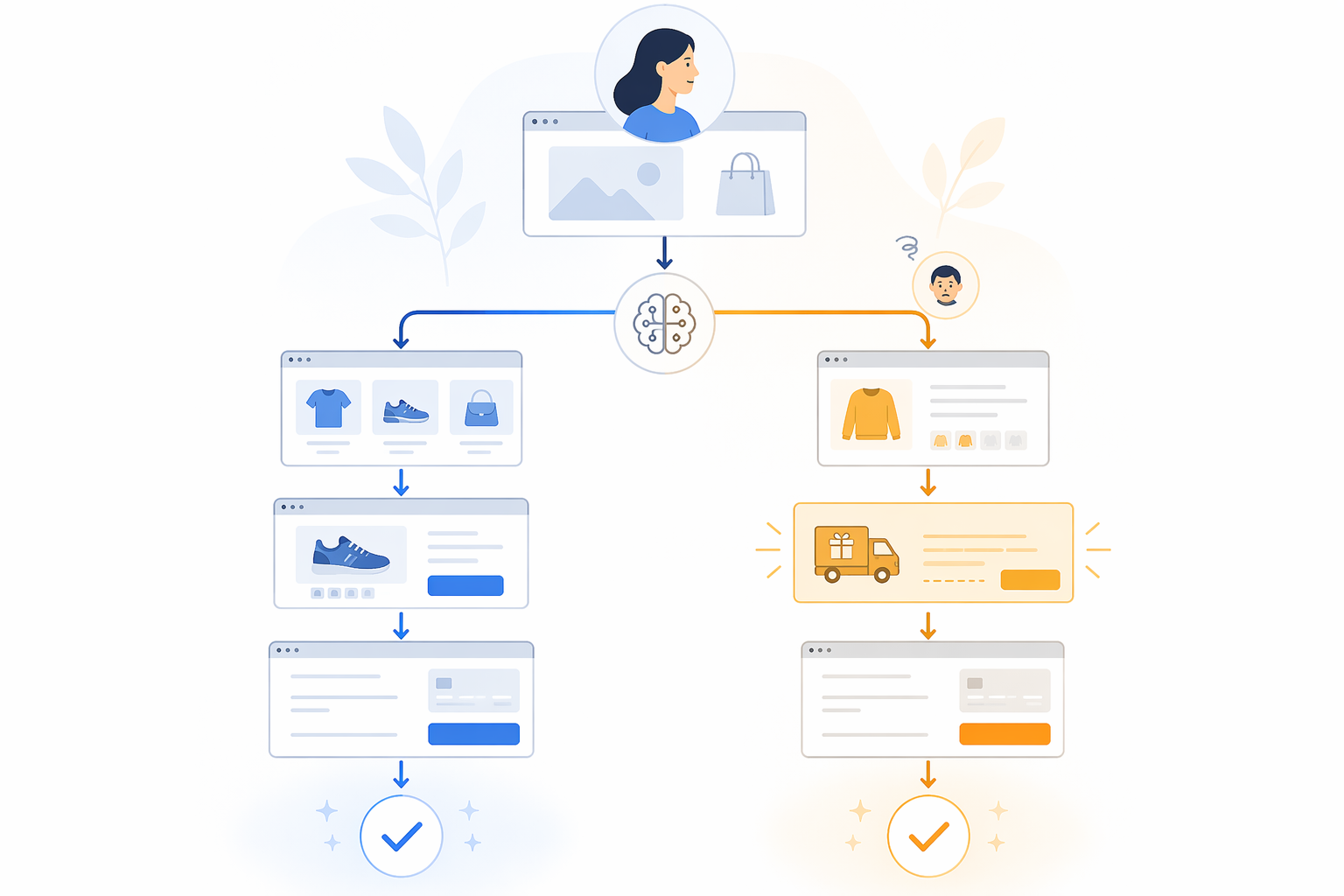
The decision rule is simple enough to defend internally:
- High-intent visitor: suppress free shipping and let checkout do the work.
- On-the-fence visitor: show the offer when it can still change behavior.
- Promo reporting: measure incremental lift against the subsidy cost, not conversion rate by itself.
What the adjacent evidence is actually saying
Blue Interactive Agency’s broader AI marketing material reports 15% to 25% conversion improvements from AI cart recovery [4]. That is a narrower use case than suppressing a free-shipping banner at the top of the funnel, so it should not be treated as proof of the same outcome. It does, however, reinforce the same operational lesson: when timing and targeting improve, the lift comes from intervening with the right shopper, not from giving the same offer to everyone.
The Subway $5 footlong example points to the opposite risk: a large-scale incentive can become what customers expect as the normal price. Free shipping is not the same promotion, but the margin problem is familiar when the discount becomes permanent behavior training instead of a selective nudge.
What has to be true for this to work
The approach is strongest when the brand has enough behavioral data to score intent in-session, enough control to withhold the offer for some visitors, and a measurement setup that can separate incremental conversion from the cost of the subsidy. If any of those pieces is missing, the result is usually a louder promotion rather than a better one.
Not every team has a dedicated AI platform, and that matters. A Shopify plus Klaviyo stack can still narrow the blast radius by using browsing, cart, and abandonment signals to suppress generic free-shipping messaging for higher-intent visitors and reserve it for shoppers who are showing real drop-off risk. That does not replicate first-session prediction, but it is enough to stop treating the full site as equally entitled to the same subsidy.
The useful boundary
Free shipping does not need to disappear. It needs to stop acting like a sitewide entitlement. If the brand can predict intent early enough to hold back the offer from shoppers who were already going to buy, the promotion keeps more of its conversion value without funding unnecessary margin loss. The practical standard for online deals marketing is narrow: show the free-shipping offer when it can change the cart, and suppress it when it is only subsidizing a purchase that was already likely to happen.
References
- Session AI, Promotion optimization: How to incentivize conversions and reduce margin loss — Session AI
- Session AI, Less offers, more revenue: 10 strategies to limit promotions without limiting conversions — Session AI
- How to Measure the True Profitability of Free Shipping Promotions — Adventure Media AI
- Benefits of AI for E-Commerce Marketing — Blue Interactive Agency

Comments
Join the discussion with an anonymous comment.