

The AI Content Trust Penalty: When Marketing Automation Damages Consumer Relationships
Learn why most AI-generated marketing content backfires with consumers and how to apply AI selectively behind the scenes to preserve brand trust without sacrificing production efficiency.
The problem with ai generated marketing content is not whether a tool was involved. It is whether the audience feels the brand has replaced attention with automation. In 2026, that penalty is already measurable: only 7% of consumers trust a brand more when they see visible AI-generated marketing content, while 31% trust it less [1]. Emplifi also found that 52% would stop buying after an inauthentic brand experience, and Gartner reported that 50% of US consumers prefer brands that avoid GenAI in customer-facing content altogether [2][3].
The penalty does not stop at preference. Pangram found that 67% of online content consumers say they can detect AI-generated content, and 69% of those who detect it trust it less [4]. That is why the disclosure question matters as much as the output itself: Emplifi reported that 91% of consumers expect brands to disclose AI use in marketing [2].
That does not mean every consumer reacts the same way. Klaviyo’s persona research points to Enthusiasts, Evaluators, Skeptics, and Holdouts, which is a more realistic picture than the usual either-or debate [1]. Some people are open to AI in the background. Some are conditional. Some are already on guard. Treating the whole market as if it shares one reaction misses the point and usually misreads the risk.
Why visible AI content loses trust
Consumers are not simply punishing the existence of AI. They are reacting to a feeling that the brand has substituted output for attention. Generic phrasing, over-shaped personalization, and copy that sounds like it was made to occupy a channel rather than help a person all create the same impression: the relationship is being managed at scale, not cared for at the point of contact.
That is also why visible AI use can become a reputational problem even when the content is technically correct. If the voice is flat, the details are thin, or the message feels overly uniform, people do not need proof to decide something is off. They just need the experience to feel inauthentic once.
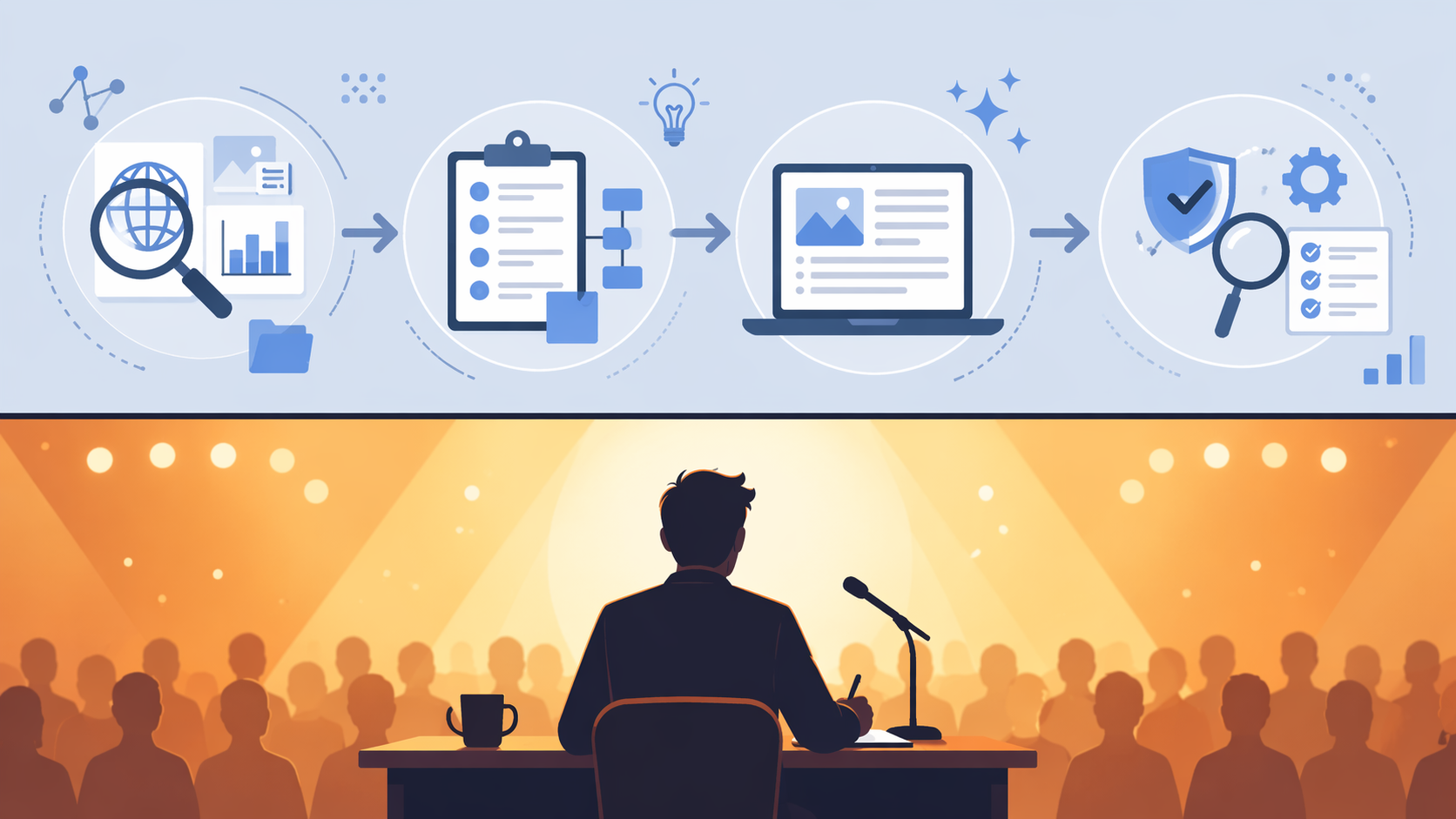
Keep AI behind the scenes, not in the final voice
| Keep AI here | Keep human here |
|---|---|
| Summarizing research and objections | Final customer-facing promise |
| Organizing briefs and variant maps | Apologies, reassurance, pricing, and policy language |
| Checking consistency and spotting gaps | Voice, nuance, escalation, and relationship judgment |
| Generating internal alternatives | Anything the customer will read as the brand speaking for itself |
That split is practical, not ideological. AI can reduce friction when the brand still has a human accountable for the promise being made. It becomes a problem when the same system is allowed to surface as the customer-facing voice with only light editing. That is usually where generic copy, hallucination risk, or tone drift turns a production shortcut into a trust leak.
The useful rule is simple: use AI for research sorting, brief building, draft support, consistency checks, and workflow acceleration. Keep the final customer-facing voice recognizably human, accountable, and worth trusting.
References
- Consumer Trust in AI, Klaviyo, 2026.
- Consumer survey on authenticity and AI disclosure, Emplifi, 2026.
- 2026 consumer survey on GenAI in customer-facing content, Gartner, 2026.
- AI Sentiment Survey, Pangram, 2026.

Comments
Join the discussion with an anonymous comment.