
How Hertz's EV Discount Spiral Backfired
A detailed case study of how Hertz's massive EV bet unraveled through overestimated demand, a mismatched celebrity campaign, and an aggressive discount spiral that destroyed residual value — and the marketing lessons for pricing, demand forecasting, and customer education.
Hertz’s EV discount spiral is easiest to misunderstand if it starts with the famous Tesla order. By the time the lesson became visible, the problem was already showing up in price: EV rental deals, free rental days, standing markdowns, direct purchase offers to renters, and used Teslas being pushed through no-haggle pricing. Hertz was no longer simply trying to make electric rentals exciting. It was trying to move inventory that the market was hesitating to absorb.
In summer 2023, Hertz was offering up to 30% off EV rentals to get more renters behind the wheel.[1] By late 2024, renters were reporting direct offers to buy the EV they had rented, including a 2023 Tesla Model 3 offered for as low as $17,913.[2] Around the same period, CNBC reported that Hertz’s used EV pricing averaged about $23,500, compared with about $33,700 for its internal-combustion used vehicles, with used Teslas appearing at no-haggle prices near $25,000.[3]
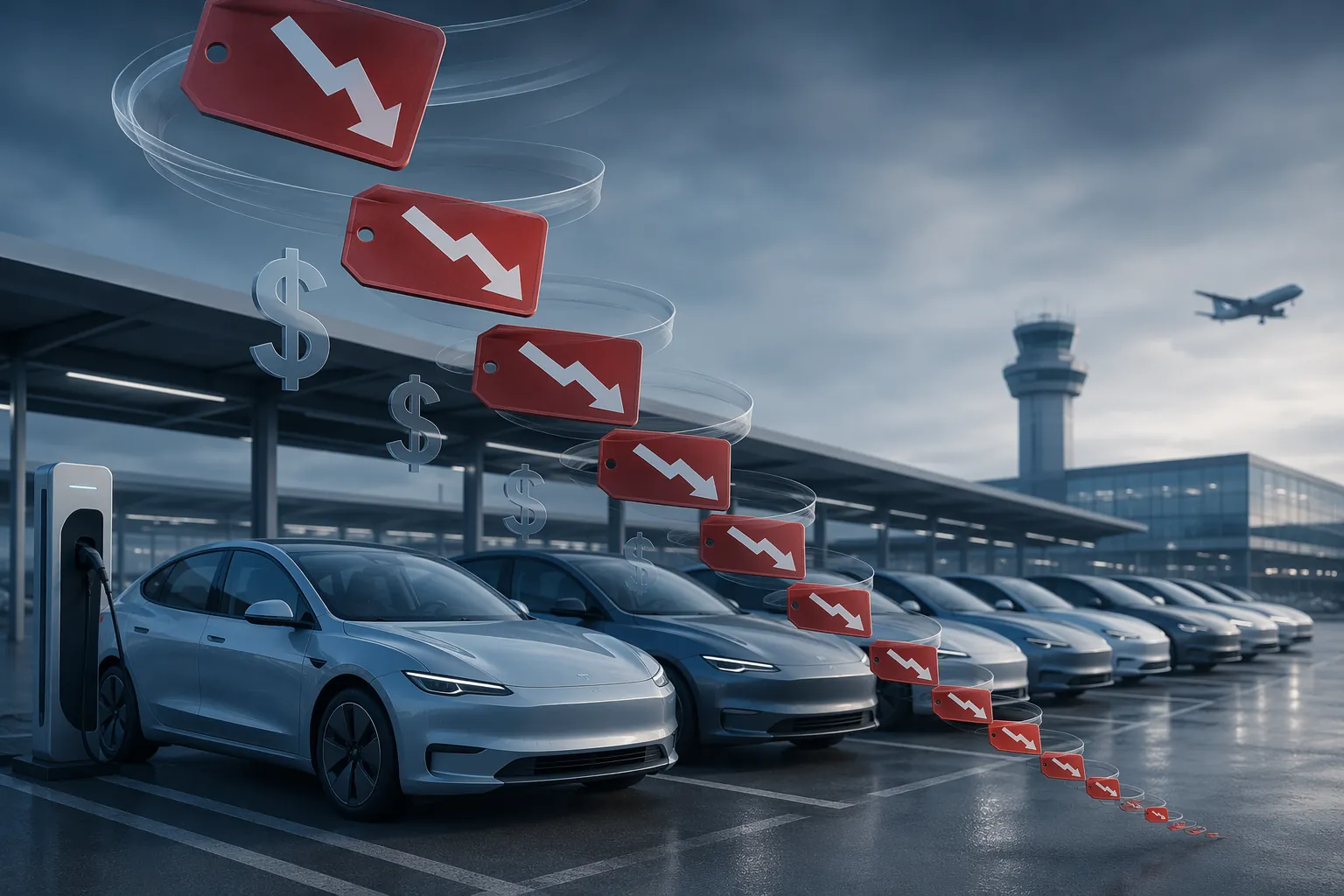
Discounts can be useful when they lower the perceived risk of trial. That is the charitable version of what Hertz was doing: make an unfamiliar rental feel easier to try, create utilization, and let experience convert skeptics. But discounts also teach. When they appear across the full customer journey — first on the rental, then on the extra day, then on the used vehicle offer — they can stop looking like an invitation and start looking like evidence that the product is stuck.
That is where the marketing problem became a fleet economics problem. The price cuts were not an isolated promotional tactic. They were a visible symptom of a demand forecast, a customer education plan, and a residual-value assumption all colliding with ordinary renters.
The Supply Bet Arrived Before the Rental Moment Was Ready
Hertz’s original move was clean enough to make sense in a boardroom. In 2021, the company ordered 100,000 Teslas in a deal widely described as the largest single EV purchase at the time, with an estimated value of $4.2 billion. Hertz also set a target for EVs to make up 25% of its fleet by the end of 2024.[4]
There was a strategic argument behind it. A rental company with national airport presence could make EV access mainstream, especially for travelers who were EV-curious but not ready to buy. Hertz could stand for mobility that felt modern, cleaner, and premium. A big commitment could create supplier advantage, press attention, and category leadership before competitors caught up.
But an EV rental is not just a different badge on the key fob. The customer has to know how much charge is enough, where to charge, how long charging will take, what happens before return, whether the hotel has a charger, and whether the route is forgiving. The branch employee has to explain those details quickly to a traveler who may already be late. The maintenance and damage model has to hold. The used-car desk has to believe the asset will still command a healthy price when it leaves the fleet.
By October 2023, EVs were only 11% of Hertz’s fleet, far short of the 25% target for the following year. Hertz later acknowledged the basic mismatch: the supply of EVs exceeded customer demand.[4] That sentence does a lot of work. It does not say EVs had no rental use case. It says Hertz had more EV inventory than its customers were prepared to choose at the pace and price Hertz needed.
Customer Education Was Treated Like a Follow-Up, Not a Prerequisite
The most revealing failure was not abstract. It looked like a renter being handed a product they had not asked for and then receiving instructions too late to use them well.
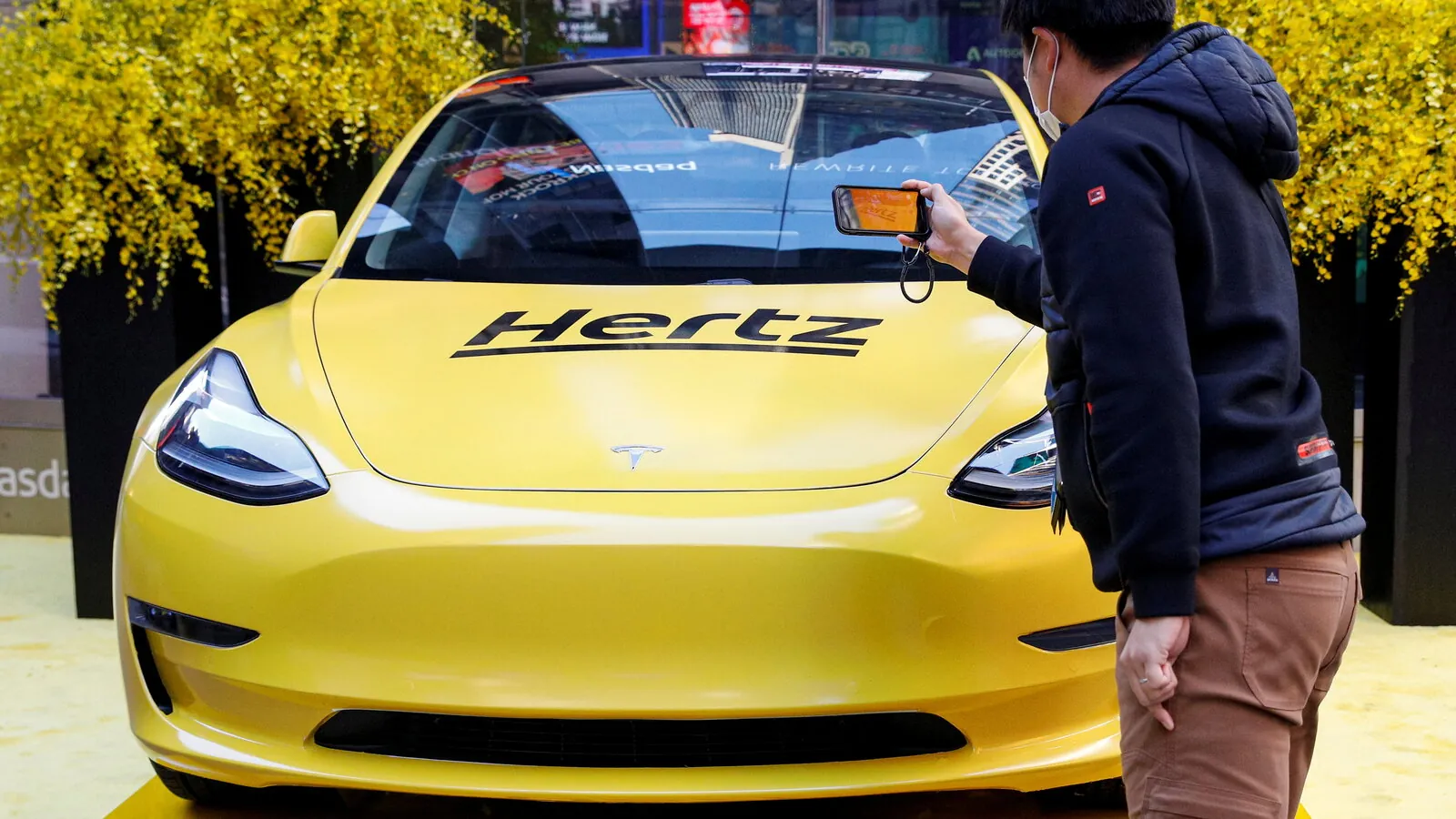
TIME’s account of an EV rental captured that gap at the counter level: the reporter said they were assigned an EV without requesting one, and the educational email arrived “when I was already on the road.”[5] As a single anecdote, it should not be inflated into a universal customer experience. But it lines up with Hertz’s own acknowledgment that renter knowledge was a problem. Then-CEO Stephen Scherr told CNBC that renters’ “knowledge of how to drive this car may be part of the issue.”[4]
That is not a minor messaging miss. In a rental environment, education has a deadline. If the customer learns how to manage charging after leaving the branch, the brand has already transferred uncertainty onto the renter. If the branch team cannot confidently answer charging questions, the campaign promise gets reinterpreted through the least prepared employee in the system. If a car is handed over partially charged, the renter experiences the vehicle not as a premium upgrade but as an errand.
The issue also reached the cost side. Hertz’s 2023 annual filing reported a $646 million increase in direct operating expenses, driven primarily by higher collision and damage costs, particularly within the EV fleet.[6] CNBC reported that Tesla repair costs were about 20% higher than comparable internal-combustion vehicles.[4] Those are not advertising problems in the narrow sense, but they are still marketing consequences. A product that is harder to explain, easier to mishandle, or more expensive to repair changes how aggressively a company can price, promote, and scale it.
| Where the strategy needed readiness | What happened when readiness lagged |
|---|---|
| Demand forecasting | EV supply exceeded customer demand |
| Customer education | Renters could receive instructions after the rental had already begun |
| Branch experience | Employees had to explain charging and vehicle use during a high-pressure pickup moment |
| Operating model | Collision, damage, and repair costs rose inside the EV fleet |
| Residual value | Used EV prices fell into a visible discount channel |
The Brady Campaign Sent Confidence Into a Low-Confidence Moment
The Tom Brady campaign was not the cause of Hertz’s EV reversal. Celebrity campaigns do not set repair costs, determine used-car residuals, or decide whether a traveler can find a charger near a hotel. The issue is fit.
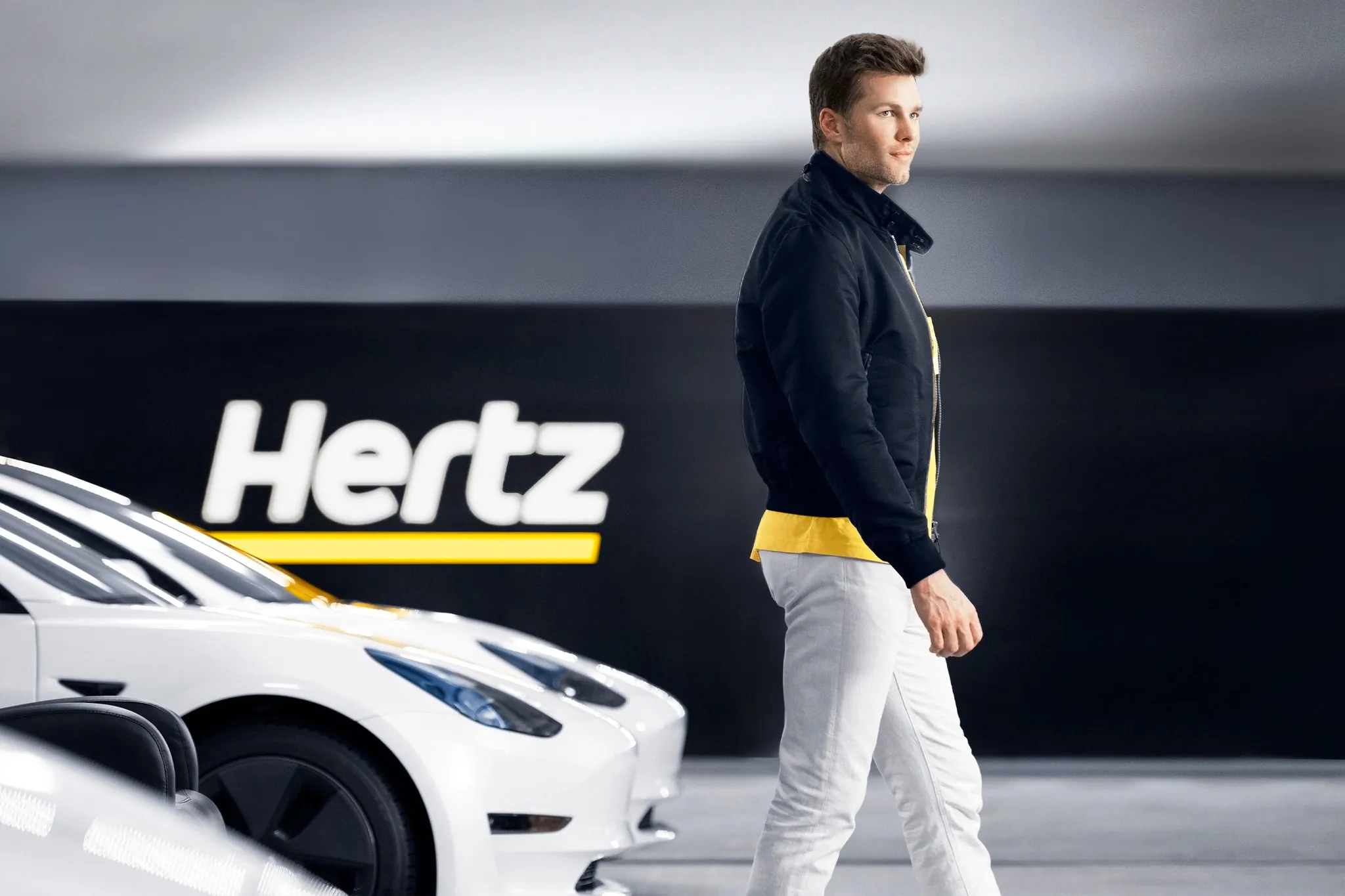
Brady gave Hertz a high-confidence signal: this is mainstream, premium, easy to understand, and worth noticing. That kind of signal can help when the remaining friction is awareness. Hertz’s problem was that the friction was not only awareness. A renter could be aware, intrigued, and still uneasy about range, charging time, charging location, return requirements, unfamiliar controls, and what happens if the trip changes.
This is where bold brand positioning can get expensive. The more confident the front-stage message becomes, the less tolerance customers have for backstage confusion. If the counter experience feels improvised, the campaign does not make the EV feel aspirational. It makes the gap more obvious.
Discounts Did Not Just Move Demand; They Repriced the Story
Once Hertz had more EV supply than demand, discounting was almost unavoidable. Rental cars are not shelf-stable inventory. Underused vehicles still carry depreciation, financing, cleaning, maintenance, insurance, and opportunity costs. If a car sits too often, revenue managers have to create movement.
The first layer was trial stimulation: EV rental promotions, including up to 30% off summer rentals in 2023.[1] Then came broader value framing: free rental days and standing EV discounts, described in coverage as generally ranging from 10% to 18%.[2] Later, the resale channel became part of the same visible markdown environment, with direct purchase offers to renters and used Teslas sold at no-haggle prices.[2][3]
Each layer can be defended on its own. A discount can reduce the fear of trying an unfamiliar EV. A free day can make a weekend trip easier to justify. A direct purchase offer can convert a renter who enjoyed the car. No-haggle pricing can simplify used-car sales.
Together, they created a different signal: Hertz had too many EVs, customers were not taking them at the expected rate, and the company needed price to do the work that demand, education, and product confidence had not done. That is the dangerous part of a discount spiral. The same tactic meant to overcome hesitation can confirm the reason for hesitation.
The used-car channel made the damage financially legible. Hertz’s EV strategy depended not only on rental utilization, but also on what the cars would be worth when sold. If rental discounts soften the perceived value of the product and resale discounts establish a lower market reference point, the company is no longer just sacrificing margin on a booking. It is pressuring the asset value of the fleet.
By the end of 2024, Hertz had recorded at least $468 million in EV-specific losses: an initial $245 million write-down, another $175 million in additional charges, and $48 million in disposal losses.[4] Those figures belong next to the $646 million increase in direct operating expenses tied primarily to higher collision and damage costs, particularly within the EV fleet.[6] The story is not simply that Hertz bought too many EVs. It bought too many for the demand it could activate, then had to discount into a market that was already questioning the value of the assets.
The Broader EV Market Made Hesitation Plausible, Not Inevitable
It would be too easy to turn the Hertz case into a verdict on EVs. The narrower conclusion is better: Hertz scaled a rental EV proposition faster than its customer education, branch operations, repair economics, and resale assumptions could support.
The U.S. market context made that risk predictable. Business Insider later framed Hertz’s bet as an exposure of broader U.S. pain points around charging infrastructure and consumer reluctance toward electric cars.[7] That context matters because rental customers are often operating away from home, without their usual routines, chargers, apps, parking setup, or route knowledge. A private EV owner can learn gradually. A renter may have one pickup conversation before the product has to work.
For marketers, that difference matters. Adoption interest is not the same as rental readiness. A customer can support EVs in principle, consider buying one eventually, and still reject an EV at an airport counter because the next 36 hours are too uncertain. Hertz’s mistake was treating a promising category direction as if it had already become a low-friction rental behavior.
The Retreat Was Operational Before It Was Reputational
Hertz’s reset began with a change in leadership. Gil West was appointed CEO in March 2024, and he later described the EV fleet as an “operational distraction.”[8] That phrase is useful because it does not rely on a grand anti-EV argument. It says the fleet was pulling attention, capital, and operating effort away from the basics that determine whether a rental company makes money.
The recovery language was deliberately unglamorous. Hertz’s “Back-to-Basics Roadmap” centered on “Buy Right, Hold Right, Sell Right,” a framework aimed at fleet acquisition, utilization, and disposal discipline.[8] By December 31, 2024, Hertz said the EV sell-off was substantially complete.[8]
The early 2026 numbers suggest why that reset mattered. In Q1 2026, Hertz reported $2.0 billion in revenue, up 11% year over year, its strongest revenue growth in three years. Depreciation per unit improved to $312, moving toward the company’s sub-$300 target.[8] Hertz also reported that Net Promoter Score improved nearly 50% year over year in 2025, and said it earned USA Today’s 2026 Most Trusted Brand award in car rental.[9]
That does not erase the loss. It clarifies the lesson. Hertz did not recover by finding a louder celebrity, a sharper EV slogan, or a richer discount. It recovered by bringing fleet buying, holding periods, resale discipline, customer experience, and operating cost control back into the same conversation.
What Marketers Should Take From the Discount Spiral
The useful lesson is not “avoid bold bets.” Hertz’s 2021 EV move had a real strategic shape: category leadership, modernized brand perception, and a chance to make EV trial mainstream. The failure came from assuming the market would meet the company at the level of the announcement.
Before using discounts or brand campaigns to push adoption, marketers need to test four things in the unglamorous places where the promise becomes real:
- Demand signal: Are customers choosing the product at a sustainable rate, or only accepting it when price removes most of the risk?
- Education timing: Does the customer know what to do before the decision point, not after the experience has already started?
- Service readiness: Can frontline teams explain the product under real pressure, without turning uncertainty into the customer’s problem?
- Price integrity: Will discounts create trial without training the market to see the product as distressed?
- Asset assumptions: Can the resale or lifetime-value model survive if adoption is slower, maintenance is higher, or incentives become necessary?
That is the decision rule the Hertz case leaves behind. Awareness can open the door. Discounts can lower the first step. But if demand, education, service experience, and asset value do not survive contact with real customers, marketing does not accelerate adoption. It accelerates the accounting of a bad assumption.
References
- Hertz, Looking to Get Renters into EVs, Is Offering Summer Deals, Car and Driver, July 2023
- Want a cheap EV? Hertz is handing out discounts to renters, TechCrunch, December 2024
- EV slump, Hertz fire sale take used Tesla to no haggle $25,000 price, CNBC, June 2024
- Hertz makes agile decision to shift strategy and sell EVs, Teslas, CNBC, January 2024
- Where Hertz Went Wrong With Its EV Fleet, TIME / LinkedIn
- Hertz Global Holdings, Inc. 2023 Form 10-K, Hertz, 2023
- How Hertz's Bet on EVs Exposed US Pain Points and Soft Spots for Electric Cars, Business Insider, December 2025
- Hertz Reports First Quarter 2026 Results, Hertz, May 2026
- Hertz Reports Fourth Quarter and Full Year 2025 Results, Hertz, February 2026
Built on this evidence
No Bidding tactic or Creative record currently cites this case file. Compare it against other results in Benchmarks.
Related benchmark reading
Report a corroborating or contradicting result
Seeing something different in your own account? Feed the data-integrity loop instead of leaving an open comment.