
How Paramount+ Built a Pre-Release Launch Playbook for Frisco King
A documented case study of Paramount+'s pre-release marketing campaign for the Frisco King spinoff — detailing five specific tactics from backdoor pilots to local production earned media, with the announcement cadence and franchise economics context that content strategists can adapt for their own streaming or subscription series launches.
The useful thing about Paramount+'s release marketing for Frisco King is that it can be studied before anyone is tempted to confuse launch activity with audience performance. As of July 2026, Frisco King has not premiered. Some coverage has pointed to an early 2027 window, while other reporting still treats the date as unannounced, so the clean read is narrower: Paramount+ has built a visible pre-release campaign, not yet a proven hit.[6]
That distinction matters because the campaign is already doing real work. It has moved a spinoff character through Tulsa King Season 3, turned a greenlight into a creator-authorship story, converted Samuel L. Jackson’s casting into a broader-audience hook, and used North Texas production activity as repeatable earned media. None of that tells us whether people will finish the series, subscribe for it, or stay after it. It does show how Paramount+ is using an existing franchise asset to lower the cost of making a new title feel familiar.
The investment makes more sense when the economics are framed carefully. Parrot Analytics’ Streaming Economics model, as reported by TheWrap, estimated that Taylor Sheridan’s shows had generated more than $800 million in global streaming revenue for Paramount+ since 2021; that is modeled third-party analysis, not a Paramount-disclosed revenue line.[1] Tulsa King alone was reported by Deadline to account for more than $140 million and to have been the No. 1 global Paramount+ Original Series in 2024.[2] TVREV, citing Parrot Analytics, reported that Sheridan originals represented 11.5% of total U.S. audience demand for Paramount+ originals.[3]
Those numbers do not prove Frisco King will work. They explain why Paramount+ would give the spinoff a long runway instead of waiting for a trailer drop close to premiere. When a creator’s universe already carries demand, the marketing job changes: the platform does not have to introduce the world from scratch, but it does have to make the extension feel inevitable rather than opportunistic.
The Campaign Became Visible Before the Show Had a Date
The Frisco King trail did not begin with a poster or a final premiere announcement. It began inside Tulsa King. Samuel L. Jackson’s Russell Lee Washington Jr. was introduced in Tulsa King Season 3 before the spinoff moved into its own formal marketing lane, and the Season 3 teaser gave viewers an early look at the setting that would carry into the extension.[2]
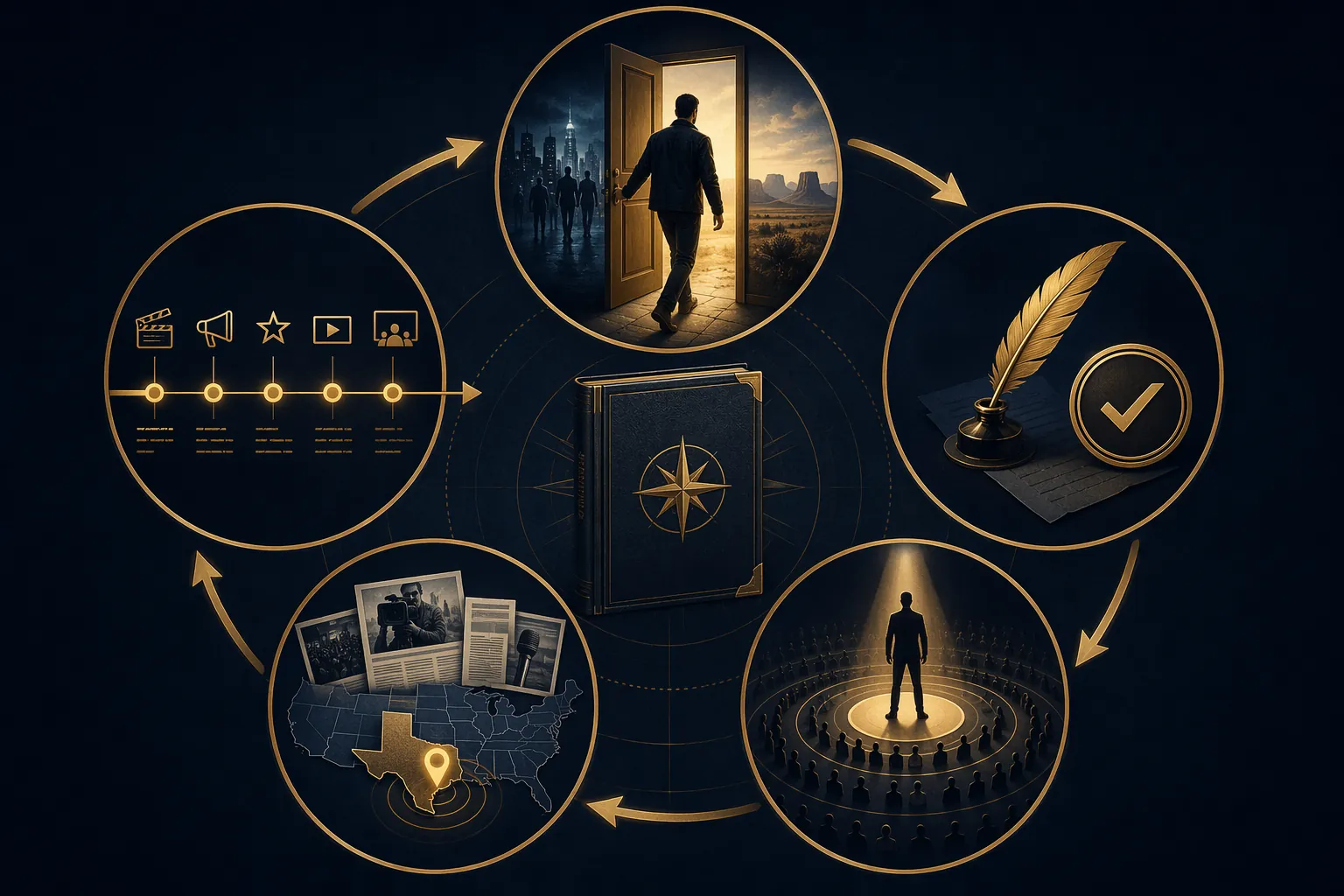
After that, the public sequence was unusually legible. Paramount+ gave the project a February 2026 greenlight.[8] In March, Variety reported creator and casting signals, including Matt Thunell’s framing of Sheridan’s “singular voice” as Sheridan was set to write all eight episodes.[4] In April, additional casting moved the story again when Variety reported that Gen V actor Asa Germann had joined as Jackson’s son.[5] Around the same stretch, Sylvester Stallone’s on-set social content helped connect the spinoff back to the working machinery of Tulsa King rather than leaving it as an abstract development item.
| Campaign beat | What it did for the launch |
|---|---|
| Tulsa King Season 3 exposure | Introduced Russell Lee Washington Jr. inside an audience the platform already had |
| February 2026 greenlight | Moved the project from implied extension to official platform commitment |
| March 2026 creator and casting signals | Made Sheridan’s authorship and franchise continuity part of the story |
| April 2026 casting and on-set content | Kept the project visible through people, production, and franchise proximity |
| Ongoing North Texas production coverage | Turned local hiring and location activity into earned-media inventory |
For a streaming marketer, the value is not that each beat was spectacular. It is that each beat gave press and fans something different to process: character, confirmation, authorship, casting, location, production. That is how a pre-release window stays alive without pretending every update is a creative revelation.
The Backdoor Pilot Did the Heaviest Marketing Work
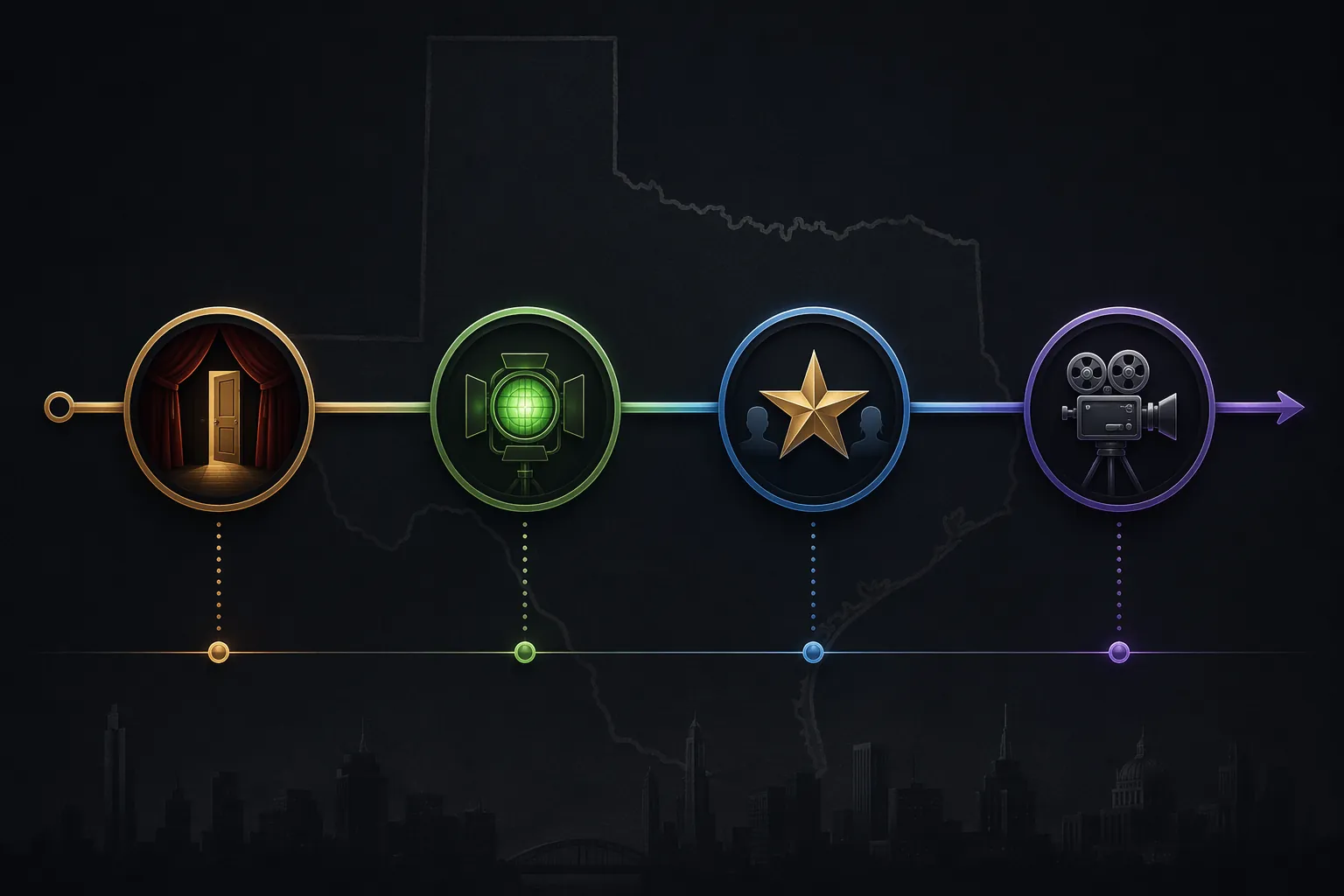
The strongest part of the Frisco King playbook is the backdoor-pilot move. Paramount+ did not ask viewers to care about Russell Lee Washington Jr. cold. It put him in Tulsa King Season 3 first, beside a show already carrying measurable value for the platform. That gives the spinoff a practical advantage: the character can be sampled by the existing audience before the standalone series has to carry its own acquisition burden.
This is not “free marketing” in the lazy sense. Tulsa King Season 3 still costs money to produce and promote. The more precise point is that the spinoff character’s first exposure rides inside production and marketing activity that would already exist for the parent series. The incremental task is not building an entirely separate awareness campaign; it is making the audience notice which part of the existing campaign is expandable.
That matters because audience validation in streaming is often discussed as if it only begins after launch. Backdoor exposure creates an earlier, softer test. Paramount+ can watch which clips travel, which cast combinations generate coverage, how the audience talks about the new character, and whether entertainment press treats the spinoff as a logical extension or a thin extraction. Those signals are not the same as completion rate or subscriber lift, but they are better than launching a franchise extension with no observed reaction at all.

The teaser coverage reinforced the same idea. Deadline’s Tulsa King Season 3 reporting previewed the spinoff setting before Frisco King had to stand alone as a title.[2] For marketers, that is the difference between announcing a new show and letting an already-performing show point toward it.
Creator Authorship Became a Continuity Signal
The creator-authorship beat was handled as a quality signal, not just a credit. Variety reported that Sheridan would write all eight episodes, with Paramount Television Studios president Matt Thunell citing Sheridan’s “singular voice” in the announcement.[4] In franchise marketing, that kind of phrasing is doing a specific job: it tells the existing audience that the extension is not merely licensed from the universe, but authored from within it.
That is useful because spinoffs often carry a credibility tax. Fans want the familiar world, but they also look for signs that the new title is a lower-priority branch. A showrunner, writer, or creator signal can reduce that anxiety when the person named actually has brand equity with the audience. In this case, Paramount+ can make continuity legible with one concrete production fact: Sheridan writing the full eight-episode season.
The tactic is easy to over-apply. “From the creator of” language is weak when the creator’s involvement is distant or ceremonial. The Frisco King version is stronger because the claim is specific enough to carry weight. It gives marketers a clean answer to the question that sits under many franchise extensions: who is protecting the voice?
Samuel L. Jackson Expanded the Addressable Audience
Jackson’s casting is the campaign’s broadest top-of-funnel asset. His role as Russell Lee Washington Jr. is significant not only because he is famous, but because the project positions Frisco King as his first-ever television lead role.[4] That gives entertainment press a simple headline and gives Paramount+ a way to reach beyond viewers already primed by Tulsa King or the Sheridan brand.
A star reveal works best when it changes the audience map. Jackson brings recognition across generations and genres; he is not merely a prestige signal for existing Sheridan viewers. The casting tells potential viewers who may not follow Tulsa King that this is not just another franchise side-room. It also gives paid and earned media teams a durable human hook long before plot details are useful.
The April casting of Asa Germann as Jackson’s son added a second kind of reach. Germann’s Gen V connection gives the campaign a younger genre-adjacent reference point, while the father-son framing creates an easy relationship premise for coverage to explain without leaning on speculative story details.[5] That is a better marketing asset than vague ensemble expansion because it says how the new actor fits the launch story.
Local Production Turned Routine Logistics Into Earned Media
The North Texas production layer is where the campaign becomes less glossy and more useful. Casting calls are not usually treated as strategic assets, but they are exactly the sort of production activity that can produce low-cost visibility when a title already has enough recognition to interest local outlets.
Frisco King extra casting calls generated coverage around specific local opportunities, including a rave scene paying $200 per night and a Pakistani restaurant scene.[7] Those details are small, but they make the show physically present in a market before the series is available to stream. Local readers are not just hearing that a Paramount+ title exists; they are seeing that it is hiring, filming, and occupying recognizable production space.
The title shift from NOLA King to Frisco King also became a press object rather than an internal naming footnote, drawing coverage from entertainment and regional outlets.[6] A title change can be confusing if it looks reactive. Here, it also helped attach the spinoff more firmly to its production geography and gave reporters a fresh reason to revisit a show still months away from release.
The operational backdrop helps explain why this geography can keep supplying campaign material. CBR connected Sheridan’s production shift toward Texas with a broader strategy around franchise logistics, while Fort Worth Magazine has covered Sheridan’s Fort Worth production footprint, including SGS Studios and the Four Sixes Ranch.[6][9] That does not mean production efficiency automatically creates audience demand. It means the same infrastructure that supports shooting can also generate a steady local-media surface.
The Cadence Is the Most Transferable Part
Most companies cannot borrow Samuel L. Jackson or Taylor Sheridan. They can borrow the sequencing logic. Frisco King’s pre-release campaign works because the beats do not all ask the audience to care about the same thing. One beat validates the character inside Tulsa King. Another confirms the platform commitment. Another reassures the core franchise audience through authorship. Another widens reach through casting. Another keeps the title present through production markets.
- Use the parent product or franchise to expose the extension before the extension carries its own launch cost.
- Make continuity concrete through named creative involvement, not generic brand language.
- Choose a star or spokesperson who expands the reachable audience instead of merely pleasing the existing one.
- Treat production, hiring, locations, and operational milestones as potential earned-media surfaces.
- Pace announcements so each quarter adds a new kind of information rather than a louder version of the same message.
The pacing also protects the campaign from one of the common problems in subscription launches: peaking too early. A single splashy announcement can create a large but short-lived awareness spike. A multi-quarter sequence gives different departments something to work with. PR has casting and production. Social has on-set material. Growth teams have franchise adjacency. Brand teams have the creator and star story. Local markets have concrete participation angles.
There is a ceiling on what this can prove. Pre-release attention can be bought, borrowed, or produced through operational activity. Frisco King uses all three, but the most interesting parts are borrowed and produced: borrowed from Tulsa King’s audience and produced by the normal work of casting, filming, and staffing. Post-launch performance will still have to answer different questions about viewing, retention, and subscriber behavior.
What This Playbook Requires
The Frisco King case is transferable, but only under certain conditions. A backdoor pilot needs a parent title with enough audience attention to make the exposure meaningful. Creator-authorship messaging needs a creator whose name actually changes perception. Star marketing needs a performer who reaches beyond the franchise base. Local earned media needs production activity that is visible, specific, and interesting to the market where it happens.
That is why this is a strong pre-release playbook rather than a universal launch template. Paramount+ is extending a franchise ecosystem with documented demand, a commercially valuable parent series, a creator whose involvement is itself a story, and a lead actor whose television role gives press an unusually clean hook. Without those ingredients, the same sequence could look like ordinary development news stretched across too many months.
For now, the clean verdict is deliberately limited. Paramount+ has not proven Frisco King’s audience conversion or subscriber impact. It has built a campaign that makes the spinoff easier to understand before release: validate the character inside the universe, signal creative continuity, broaden the audience through casting, turn production markets into media surfaces, and keep the announcement rhythm alive without pretending that pre-release chatter is the same as performance.
References
- Sheridan shows $800M+ streaming revenue analysis, TheWrap, November 2025.
- Tulsa King Season 3 teaser and Paramount+ original series performance reporting, Deadline, August 2025.
- Sheridan originals demand share analysis, TVREV.
- Frisco King greenlight, Taylor Sheridan authorship, and Matt Thunell comments, Variety, March 2026.
- Asa Germann joins Frisco King casting report, Variety, April 2026.
- Frisco King title change and Texas production strategy coverage, CBR, July 2026.
- Frisco King extra casting calls coverage, Fort Worth Star-Telegram, 2026.
- Frisco King official show details and greenlight announcement, Paramount+ Sneak Peak, 2026.
- Fort Worth production details for Taylor Sheridan projects, Fort Worth Magazine, March 2026.
Built on this evidence
No Bidding tactic or Creative record currently cites this case file. Compare it against other results in Benchmarks.
Related benchmark reading
Report a corroborating or contradicting result
Seeing something different in your own account? Feed the data-integrity loop instead of leaving an open comment.