
What Suno's GEMA loss means for AI ad creatives
The Munich Regional Court's July 31, 2026 ruling in GEMA v. Suno does not make AI-generated music unlawful in ads, but it weakens Suno's commercial-rights promise and shifts rights verification onto media buyers. What changes for AI ad creatives is the diligence burden: keep dated records of plan tier, downloads, and prompts, and track the appeal plus the U.S. case dates before trafficking AI music.
- Platform
- Suno
- Creative type
- AI music
- Last reviewed
- 0-08-27
| Decision date | Procedural status | What the ruling addresses | Immediate meaning for ad creative |
|---|---|---|---|
| July 31, 2026 | First-instance judgment of Munich Regional Court I; appealable | Suno’s training on protected works and its storage and reproduction of those works in Europe | It does not rule that an advertiser’s use of generated music is unlawful, but it makes a generic commercial-rights promise less useful without asset-level evidence. [1][2] |
The practical impact of GEMA v. Suno on AI ad creative is therefore a verification burden, not an automatic ban. A buyer can still receive a track that Suno’s terms permit them to use commercially while remaining exposed to a claim that the output reproduces or is derived from third-party protected material. Contractual permission from the platform and freedom from infringement claims are separate questions.
The court’s chronology, enforceability and appeal updates belong in the GEMA v. Suno ruling tracker. The immediate production question is narrower: before a Suno-derived audio file reaches trafficking, what should the buyer be able to produce if a client, platform or rights holder asks where it came from?
The asset file to build before launch
| Record | What to preserve | What it establishes | Reason to pause trafficking |
|---|---|---|---|
| Audio asset | Original downloaded file, generated version identifier if available, and the final edited export | Which source output became part of the ad | The team cannot reliably connect the final mix to a particular source file |
| Account and plan | Account owner, plan name, billing evidence and plan status when the file was downloaded | Whether the account met the platform’s commercial-use conditions on the relevant date | The file was downloaded under a tier that did not grant commercial rights |
| Dated transaction | Download timestamp, receipt, invoice or contemporaneous project log | When the asset entered the production chain | No dated evidence can connect the download to the claimed subscription period |
| Applicable terms | A PDF, screenshot or archived copy of the terms and download policy effective on that date | The actual license language relied on, rather than the vendor’s current marketing copy | The team is relying on terms that took effect only after the download |
| Prompt provenance | Full prompt history, revisions, uploaded references and generation settings retained by the team | What the user asked the system to evoke and whether protected songs or artists were deliberately targeted | Prompts or reference inputs explicitly call for imitation and no rights review occurred |
| Output review | Reviewer, review date, notes on recognizable lyrics, melody, hooks, arrangement or other striking similarities | That the output itself was checked rather than cleared solely from the prompt | A reviewer recognizes protected material or cannot distinguish the output from a known work |
| Handoff and approvals | Producer approval, client disclosure where required, media-buyer acceptance and any platform-specific records | Who accepted the remaining risk and which version was authorized | The approved file and the trafficked file do not match |
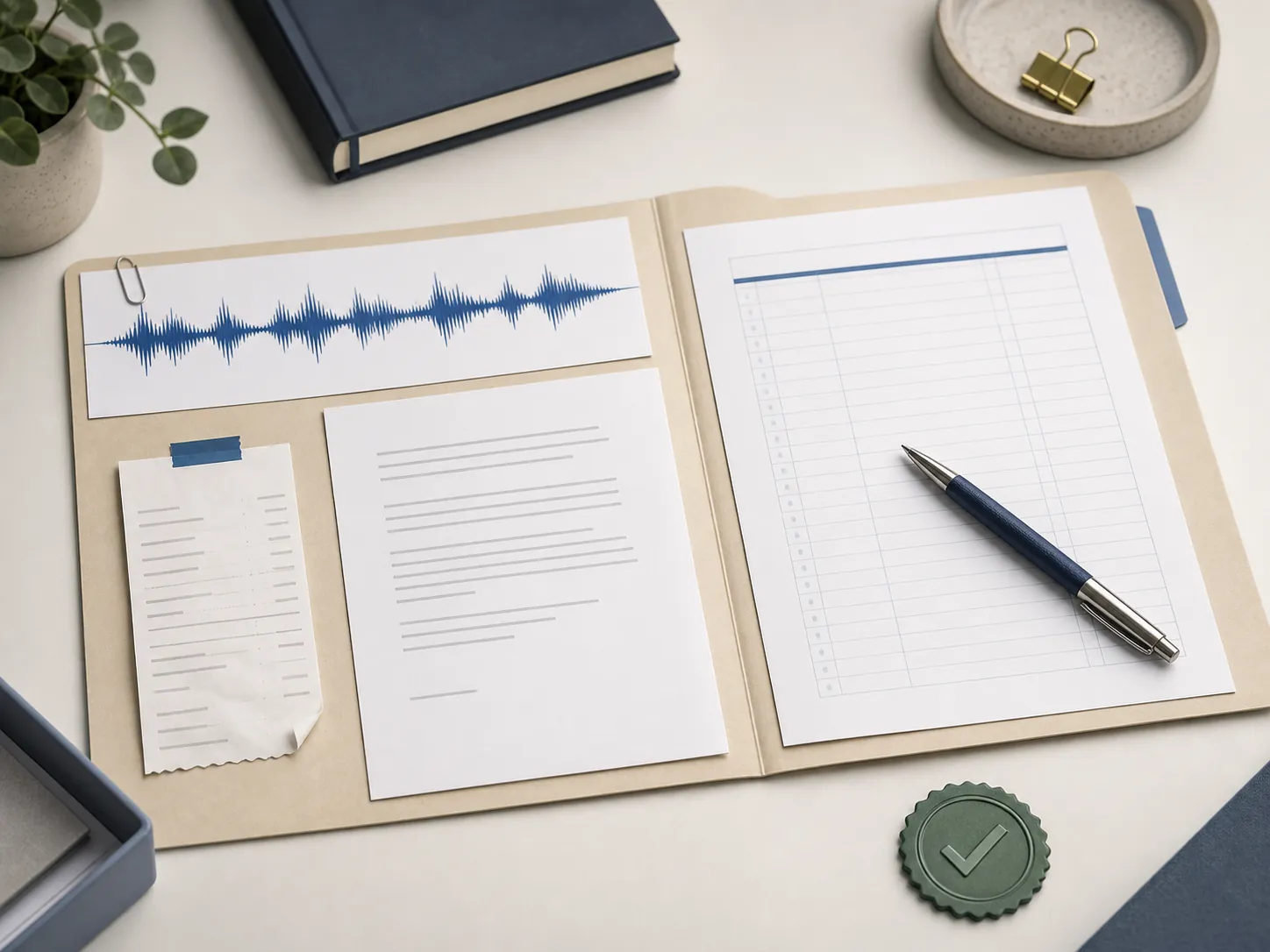
This documentation is evidence of the team’s process and contractual basis. It does not cure infringement, convert an imitative output into an original one or guarantee that a platform will accept the asset. Its value is clear when the person trafficking the campaign needs to reconstruct the supply chain without relying on someone’s memory of which subscription was active.
Match the download—not just the generation—to the correct plan
As of August 27, 2026, Suno’s announced September 3, 2026 policy change is still prospective. Under the announced policy, Free accounts will receive seven lifetime trial downloads without commercial rights. Pro will allow 20 downloads per month, Premier 60 per month and Premier Studio unlimited downloads; commercial rights will apply only to downloads made on paid plans.[3][4]
That makes the download event operationally important. A project folder showing that a producer later upgraded to a paid plan does not, by itself, establish that an earlier free-plan download acquired commercial rights. Nor should a team apply the September 3 policy backward to a file obtained under earlier terms. The relevant evidence is the plan and license language in force when the particular file was downloaded.
For a new campaign, the cleanest record connects four items: the Suno account, the paid tier, the timestamped download and the exact terms effective that day. Keep the invoice, but do not let it stand alone. An invoice proves payment; it may not prove which track was downloaded during the covered subscription period.
Older assets need the same treatment before reuse. If an agency created a track for an organic post and now wants to place it in a paid campaign, retrieve the original download record rather than assuming the new media spend or current subscription changes the old file’s rights. Where that link cannot be reconstructed, regenerating and redownloading an acceptable replacement under documented paid-plan terms may produce a cleaner contractual record. The replacement still requires similarity review.
Prompt provenance is part of the rights review
GEMA’s case identified outputs it considered “misleadingly similar” to works including “Forever Young,” “Atemlos,” “Mambo No. 5,” “Rasputin,” “Big in Japan” and “Daddy Cool.”[5] That list does not establish that every generated song resembling a genre infringes copyright, and the available case materials do not justify treating every stylistic reference as equivalent to copying. It does show why the final audio cannot be reviewed in isolation from the request that produced it.
Preserve the full prompt chain, not just the sanitized final line pasted into an approval document. That includes revisions, continuation requests and any uploaded audio used as a reference. A first prompt may ask for a broad mood, while a later revision asks for the hook, vocal delivery or arrangement of an identifiable work. The latter instruction is the one a reviewer needs to see.
The prompt log answers intent and provenance questions; it does not clear the output. A generic prompt can still produce something recognizable, while an ill-advised reference may result in an output that is not materially similar. Review both sides of the generation event.
- Flag direct requests to reproduce a named song, lyric, melody, hook or recording.
- Escalate artist-name prompts and combinations of details that plainly point to one performer or work, rather than assuming removal of the name from the final prompt resolves the issue.
- Listen to the unedited output and the final ad mix. Editing, shortening or placing voice-over above a track does not make a recognizable element irrelevant.
- Record who performed the review and what was checked. If the reviewer recognizes a work, stop the handoff and seek qualified clearance advice or replace the asset.
A media buyer is not expected to produce a legal musicological analysis. They do need a usable escalation threshold. “The paid plan says commercial use” is not a sufficient answer when the audio itself sounds like a known song or the prompt history shows that the resemblance was requested.
What the Munich ruling actually puts at risk
Munich Regional Court I’s 42nd Civil Chamber found that Suno breached German and U.S. copyright law through training on GEMA-repertoire works and through storage and reproduction in Europe. The court ordered revenue disclosure and damages, although the amount had not been set in the available reporting. The judgment is first-instance rather than final.[1][2]
Those findings concern Suno’s conduct. They are not a holding that an advertiser infringes whenever an ad contains Suno-generated audio. The distinction matters because the buyer is dealing with an output license, while the litigation examined what happened upstream in training, storage and reproduction.
Even so, an upstream loss weakens the operational comfort supplied by Suno’s commercial-rights language. A platform can grant the contractual rights it controls; it cannot make a third party’s potential rights disappear merely by labeling a subscription commercial. If the source, prompt and output cannot be defended, the agency may have little more than proof that it complied with Suno’s account rules.

How exposure moves into the advertising chain
The generated file moves through several hands: the account holder creates or downloads it, a producer edits it, a buyer attaches it to an ad, and a client pays to distribute the resulting creative. The Munich judgment does not assign liability across that entire chain. Contracts, jurisdictions, platform rules and the facts of a particular output can change the analysis.
The practical gap appears at handoff. The producer may understand “commercial rights” as permission to deliver the file. The buyer may understand delivery as confirmation that it has been cleared. The client may understand campaign launch as the agency’s acceptance of the risk. A rights record prevents those assumptions from silently replacing an actual review.
GEMA’s licensing model makes the downstream question harder to ignore. Introduced in September 2024, it has one component for AI training, described as a 30% share of an AI provider’s net income subject to a minimum royalty, and another for the “subsequent use” of AI-generated music. GEMA says the latter includes use as background music or on music platforms and proposes a share at least equal to that for human-generated works.[6]
The connection from that “subsequent use” component to advertising is this article’s analytical synthesis: music embedded in a paid video can function as commercial background music, so the model signals that GEMA views licensing as extending beyond the provider’s training stage. It is not a direct declaration from GEMA that every ad containing generated music requires one particular GEMA license. Whether a specific campaign does depends on the work, use, territory, parties and applicable law.
Suno disagrees with the judgment and called it “a fundamental mischaracterization of how Suno’s technology works.” It was evaluating an appeal as of the reported decision.[2] That disagreement is important, but it does not give a trafficking team a substitute for dated records while the judgment remains subject to further proceedings.
The decision also follows GEMA’s November 11, 2025 win against OpenAI concerning ChatGPT’s use of song lyrics, which OpenAI is appealing.[7] The implications of that dispute for advertisers are covered separately in the GEMA v. OpenAI copyright-risk analysis and its case-status tracker; the Suno asset review should not assume that the earlier case decides the treatment of generated audio.
Dated watchlist
| Date or event | What changes | What the asset owner should check |
|---|---|---|
| September 3, 2026 | Suno’s announced terms and download policy take effect, including the distinction between free downloads without commercial rights and paid-plan downloads with commercial rights. [3][4] | Archive the new terms and ensure post-change campaign files are tied to qualifying paid-plan downloads |
| September 30, 2026 | Scheduled close of discovery in the U.S. litigation. [8] | Watch for evidence or rulings that alter the assessment of Suno’s training and licensing position |
| April 9, 2027 | Scheduled deadline for dispositive motions in the U.S. case. [8] | Reassess long-running or reusable creative libraries before relying on prior clearance decisions |
| Munich appeal | Suno was evaluating an appeal; no hearing date had been published as of August 27, 2026. [2] | Track whether the first-instance findings are stayed, narrowed, upheld or reversed |
The July 31 ruling does not itself prohibit AI-generated music in advertising. It does mean a buyer should not traffic a Suno-derived track on the strength of “commercial rights included” alone. Preserve the source asset, paid-plan evidence, dated terms, download record, prompt history and review notes now, then follow the GEMA-Suno ruling tracker for developments that could change that assessment.
References
- Court rules in favour of music creators: GEMA prevails over SUNO — GEMA, July 31, 2026
- Suno loses copyright infringement lawsuit brought by GEMA in Germany — Music Business Worldwide, July 31, 2026
- Suno Updates ToS — Suno
- 5 things to know about Suno’s BMG licensing deal — Music Business Worldwide
- AI lawsuit — GEMA
- Generative AI licensing model — GEMA, September 2024
- GEMA wins landmark ruling against OpenAI over ChatGPT’s use of song lyrics — Music Business Worldwide, November 11, 2025
- Why a fight over 61,000 recordings could shape the future of AI music licensing — Music Business Worldwide
This is a record of what happened and what was tested, not legal advice. Compliance determinations require qualified counsel.