
How Robinhood's Platinum Card Marketing Strategy Works
A tactical breakdown of Robinhood's Platinum Card launch—invite-only scarcity, physical-object branding, and ecosystem cross-sell—and what fintech marketers can learn from a go-to-market strategy designed to convert high-spending subscribers into wealth management clients.
Robinhood’s Platinum Card launch starts with a list, not a card.
In March 2026, Robinhood sent only 15,000 initial invitations for the Platinum Card, and those invitations went to its highest-spending Gold cardholders. There was no broad public application funnel and no generic waitlist designed to capture anyone with premium-card curiosity. Robinhood used spending data it already had to decide who should see the offer first. [1][2]
That is the useful place to enter the Robinhood Platinum Card marketing strategy. The obvious story is a premium credit card wrapped in a heavy metal object. The more interesting story is a customer-selection system: Robinhood already knew these users paid for Gold, already knew they spent enough to matter, and could now test whether a higher-status financial product would pull them deeper into its wealth, banking, and advisory ecosystem.
The Invite List Did The Positioning Work First
Invite-only launches are easy to overread as scarcity theater. Here, scarcity had a more practical job. Robinhood was not hiding the product from the market because no one would understand it. It was exposing the product to a narrow group of people whose behavior already suggested they might be worth a much larger relationship.
The filter matters. A highest-spending Gold cardholder is not just an affluent prospect in the abstract. This is someone who has already accepted Robinhood as a place to hold a paid financial relationship, already uses a Robinhood card, and already produces transaction data Robinhood can analyze. Robinhood has said its Gold Card had more than 700,000 cardholders, with about $10 billion in annualized spend, and that it expected to reach well over one million Gold cardholders by the end of 2026. Those are Robinhood’s own figures, so they should be treated as company-reported scale signals rather than independent proof of performance. [3]
Still, the strategic shape is clear. Robinhood did not need to buy a cold audience, explain the brand from zero, or persuade a mass affluent traveler that one more premium card belonged in the wallet. It could start with users who had already crossed three thresholds: they knew the brand, they paid for a subscription, and they spent enough to qualify for a status upgrade.
That changes what the card is allowed to do. A standalone premium card has to justify itself at the point of acquisition: fee, rewards, lounges, credits, insurance, welcome offer. Robinhood’s Platinum Card can work more like a routing device. It identifies a subset of Gold users, gives them a reason to feel recognized, and then creates a more natural path into products where Robinhood’s economics may be better than credit-card interchange.

The Card Was A Gateway, Not The Destination
Deepak Rao, Robinhood’s general manager for money, told Reuters the Platinum Card could “act as a channel to bring in wealthy customers who can then choose to use Robinhood’s other services.” That sentence is more revealing than any benefit grid. It places the credit card in the acquisition architecture, not at the center of the profit story. [1]
The downstream products give that architecture a commercial reason to exist. At its Take Flight event, Robinhood said its Strategies product had $1.5 billion in assets under management and more than 250,000 funded customers, while Banking had more than $800 million in deposits and more than 50,000 funded customers. Again, these are company-reported figures, but they show where Robinhood wants higher-value users to go after the card opens the door. [3]
The funnel is not complicated, which is why it is easy to miss:
| Stage | What Robinhood Already Knows | What The Platinum Card Adds |
|---|---|---|
| Gold subscriber | The user will pay for a Robinhood financial membership | A higher-status offer without starting from cold acquisition |
| High-spending cardholder | The user has meaningful transaction volume | A qualification signal for premium pricing and wealth-adjacent products |
| Platinum invitee | The user belongs to a selected segment | Recognition, exclusivity, and a reason to engage |
| Potential ecosystem client | The user may have investable cash, deposits, or advisory needs | A bridge into Strategies, Banking, and other Robinhood services |
This is why the 15,000-invite rollout is more than launch choreography. It reduces persuasion waste. Robinhood does not have to make the Platinum Card legible to every premium-card shopper. It can make it meaningful to the smaller group whose behavior already says: this person might spend, pay, invest, deposit, and consolidate.
The public evidence does not show conversion rates from Platinum invite to Strategies customer, Banking depositor, or broader wallet share. It also does not show the nurture sequence behind the launch: email cadence, in-app messaging, push notifications, call-center scripts, or creative testing. So the defensible claim is narrower than “the strategy worked.” The public product design shows what Robinhood was trying to make happen.
The Heavy Card Was Earned Media With A Job
The physical card is the part most people notice first: 99.9% pure platinum plating, a deliberately heavy feel, and Robinhood executives describing it as “annoyingly heavy.” Payments Dive also reported Robinhood’s direct jab at American Express: “actually platinum, unlike some platinum cards.” [2]
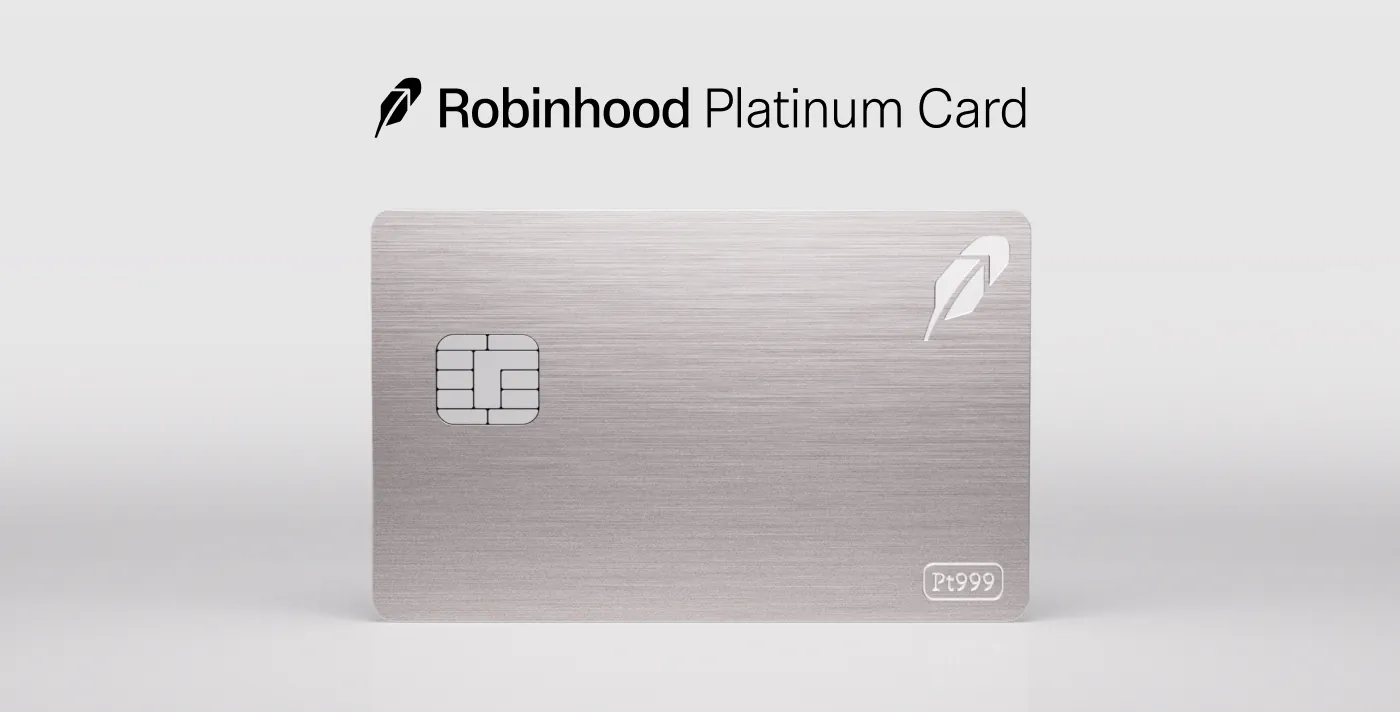
As a product feature, the plating is theatrical. As a go-to-market asset, it is efficient. It gives journalists a concrete hook, gives invited users a shareable object, and turns a financial product into something that can be photographed, weighed, compared, and argued about. Most premium cards say status through access. Robinhood made status tactile.
That distinction matters because Robinhood was not trying to look like a slightly cheaper Amex Platinum. Rao told Reuters the target audience was younger, tech-savvy, high-net-worth consumers who “don’t identify culturally” with American Express or Chase. Sam Altman’s endorsement added another layer of tech-elite signaling. [1]
The point is not that one founder endorsement moves the market. It is that the launch gives the intended user a different story to tell about wealth. Not old rewards wealth. Not lounge-access wealth. Not spreadsheet-maximizer wealth. More like founder/operator/platform wealth: people who want premium treatment without borrowing the rituals of legacy premium cards.
That is why the Amex comparison works as positioning even if it is not a full competitive analysis. It identifies the institution Robinhood wants to stand against, then refuses to compete on that institution’s most familiar terrain.
The Missing Lounge Benefit Is A Segmentation Choice
Premium-card marketing usually turns into a benefit inventory: airport lounges, travel credits, transfer partners, hotel status, concierge access. Robinhood’s more interesting decision was what it left out.
Reuters reported that Robinhood’s market research found its affluent target users did not care as much about points transfers or lounge access because they already bought business class and preferred pure cash back. NerdWallet’s overview of the card also emphasizes the product’s cash-back orientation rather than a traditional points-and-lounges structure. [1][4]
That is not a universal truth about affluent consumers. It is a narrower, more useful claim: Robinhood believed this specific premium segment valued simplicity and cash economics more than travel-rewards optimization. The consequence is exclusion. A traveler who loves transfer partners may self-select out. A cardholder who wants the cleanest cash-back expression of status may feel the product was made with them in mind.
Good premium positioning often depends less on adding one more perk than on making the wrong buyer mildly uncomfortable. A no-points, no-lounge premium card tells the market: if you want the classic travel-rewards game, this is not your object. That is risky if the goal is broad adoption. It is sensible if the goal is to identify a narrower group that looks more like Robinhood’s ideal ecosystem customer.
Price Helped Robinhood Sound Premium Without Sounding Legacy
Robinhood priced the Platinum Card at a $695 annual fee, below the reported $895 fee for Amex Platinum and the $795 fee for Chase Sapphire Reserve. Yahoo Finance also reported Robinhood’s claim of more than $3,000 in annual value. [5]
The fee does two things at once. It keeps the card in premium territory; this is not a mass-market cash-back product dressed in metal. But it also gives Robinhood a challenger frame against the two obvious incumbents. The product can say “premium” while still implying that legacy premium-card pricing contains waste.
The claimed $3,000-plus value should be handled carefully. It is a company claim, not an independently verified measure of what most cardholders will actually realize. For marketing strategy, though, the claim is still useful: it gives Robinhood a value anchor while the heavier strategic work is being done by the invite criteria, cultural contrast, and ecosystem path.
For a deeper look at the economics behind the benefit structure, see The Marketing Math Behind Robinhood's Platinum Card. The go-to-market question is slightly different: not whether every benefit pays for itself in isolation, but whether the card helps Robinhood acquire or upgrade customers whose broader financial relationship is worth more.
The X1 Piece Explains Capability, Not The Whole Strategy
Robinhood’s card ambitions did not appear from nowhere. Its acquisition of X1 brought credit-card product capability and Rao into the company, which made it easier to execute a card-led strategy without treating the card as a bolt-on partnership. The important point is not the acquisition as a corporate event; it is what the capability allowed Robinhood to control.
Control matters when the card is meant to serve multiple jobs. Robinhood needed the product, data, membership logic, invite system, and downstream cross-sell to feel connected. A premium card that simply carries another issuer’s strategy would be much less useful as an ecosystem gateway.
Do Not Confuse The Agentic Card Feature With The Platinum Launch
Robinhood later announced a credit card for AI agents with 3% cash back, reported by Fortune in May 2026. That feature belongs near the broader Robinhood card story, but it should not be folded into the Platinum Card positioning as if it were the same offer. [6]
The agentic feature points to Robinhood’s interest in software-native finance and automated spending use cases. The Platinum Card launch is a different move: a selected premium object aimed at high-spending Gold users who may be ready for more of Robinhood’s financial stack. Both fit Robinhood’s platform direction, but they answer different marketing problems.
What Fintech Marketers Should Take From The Launch
The reusable lesson is not “make a heavy card.” Most brands cannot, and most should not. The stronger lesson is that premium-tier launches work better when the company can define who deserves the offer before the market does.
- Use existing behavior to qualify the audience. Robinhood’s first Platinum audience was built from high-spending Gold cardholders, not a broad lookalike guess.
- Make scarcity operational, not decorative. The 15,000 invites mattered because they mapped to a known segment.
- Let benefits exclude as well as attract. Cash back without the usual premium travel grammar helped separate Robinhood’s target user from the legacy-card optimizer.
- Build a media object only if it advances the funnel. The platinum plating created attention, but its better job was making invited users feel selected and different.
- Judge the launch by downstream movement. A premium card can look successful in press and still fail strategically if selected users do not move into higher-margin products.
The public record does not prove that Robinhood’s Platinum Card has converted high spenders into wealth-management clients at attractive rates. It does show a disciplined go-to-market design. Robinhood selected warm, monetized users; gave them a status object that generated press; positioned the product against legacy premium cards; and attached the whole thing to a broader financial-services path.
That makes the Platinum Card less interesting as a credit card and more interesting as a lead-generation and ecosystem-lock-in device. Its success will depend less on whether the card feels impressive at dinner and more on whether those carefully selected high spenders move assets, deposits, and advisory relationships into Robinhood.
References
- Robinhood targets wealthy customers with new Platinum credit card — Reuters
- Robinhood takes on premium card issuers — Payments Dive
- Robinhood Unveils the Future of Family Finance at Robinhood Presents: Take Flight — Robinhood Newsroom
- 5 Things to Know About the Robinhood Platinum Card — NerdWallet
- Robinhood launches Platinum Card with premium benefits, $695 fee — Yahoo Finance
- Robinhood launches agentic trading, announces credit card for AI agents with 3% cash back — Fortune
This is a record of what happened and what was tested, not legal advice. Compliance determinations require qualified counsel.