
Qwen 3.8 Max for ad creative? Start with a capped test
Qwen 3.8 Max is the cheapest frontier-scale model a media buyer can test for ad creative right now, but the preview shipped with no published benchmarks, no per-token price, and no dated open-weight plan. Here's what Alibaba actually delivered — and why a capped test on copy iteration beats a production migration.
- Platform
- Qwen Cloud
- Creative type
- AI text creative
- Last reviewed
- 0-08-04
For a media buyer deciding this quarter whether to route any ad-creative generation through Qwen 3.8 Max, the useful question is not whether Alibaba’s launch language sounds ambitious. It does. The useful question is whether using Alibaba Qwen 3.8 Max for ad creative can be costed, contained, reviewed, and reversed before it touches production workflow.
On the shipped side, Alibaba announced qwen3.8-max-preview on July 19, 2026 at WAIC Shanghai, with some coverage dated July 20 UTC. The preview picture is large enough to deserve attention: a 2.4T total-parameter sparse MoE model, confirmed text and image input, and Qwen Cloud integration metadata showing a 983,616-token context window and 131,072 maximum output tokens. The active-parameter count was not disclosed.
Next to that launch sheet sits the part that matters when someone has to approve the invoice: no published benchmarks, no per-token API price, no active-parameter disclosure, and no dated open-weight plan with license terms. The $6 preview entry makes the model unusually easy to try for a frontier-scale system. It does not, by itself, make repeated headline generation, primary-text rewrites, landing-page angle exploration, or brief drafting predictably cheap.
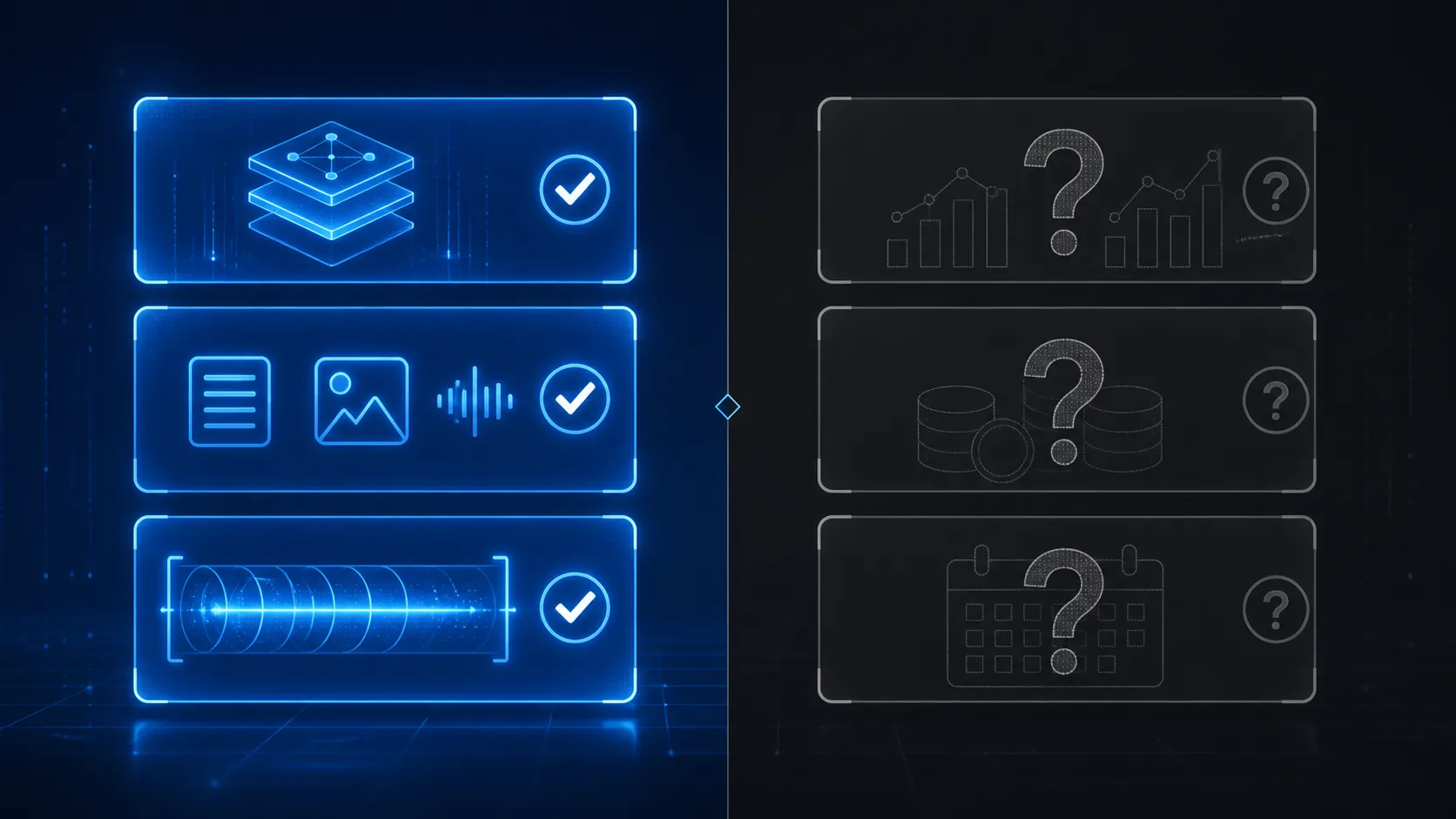
What shipped, and what did not
| Item | Status for an ad-creative workflow |
|---|---|
| qwen3.8-max-preview availability | Announced as a preview at WAIC Shanghai on July 19, 2026; enough to justify a test lane. |
| Model scale | 2.4T total parameters in a sparse MoE design; impressive, but not a cost model. |
| Input modes | Text and image input confirmed; useful for creative review, landing-page analysis, and brief expansion. |
| Context and output metadata | Qwen Cloud integration metadata lists 983,616-token context and 131,072 max output; potentially useful for long briefs, but also a reason to watch usage closely. |
| Active parameters | Not disclosed; total parameter count does not reveal compute used per request. |
| Benchmarks | Not published; Alibaba’s ranking language should be treated as vendor positioning until comparable public results exist. |
| API unit pricing | No per-token price disclosed; the preview entry price does not answer per-task cost. |
| Open weights | Promised without a dated release plan or license terms; not something to build a production dependency around yet. |
That table is the working record. A model can be worth testing before it is fully auditable. It should not be quietly promoted from experiment to infrastructure while the unit economics and verification layer are still missing.
The $6 entry is interesting. The billable unit is still unclear.
A low preview entry price changes the experimentation math for a small growth team. If a team can test a frontier-scale model without adding another SaaS seat or committing to a large platform contract, it can widen its creative exploration: more hooks, more angles, more brief variants, more ways to turn the same offer into testable copy.
But ad-creative generation is not a one-off demo. It is repetitive. A normal paid-social workflow can ask for dozens of headline variants, alternate primary text, pain-point rewrites, landing-page summaries, audience-specific hooks, compliance-safe reframes, and internal creative briefs. The cost question is not “Can we get in for $6?” It is “What does one reviewed, usable creative batch cost after retries, long prompts, image inputs, reasoning overhead, and discarded outputs?”
The preview’s credit system makes that harder to answer from the outside. Credits can be perfectly workable for a test, but they obscure the unit a buyer actually needs: cost per task, cost per accepted variant, cost per campaign brief, or cost per account per week. If always-on reasoning increases usage, that can be acceptable for harder planning tasks and wasteful for simple copy transformations. Without per-token API pricing, the operator has to measure the model in a sandbox instead of trusting the launch number.

That is where finance conversations usually go sideways. “Cheap” gets used to mean cheap to start, while the buyer needs cheap to repeat. For ad creative, repetition is the product.
Alibaba’s ranking claim should stay in the vendor-claim column
The “second only to Fable 5” framing is bold enough to notice and not solid enough to operationalize. Without published, dated, comparable benchmarks, it is Alibaba’s positioning claim. It may turn out to be directionally useful. It may also be based on internal evaluations that do not map to ad-creative work, brand-safety review, multilingual performance, landing-page interpretation, or prompt-following under budget caps.
For a media team, the missing benchmark is not only a leaderboard problem. It affects scope. If the public evidence does not show where the model is strong or weak, the safest early use is work where humans already review the output and where failure is cheap: draft variants, angle exploration, brief expansion, creative QA notes, and internal synthesis. That is different from letting the model feed production ads directly or replace an existing approval checkpoint.
Where Qwen 3.8 Max fits in an ad-creative test lane
The strongest near-term case is not automated media performance. The available materials do not support claims about CTR, CPA, ROAS, conversion rate, or creative fatigue. The stronger case is operational: can Qwen 3.8 Max help a team produce more reviewable creative options inside a known spend cap?
Good first tasks are bounded and disposable:
- Generate headline and primary-text variants from an approved offer, not from a vague business objective.
- Rewrite existing approved claims for different audience angles without inventing new proof points.
- Summarize landing-page sections into creative hooks for human review.
- Turn campaign notes into first-draft briefs that a strategist edits before use.
- Compare batches of variants against a brand, compliance, or offer checklist.
Poor first tasks are the ones that hide risk or make the cost harder to see: unattended ad upload, direct production copy without review, broad “make us a campaign” prompts, or workflows where the model can keep expanding context and output length without a hard stop.
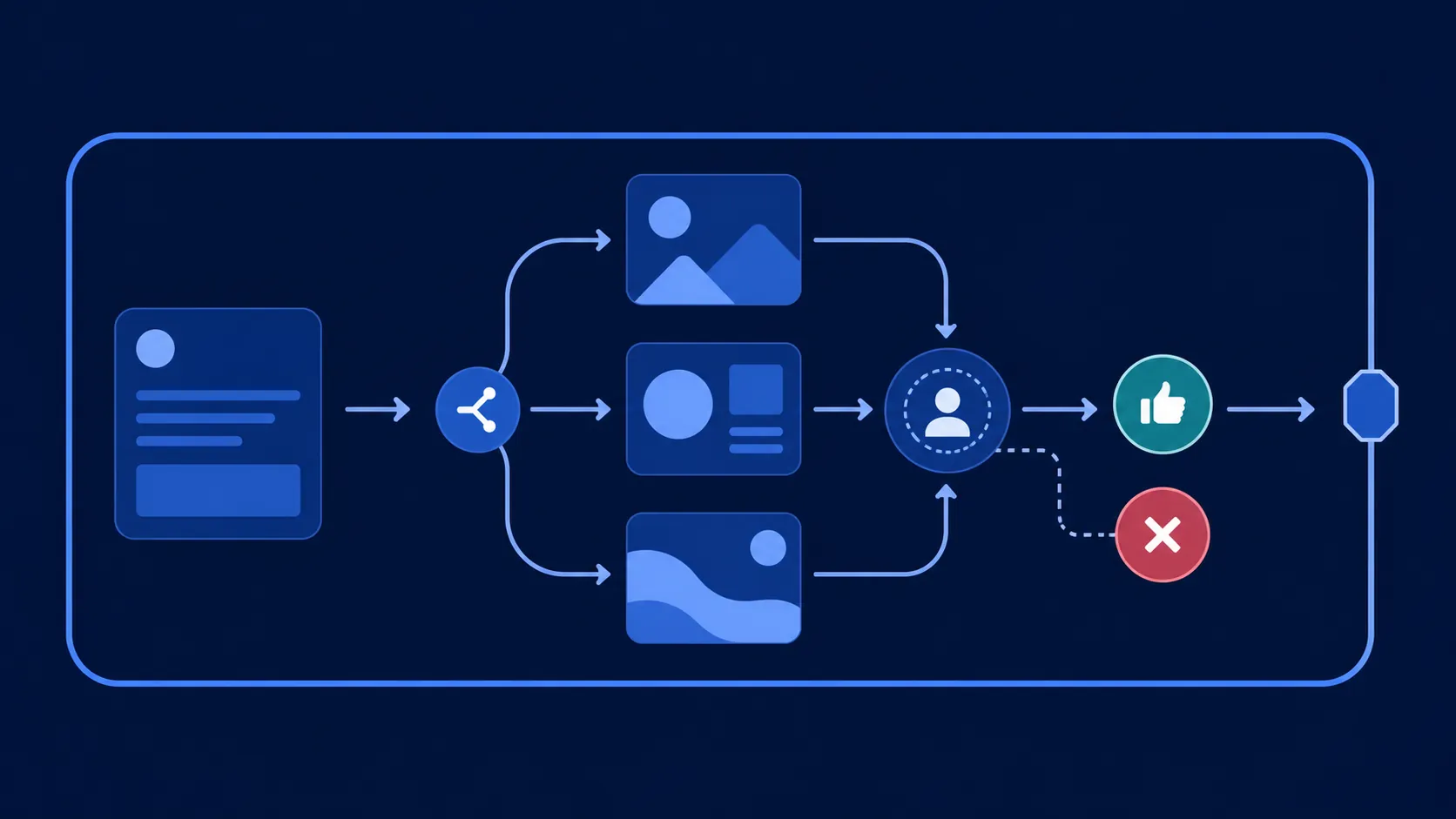
A capped 90-day test that can survive budget review
The test should be designed so the team can stop without breaking the creative process. That means Qwen 3.8 Max sits beside the current workflow, not underneath it. Existing tools and approval steps remain the control path.
| Test control | How to run it |
|---|---|
| Time box | Run the test inside a defined 90-day window, with review points before spend expands. |
| Spend cap | Set a hard credit or account-level ceiling before the first batch. Do not raise it automatically because early outputs look promising. |
| Task catalog | Limit usage to named tasks: headline variants, primary-text rewrites, landing-page angle extraction, and brief drafts. |
| Prompt templates | Use stable prompt templates so output quality and usage can be compared across batches. |
| Output limits | Cap requested variants, requested length, and retries. Long context is available, but it should not be the default. |
| Human checkpoint | Require a media buyer, strategist, or brand reviewer to approve anything that moves toward a live campaign. |
| Cost log | Record credits consumed per task type, per batch, and per accepted draft. |
| Exit rule | Keep the model in test status until pricing, benchmarks, and open-weight terms are public enough to audit. |
The cost log is the piece most teams skip and then regret. A useful log does not need to be elaborate. It needs to connect the model’s billing unit to the team’s operating unit. If one prompt produces 50 headline variants and three survive review, the buyer should know the cost of the batch and the cost of the three kept variants. If a long landing-page prompt produces a useful angle brief but consumes far more credits than a shorter template, that tradeoff should be visible before the workflow spreads to more accounts.
The review log should stay separate from the performance log. A Qwen-generated headline that a strategist likes is not evidence that the model improves CTR. A batch that helps the team find five stronger angles is evidence that it may improve creative throughput. Those are different claims, and only one of them is supported before live media results exist.
What the test can prove
- Whether the model follows the team’s creative templates closely enough to reduce editing time.
- Whether it produces enough reviewable variants to justify further testing.
- Whether credit consumption is predictable for common ad-creative tasks.
- Whether always-on reasoning appears useful for briefs and analysis, or wasteful for simple rewrites.
- Whether image input helps with creative review or landing-page interpretation in the team’s actual workflow.
What it cannot prove
- That Qwen 3.8 Max is objectively second only to Fable 5.
- That the model will lower CPA or improve ROAS.
- That preview credit economics will match future API pricing.
- That promised open weights will arrive on a usable timeline or under a license that fits commercial ad work.
- That a strong draft output is safe to publish without brand, legal, and platform-policy review.
The open-weight promise is upside, not a migration plan
Open weights would matter. They could give technical teams more control over hosting, privacy boundaries, latency, and long-term cost. They could also change the buying conversation from “Do we keep paying this preview system?” to “Can we operate this model under our own constraints?”
That is not where the July preview leaves buyers. Without a date and license, the open-weight promise belongs in the upside column, not the production plan. A team can monitor it. It should not defer normal vendor-risk questions because a more controllable version may arrive later.
Operational verdict for Q3 2026
Qwen 3.8 Max is worth a capped creative-iteration test because the preview may be the cheapest frontier-scale model a media buyer can evaluate right now. Use it for draft variants, brief expansion, landing-page angle extraction, and reviewed copy exploration. Keep the current approval path intact, cap spend before usage begins, and measure cost per usable task rather than trusting the entry price.
Alibaba’s “second only to Fable 5” framing should remain an unverified ranking claim until public, dated, comparable benchmarks are available. Qwen 3.8 Max should not become production ad-creative infrastructure until the missing benchmarks, per-token pricing, active-parameter disclosure, and open-weight terms are public enough to audit.
This is a record of what happened and what was tested, not legal advice. Compliance determinations require qualified counsel.