
The Nothing Bundt Cakes Grand Opening Playbook
A step-by-step grand opening marketing timeline for Nothing Bundt Cakes franchisees, from eight weeks before opening through the first 60 days, covering community outreach, paid advertising, and repeat-customer mechanics backed by real location case studies.
A practical Nothing Bundt Cakes grand opening marketing plan starts about eight weeks before the doors open and keeps going for the first 60 days. Opening week gets the photo, the ribbon, and the line out front. The work that decides whether the launch spend was worth it usually happens earlier: who has already met the bakery, who has a reason to show up on a specific day, and how those first visits get captured before the novelty wears off.
The financial stakes are not abstract. FDD-derived reporting for 2025 lists 459 franchised Nothing Bundt Cakes bakeries, a required $10,000 to $15,000 opening advertising fee, an ongoing 2% local advertising requirement, and a 5% national marketing fund contribution. The same source reports average gross revenue terciles of about $1.94 million for the top third of bakeries, $1.35 million for the middle third, and $1.02 million for the bottom third.[1] Public brand-site counts may use a broader scope, such as total open bakeries or units in development, so the FDD-derived figures are the cleaner source for launch-budget and franchised-bakery claims.

No single public source gives the whole operating calendar. The useful plan comes from stitching together the franchise financial requirements, repeated patterns in actual openings, and campaign case studies that show how paid media and personalization have been used around the brand. The result is a four-phase launch window.
| Launch Window | Phase | Main Job | What It Should Set Up |
|---|---|---|---|
| 8 to 5 weeks before opening | Pre-opening groundwork | Build the local audience architecture: chamber, charity partner, schools, city departments, healthcare groups, first responders, nearby employers, and neighborhood organizations. | Named groups with reasons to attend during opening week. |
| 4 to 1 weeks before opening | Pre-launch buzz | Turn those relationships into public dates, local PR, maps, paid reach, and offer reminders. | Awareness with a destination, not just impressions. |
| Opening week | Grand opening week | Run a structured celebration calendar: appreciation days, charity day, ribbon cutting, and Free Bundtlets for a Year mechanic. | High-intent first visits and identifiable customer records. |
| First 60 days | Post-opening retention | Move opening-week visitors into eClub, app, punch-card, catering, gifting, and occasion-based repeat behavior. | A local store marketing rhythm after the launch project ends. |
Eight to Five Weeks Out: Build the Room Before You Invite the Crowd
The first phase is not “announce we are coming soon.” It is deciding which local groups will make opening week feel like a town event instead of a bakery trying to buy attention. This is where the operator, field marketer, and store leadership turn a corporate launch template into a calendar that fits the trade area.
Start with the chamber, because the ribbon cutting needs a host, an invitation list, and enough notice to land on civic calendars. Then choose the charity partner before the public announcement goes live. In Sunset Valley, the bakery’s grand opening week included a Friday benefit day sending 20% of sales to Make-A-Wish Central & South Texas, followed by a Saturday chamber ribbon cutting and Sunday Free Bundtlets for a Year promotion for the first 50 guests.[2] Owensboro used the same basic opening-week shape with Ronald McDonald House Charities of the Ohio Valley as the charity partner.[3] Cypress tied its grand opening support to Cy-Fair Helping Hands.[4]
That pattern matters because the charity day is doing more than softening the sales pitch. It gives local media a reason to care, gives the nonprofit a reason to mobilize its own network, and gives the bakery staff a clear answer when someone asks, “Why should I come Friday instead of whenever?” The partner should be chosen early enough to approve copy, coordinate social sharing, and prepare the team for donation-day traffic.
Next, assign weekday audiences. Sunset Valley’s opening week recognized city employees on Monday, first responders on Tuesday, healthcare workers on Wednesday, and teachers on Thursday.[2] That sequence is useful because it breaks a vague “community appreciation” idea into actual outreach lists. Someone can call the city manager’s office. Someone can drop a tray and invitation at the fire station. Someone can ask school administrators how staff communications work. Someone can make sure hospital and clinic employees know which day is theirs.
This is also the point to get honest about capacity. Appreciation days consume cake, labor, manager attention, and goodwill if they are underprepared. A bakery that invites teachers on Thursday needs a plan for before-school, lunch, and after-school windows. A first responder push may produce irregular arrival times. Healthcare outreach may reach people who cannot leave mid-shift. The marketing calendar has to be checked against staffing and production, not just against what looks nice on a flyer.
The Pre-Opening Contact List
- Chamber of commerce: confirm ribbon-cutting date, invitation process, photography expectations, and elected-official outreach.
- Charity partner: confirm donation terms, day-of messaging, logo use, social posts, and who will be present during the event.
- Schools and teachers: identify district communications rules, staff lounges, PTA contacts, and realistic pickup windows.
- First responders and healthcare workers: map nearby stations, clinics, hospitals, urgent care centers, and shift constraints.
- City employees and local organizations: give them a specific appreciation day, not a generic opening announcement.
- Nearby employers and property managers: prepare lunchroom cards, catering conversations, and business-gifting introductions.
The owner does not need to turn every contact into a formal partnership. The goal is simpler: by the time paid media starts, the bakery should know which local hooks the ads and PR are supporting. Spending the opening ad fee before that work is done is how a launch becomes broad, busy, and forgettable.
Four to One Weeks Out: Spend the Opening Ad Fee Against Real Jobs
The $10,000 to $15,000 opening advertising fee should not be treated as one big awareness bucket.[1] By four weeks out, it should have jobs attached to the calendar: tell people the bakery is coming, make the address easy to find, drive attendance to specific opening-week events, promote the Free Bundtlets for a Year mechanic, and retarget people who have shown interest.
| Budget Job | Best Timing | Operator Check |
|---|---|---|
| Local awareness | Four to three weeks out | Are ads and PR naming the neighborhood, opening date, and bakery location clearly? |
| Directions and proximity | Three weeks out through opening week | Can nearby drivers and mobile users find the storefront without friction? |
| Event attendance | Two weeks out through opening week | Is each audience seeing the day meant for them? |
| Offer promotion | Final week and opening weekend | Are the rules for Free Bundtlets for a Year clear and staffed? |
| Retargeting and capture | Opening week through first 60 days | Are visitors being moved into eClub, app, punch-card, or other repeat-visit paths? |
Geo-targeted mobile advertising can fit this phase well because bakery launches are physical, local, and time-bound. Ansira published a Nothing Bundt Cakes Waze campaign case study reporting 391% ROAS, 90,253 in-store visitors over seven months, and a 52% navigation rate.[5] Those are vendor-published campaign results, not a promise that every new bakery will see the same return. The practical lesson is narrower: when the local hook and address are clear, navigation-based ads can support store discovery and trips.
Paid media should also protect the staff from the wrong kind of demand. If the strongest offer is Sunday morning for the first eligible guests, save heavier offer reminders for the final stretch. If Friday is a charity benefit day, the nonprofit audience and local-civic audience need enough lead time to plan. If a weekday appreciation offer is aimed at healthcare workers, the creative should make the eligible audience and timing obvious so the front counter is not negotiating the rules all day.
Local PR belongs here too. Sunset Valley’s published calendar gave residents the full weeklong cadence before the events occurred, including the appreciation days, charity benefit, ribbon cutting, and Free Bundtlets for a Year promotion.[2] That kind of listing is not glamorous, but it does the job: it turns opening week into a schedule people can choose from.
Opening Week: Run the Celebration Like a Traffic Plan
The best public examples of Nothing Bundt Cakes openings do not rely on one ribbon-cutting moment. They spread attention across the week, giving different groups a reason to come on different days. That is good marketing and good operations. It reduces the pressure to make one event carry the whole launch, and it gives the team multiple chances to greet first-time visitors while the store is fresh in the market.
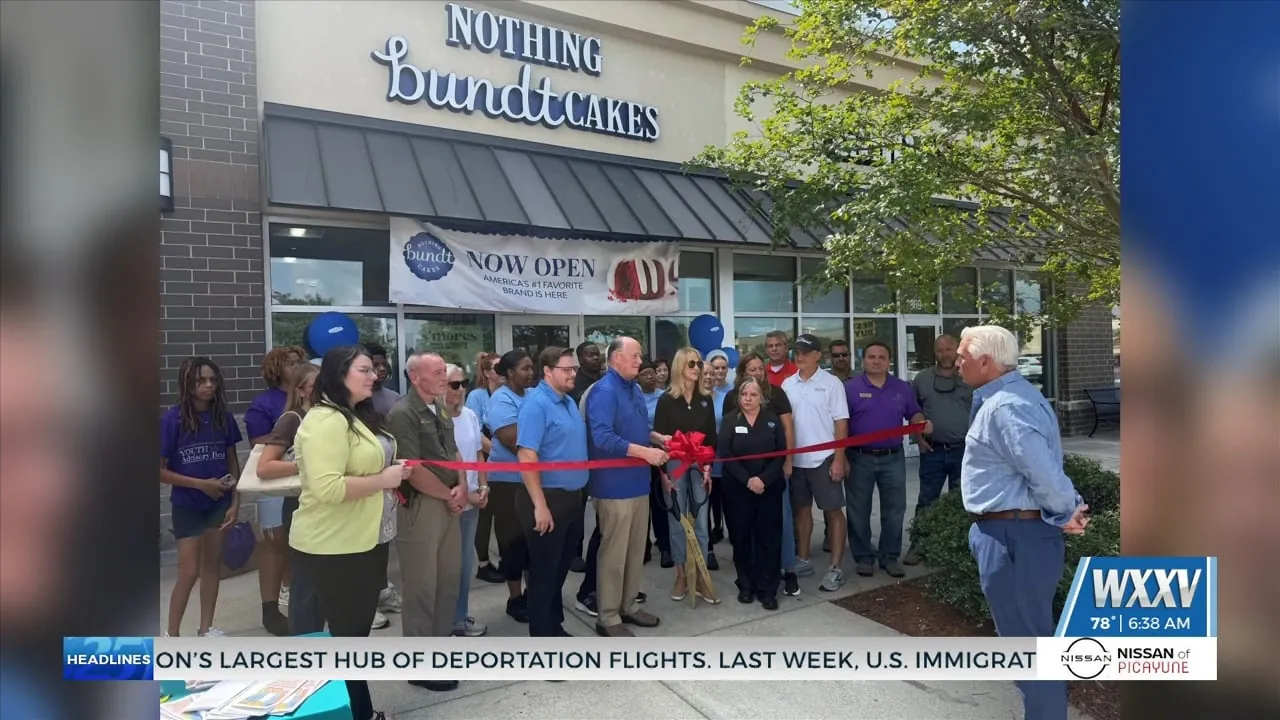
A Sunset Valley-style week is the cleanest template: city employees Monday, first responders Tuesday, healthcare workers Wednesday, teachers Thursday, charity benefit Friday, chamber ribbon cutting Saturday, and Free Bundtlets for a Year Sunday for the first 50 guests.[2] Owensboro followed the same broad structure with its own local charity partner.[3] That consistency is useful for new operators because it shows the format is not a one-off stunt.
The template has room for local variation. Prescott Valley added a spin-the-wheel promotion and a hygiene product donation drive alongside the standard grand opening activity.[6] North Loop used a larger free-bundlet opening mechanic for the first 300 guests and added a golden ticket scavenger hunt.[7] Those details should be treated as options, not obligations. A spin wheel can help keep guests engaged in-store. A donation drive can make sense when it is easy to explain and operationally simple to collect. A scavenger hunt only works if the neighborhood and partner network can support it.
The Free Bundtlets for a Year mechanic deserves special handling because it is both a crowd-builder and a retention bridge. Public examples vary: some locations cap the promotion at the first 50 guests, while North Loop used the first 300 guests; some versions include eligibility details such as age restrictions.[2][7] The operator’s job is to make the rule visible, train the team on the cutoff, and connect the reward to a customer record wherever possible.
A Workable Opening-Week Cadence
| Day | Primary Audience | Marketing Purpose | Operational Watchout |
|---|---|---|---|
| Monday | City employees | Start with civic goodwill and a manageable appreciation audience. | Make eligibility simple for front-counter staff. |
| Tuesday | First responders | Create visible local gratitude and station-level word of mouth. | Expect arrivals outside standard lunch peaks. |
| Wednesday | Healthcare workers | Reach shift-based workers who can become repeat occasion buyers. | Clarify whether uniforms, badges, or employer IDs are needed. |
| Thursday | Teachers | Build school relationships before birthdays, staff gifts, and seasonal appreciation moments. | Prepare for before-school and after-school surges. |
| Friday | Charity partner supporters | Give the week a community-benefit reason to show up. | Coordinate donation messaging and partner presence. |
| Saturday | Chamber, officials, neighbors | Capture the public launch moment and local media photo. | Keep the ceremony tight so retail flow can continue. |
| Sunday | Offer-driven first-time guests | Use Free Bundtlets for a Year to create urgency and a repeat-visit path. | Train the team on rules, cutoff, and customer capture. |
The ribbon cutting still matters. It gives the chamber, elected officials, neighboring businesses, and local press a clean moment to show up. It should not be asked to do every job. A crowded ribbon photo can coexist with weak customer capture, weak charity coordination, or an offer line that leaves guests confused. The stronger plan lets the ribbon cutting be what it is: one public proof point inside a week that already has momentum.
First 60 Days: Convert the Crowd Before It Turns Back Into Strangers
The first 60 days are where the grand opening either becomes local store marketing or fades into a memory. By this point, the bakery has paid to attract attention, borrowed trust from community partners, and handed out enough cake for people to form an opinion. The next job is to make the second visit easier than the first.
The Free Bundtlets for a Year punch-card idea is useful because it turns the giveaway into a reason to return. The first visit may be driven by urgency, curiosity, or a neighbor’s post. The next visits should be tied to habit: a monthly treat, a birthday, a teacher gift, an office thank-you, a holiday table, or a last-minute dessert. The promotion should be explained at handoff, not buried in fine print after guests have already left.
This is also where eClub and app capture have to be treated as part of the launch, not a corporate afterthought. A guest who came for a free Bundtlet and leaves anonymous is hard to win back. A guest who joins a list, saves an offer, or identifies an occasion can be reached when the next reason to buy appears.
Zeta Global published a Nothing Bundt Cakes case study reporting 4x to 6x ROAS, doubled in-store traffic, and a reduction in conversion lag from nine days to six days through data-driven personalization.[8] Again, that is a vendor case study, not a standing forecast for every bakery. It does support a practical point for the post-opening phase: personalization is most valuable after the bakery has identifiable visitors and enough behavior to act on.
The local team should review the opening-week customer file while the week is still fresh. Which appreciation day produced the most useful relationships? Did the charity partner bring new faces or mainly existing supporters? Did chamber attendance create catering leads? Did the Sunday offer line create punch-card holders and eClub signups, or just a crowd? Those answers decide the first 60-day calendar.
What to Do With Each Opening-Week Audience
| Audience | Follow-Up Within 60 Days | Reason It Matters |
|---|---|---|
| Teachers and schools | Send a staff-appreciation, birthday, or classroom-celebration reminder through the appropriate contact path. | Schools can create recurring gifting and seasonal moments. |
| Healthcare workers and first responders | Return with a thank-you touchpoint or workplace catering conversation. | Shift-based teams often need easy group treats and recognition gifts. |
| Charity partner supporters | Share the donation result if available and invite them back for another occasion. | The charity day creates emotional permission to keep talking. |
| Chamber and business contacts | Move from ribbon-cutting thanks to catering, gifting, and employee-recognition conversations. | Business buyers can produce repeat orders beyond household dessert trips. |
| Free Bundtlets for a Year recipients | Make redemption easy, remind them before the next eligible visit, and encourage eClub or app engagement. | The opening-week offer only works if it creates future visits. |
The ongoing 2% local advertising requirement matters here because the bakery’s marketing obligation does not end when the scissors go back in the chamber box.[1] The opening ad fee buys the first push. The local ad requirement should help the operator keep testing what the opening revealed: which neighborhoods respond, which organizations create real traffic, which offers bring people back, and which messages turn into catering or gifting orders.
A Launch Calendar Operators Can Actually Use
| Timing | Action | Owner | Output |
|---|---|---|---|
| 8 weeks out | Confirm chamber contact, charity shortlist, local employer map, school and public-service outreach list. | Franchisee with field marketing support | Draft audience architecture for opening week. |
| 7 weeks out | Select charity partner and request approval for logos, copy, donation language, and social coordination. | Franchisee | Confirmed benefit-day partner and message. |
| 6 weeks out | Assign appreciation days to specific groups and begin direct outreach. | Store leadership and field marketer | Named contacts for city, first responders, healthcare, teachers, and organizations. |
| 5 weeks out | Check the event calendar against staffing, production, training, and construction-opening realities. | Franchisee and operations lead | Launch schedule that the bakery can actually run. |
| 4 weeks out | Begin coming-soon PR and awareness media with location, opening window, and local hook. | Field marketer or agency | Public awareness tied to the real store address. |
| 3 weeks out | Add mobile, map, and proximity-based media where appropriate. | Marketing support team | Store discovery and directions support. |
| 2 weeks out | Publish full grand opening week schedule and distribute partner-ready assets. | Franchisee and partners | Shareable event calendar. |
| 1 week out | Train staff on offer rules, customer capture, punch-card handling, and event-day talking points. | Store manager | Front-counter readiness. |
| Opening week | Run appreciation days, charity day, ribbon cutting, and Free Bundtlets for a Year mechanic. | Full store team | First visits, community proof, and customer records. |
| Days 1 to 30 after opening | Follow up with partners, offer recipients, eClub/app signups, and business contacts. | Franchisee and field marketer | Second-visit and catering opportunities. |
| Days 31 to 60 after opening | Review performance, shift local ad spend, and build the next local store marketing calendar. | Franchisee | Launch handoff into ongoing marketing. |
The strongest Nothing Bundt Cakes grand openings are not necessarily the loudest single-day events. They sequence local trust, targeted paid reach, a structured celebration week, and repeat-visit mechanics into one operating plan. Corporate templates help. Familiar offers help. Proven campaign examples show what has worked under specific conditions. The outcome still depends on whether the franchisee does the early community work and captures the opening-week crowd before it turns back into anonymous foot traffic.
At day 60, the grand opening project should be over. The relationships, customer records, catering leads, and repeat-visit habits it created should not be.
References
- Franchise Deep Dive: Nothing Bundt Cakes Franchise Costs, Fees, Profit and Data, 1851 Franchise
- Nothing Bundt Cakes to hold weeklong grand opening events in Sunset Valley, Community Impact
- Nothing Bundt Cakes hosting grand opening events next week, Owensboro Times, May 2026
- Nothing Bundt Cakes Grand Opening Supports Cy-Fair Helping Hands, Cy-Fair Helping Hands
- Nothing Bundt Cakes Waze Ads, Ansira
- Nothing Bundt Cakes Celebrates Grand Opening in Prescott Valley, Signals AZ
- Nothing Bundt Cakes now open; Grand Opening party Nov. 1, North Loop Neighborhood Association
- Nothing Bundt Cakes Marketing Strategy, Zeta Global
This is a record of what happened and what was tested, not legal advice. Compliance determinations require qualified counsel.