
Marine Corps AI Anti-Drone Turret: Cost Lessons for Marketers
Marketers struggling to justify AI tool costs can learn from the Marine Corps' Bullfrog system, which cut cost-per-kill from $4M to $10 by integrating AI with existing hardware, using passive sensors, and keeping humans in the loop. This article translates those three principles into a framework for evaluating AI tool investments.
The useful part of the Marine Corps AI anti-drone turret system is not that it looks futuristic. It is that it starts with a budget problem so blunt that nobody needs a dashboard to understand it: a roughly $35,000 Shahed drone being answered by a roughly $4 million interceptor missile, a 114x cost mismatch per kill in recent reporting on the Bullfrog system.[1][2]
That is the kind of mismatch marketing teams create in quieter form when they buy a six-figure AI suite to patch a workflow whose expensive part was never clearly identified. The demo says “save hours.” The budget question is harder: whose hours, in which step, against what cost per useful outcome, and after how much cleanup?
Allen Control Systems’ Bullfrog is interesting because its answer is unusually concrete. The company says the system can bring cost per kill as low as $10 by applying AI-enabled targeting to existing M240 machine guns rather than relying on high-cost missiles for low-cost drones.[1][2] That $10 figure should be treated carefully. It appears to be a best-case, ammunition-cost-style claim from the vendor, not an all-in operating cost that includes the platform, maintenance, personnel, deployment, training, and everything else that makes a capability real.
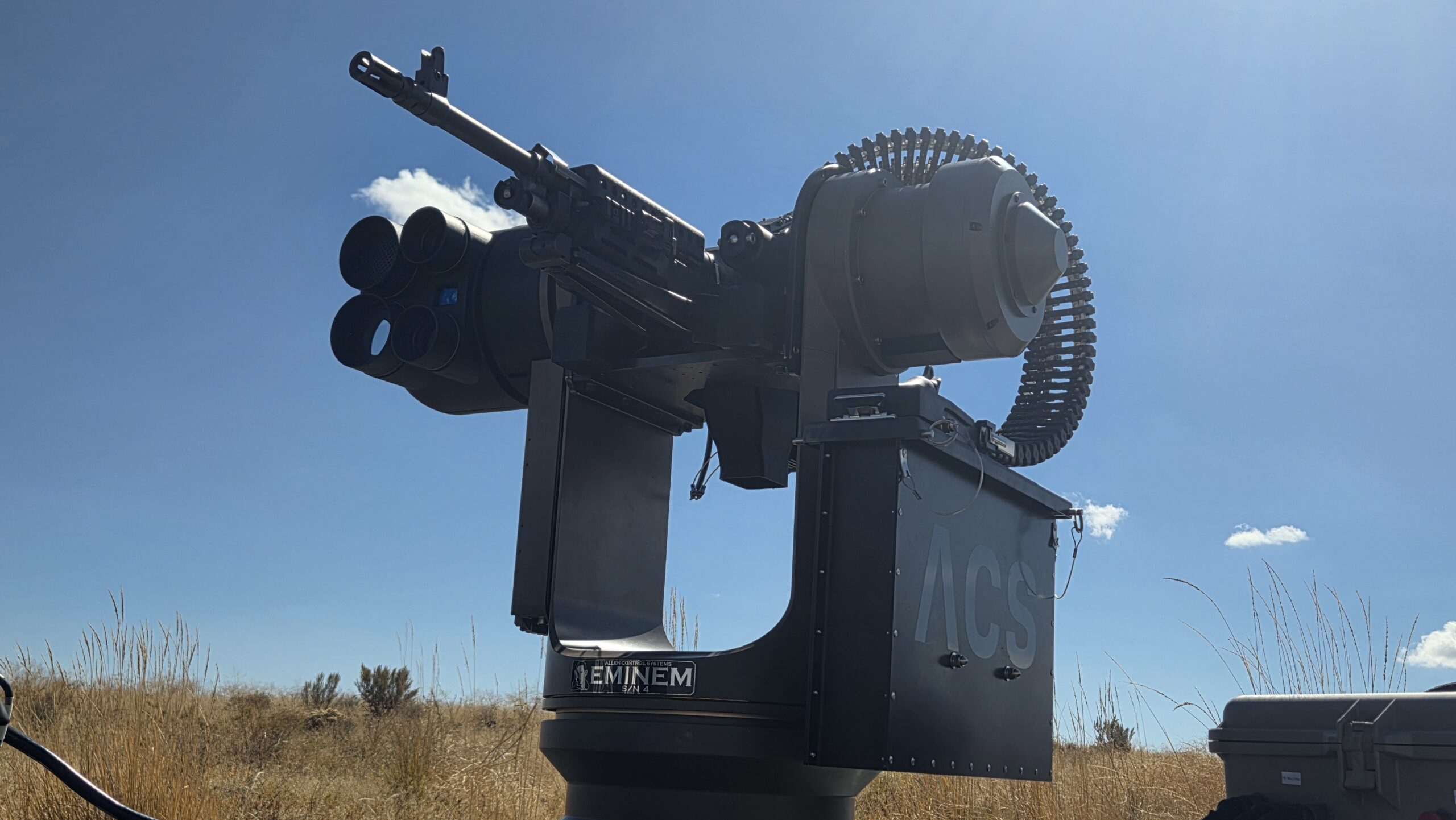
Even with that caveat, the design logic is worth stealing. Bullfrog does not make the expensive interceptor slightly cheaper. It changes the cost unit. It moves the work from a scarce, costly munition to a cheaper firing mechanism, while using AI to handle the targeting work that makes that substitution viable.
This is not just a lab curiosity. ACS has reportedly secured more than $120 million in contracts across U.S. military branches and raised $200 million at a $2.2 billion valuation.[3][4] The broader anti-drone market is also projected to grow from $2.97 billion in 2025 to $30.91 billion by 2035, a 26.4% CAGR, according to Precedence Research.[5] The market is paying attention because the cost imbalance is not going away on its own.
The ROI Question Is What Cost Unit AI Actually Changes
Most AI ROI arguments in marketing start in the wrong place. They begin with tool capability: generate copy, summarize calls, score accounts, personalize journeys, forecast pipeline. Capability matters, but it is not the budget object. The budget object is the cost per qualified meeting, cost per approved asset, cost per usable segment, cost per resolved customer question, cost per launched experiment, or cost per decision that would otherwise stall.
Bullfrog’s lesson is not that marketers should chase a military-style efficiency number. It is that the ROI case becomes cleaner when the AI investment points at a specific expensive substitution. In the anti-drone example, the costly substitution is obvious: stop spending missile-level money on drone-level threats when a lower-cost weapon can do the job under the right conditions.
In a marketing organization, the expensive substitution may be less visible. A team may be using senior strategists to reformat reports, lifecycle marketers to manually QA audience logic, paid media managers to reconcile naming conventions, or content leads to turn raw transcripts into first drafts. AI ROI improves only if the tool removes, compresses, or upgrades that specific cost unit. If it simply creates more assets for the same humans to review, rewrite, and route, the cost did not disappear. It moved.
| Bullfrog design choice | Marketing equivalent | Budget question |
|---|---|---|
| Add AI to existing M240 machine guns | Augment tools already in the stack before buying a net-new suite | What owned asset becomes more productive? |
| Use passive EO/IR/laser rangefinder sensing | Prefer purpose-fit signal capture over heavy infrastructure | What complexity does the tool avoid? |
| Let AI detect, track, and aim while a human authorizes fire | Automate volume work while keeping judgment with accountable people | Who decides when the output matters? |
Principle One: Retrofit Before You Replace
Bullfrog’s first useful design choice is almost boring: it builds around the M240 machine gun, a weapon the military already knows how to operate, maintain, supply, and train around.[1][2] The AI layer changes what the existing hardware can do. It does not require the entire operating model to be reinvented before value appears.
That is the part many AI tool evaluations skip. A team will price a new AI platform before it has audited the automation, enrichment, scoring, routing, and reporting features already sitting inside its CRM, CMS, ad platforms, analytics stack, and workflow tools. The result is not just duplicate spend. It is duplicate process. Two places to configure fields. Two places to monitor output quality. Two vendors to manage when something breaks.
The marketing equivalent of the Bullfrog move is not “never buy a new platform.” Sometimes the existing stack cannot support the workflow, the data model is wrong, or the security and governance requirements justify a dedicated system. But the new-platform case should survive a retrofit test first.
- Can the same outcome be reached by adding an AI layer to the CRM, CMS, data warehouse, sales engagement platform, or project management system already in use?
- Will the proposed tool reduce work inside an existing workflow, or will it create a parallel workspace that people must remember to check?
- Which current cost unit changes: production time, review time, media waste, agency dependency, analyst backlog, routing delay, or rework?
- What current system of record remains authoritative after the tool is added?
The last question is usually where the purchase either becomes operationally real or starts drifting. If the AI tool produces recommendations that still have to be copied into another platform, reconciled with another report, or manually approved in a spreadsheet, the savings claim needs a haircut. Integration is not a technical nice-to-have. It is where ROI either lands or leaks.
Principle Two: Avoid Infrastructure That Makes the Outcome Heavier
Bullfrog’s second design choice is restraint. Reporting describes the system as using passive electro-optical, infrared, and laser rangefinder sensing rather than radar or RF emissions that could be detected.[1][6] The point for marketers is not the sensor technology itself. It is the discipline of not adding a heavier detection layer than the job requires.
Marketing teams do the opposite when they overbuild AI infrastructure for a narrow decision. A demand generation team trying to prioritize follow-up may not need a sprawling predictive platform, custom data lake work, and a months-long implementation if the immediate bottleneck is that high-intent accounts are not being surfaced in time. A content team may not need an enterprise generative suite if the real gap is first-pass transcript cleanup inside an existing editorial workflow.
The passive-sensing analogy is useful because it forces a cleaner question: what is the minimum signal required to make the decision better? Not the maximum data the vendor can ingest. Not the most impressive architecture slide. The minimum signal that improves the next operational action.
- For lead routing, that may mean recent behavior, firmographic fit, account ownership, and sales capacity.
- For content operations, it may mean source material, brand rules, approval status, and channel format.
- For paid media optimization, it may mean spend, conversion quality, audience overlap, and creative fatigue.
- For customer marketing, it may mean product usage, renewal timing, support history, and expansion eligibility.
A heavier system can be justified when it changes a bigger economic lever. If a platform improves budget allocation across millions in media spend, prevents compliance failures, or shortens a high-value sales cycle, the implementation burden may be worth carrying. But managers should price that burden honestly: integration work, admin time, enablement, governance, vendor management, data cleanup, and the quiet tax of asking teams to trust one more interface.
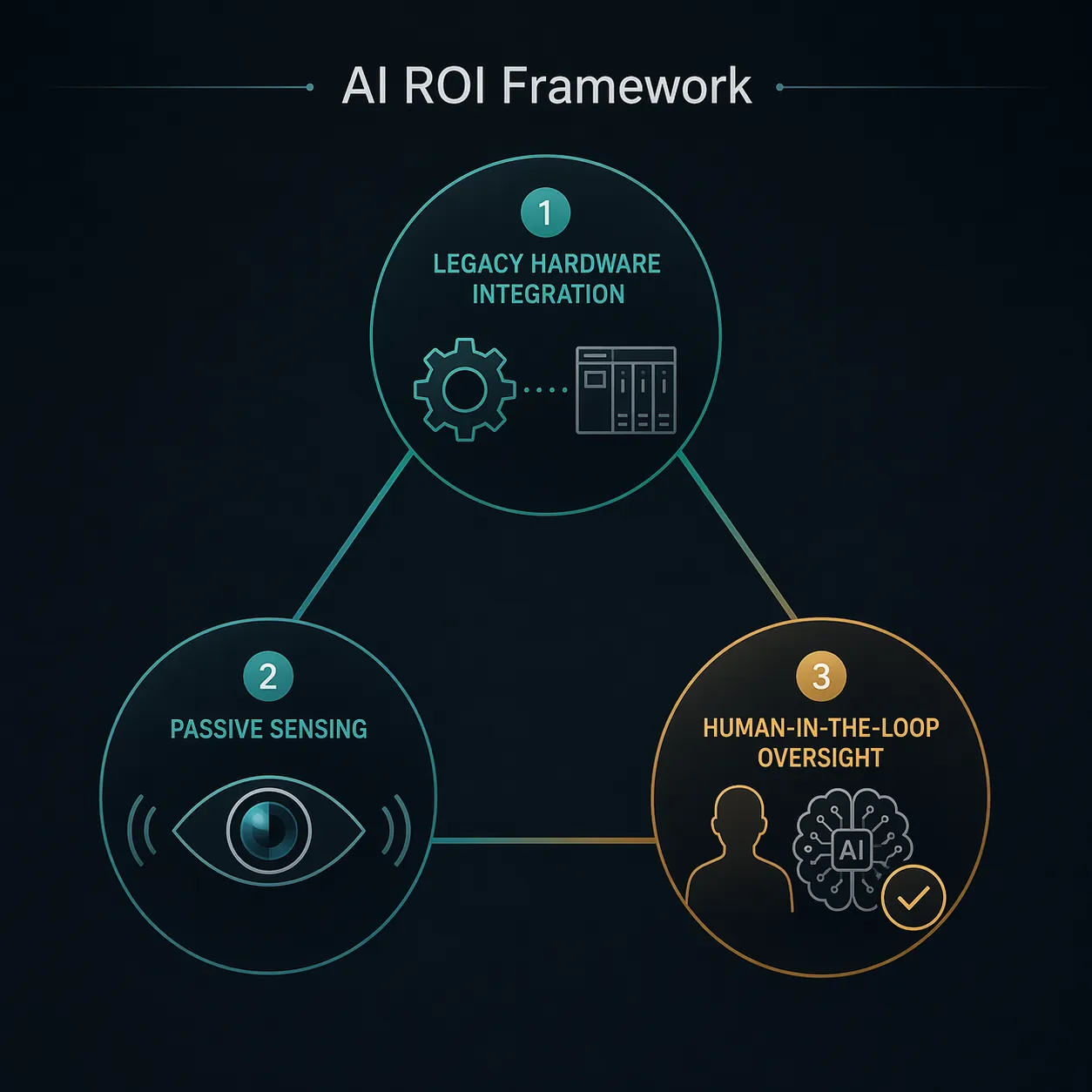
Principle Three: Put the Human at the Decision Point, Not Everywhere
Bullfrog’s human oversight model matters because it separates machine speed from human authority. The system is described as using AI to detect, track, and aim, while a human operator decides whether to fire.[2] ACS has put the principle plainly: “The computer doesn't decide what to do — humans do.”[2]
There is a serious military ethics boundary here. Bullfrog is also reported to have ground-target capability under human oversight, and coverage has noted software protections against fully autonomous engagement of designated targets, including human combatants.[2][7] That context should not be flattened into a tidy business metaphor. A marketing workflow is not a weapons system, and the consequences are not comparable.
The transferable operating principle is narrower: AI should absorb the volume work, while humans keep authority where judgment, accountability, and brand or customer risk concentrate. That is different from putting a human in every step. If every AI-generated output requires the same level of review as a blank-page human draft, the workflow may feel safer, but the ROI case weakens quickly.
The manager’s job is to locate the decision point. In campaign operations, a machine can draft variants, check naming conventions, summarize performance, flag anomalies, or recommend reallocations. A person should still approve the budget move, the audience exclusion that could suppress revenue, the claim that legal will care about, and the message that shapes how a customer understands the company.
| AI can usually handle | Humans should retain |
|---|---|
| Drafting first-pass copy from approved inputs | Approving claims, positioning, and regulated language |
| Surfacing anomalous campaign performance | Deciding whether to pause, scale, or reallocate budget |
| Scoring or clustering accounts based on defined signals | Changing territory rules, target account strategy, or sales ownership |
| Summarizing calls, transcripts, and research | Interpreting customer intent and deciding follow-up strategy |
| Generating test ideas and variants | Choosing which experiments deserve traffic, spend, and brand exposure |
A human-in-the-loop workflow is not automatically responsible. It can still be lazy if the human is too late, too rushed, or too far from the consequence to make a real decision. The useful version defines who reviews, what they are allowed to change, what evidence they see, and what happens when they reject the AI recommendation.
How to Bring This Into an AI Budget Conversation
The cleanest AI business case does not start with a feature matrix. It starts with the current cost of the outcome and the proposed cost after the workflow changes. If those numbers are not known, the renewal or purchase discussion is not ready.
A useful evaluation can be simple. Pick one workflow where the pain is already funded: campaign launch, content production, lead follow-up, reporting, experimentation, sales enablement, customer expansion. Then map the expensive step before looking at vendors.
- Name the useful outcome: approved asset, qualified meeting, resolved ticket, launched test, accepted sales insight, retained account, or reallocated budget decision.
- Calculate the current cost unit using labor, vendor fees, media waste, agency support, delay, rework, and opportunity cost where they can be reasonably estimated.
- Identify the expensive substitution the AI tool claims to change, such as senior human review, manual QA, analyst backlog, agency drafting, or delayed routing.
- Check whether the tool improves an existing system of record or creates a parallel process.
- Define the human decision point and the evidence the reviewer will use.
- Price the operating burden after purchase, including implementation, enablement, governance, maintenance, and output cleanup.
This framing also protects teams from overcounting “hours saved.” If AI drafts ten email variants in seconds but lifecycle marketing still spends the same afternoon checking segmentation logic, offer setup, compliance language, rendering, and CRM sync, the saved drafting time may be real but financially small. If AI cuts three days from campaign QA because it catches broken fields before launch, the value may be less glamorous and more defensible.
The same logic applies to renewals. A tool that looked promising during procurement can become hard to defend after a year if nobody can point to the cost unit it changed. Usage metrics will not fix that. Adoption shows that people opened the system. ROI shows that an expensive part of the work got cheaper, faster, more reliable, or more scalable without creating an equal burden somewhere else.
The Stricter Lesson From Bullfrog
Bullfrog is a useful comparison because it does not ask buyers to admire AI in the abstract. It points to a specific cost mismatch, changes the mechanism used to solve it, integrates with hardware already owned, avoids unnecessary detectable infrastructure, and keeps a human responsible for the consequential decision.
That is a high bar for marketing AI tools, and it should be. A strong AI purchase case should be able to answer four questions without leaning on demo language: what expensive workflow step is being replaced or compressed, what existing asset becomes more productive, what complexity is being avoided, and who remains accountable when the recommendation turns into action.
The lesson is not that marketers can copy a military system or claim the same cost reduction. It is that AI ROI gets more credible when the system reduces the expensive part of the workflow instead of merely adding intelligence around it.
References
- US Marines' latest anti-drone toy is an AI turret that uses regular machine guns, The Register, July 21, 2026
- US Marine Corps turns to AI-powered Bullfrog as drone threats expand, Military Times, July 21, 2026
- Allen Control Systems contract coverage, Tectonic Defense
- Defense Tech Funding Trends 2026, New Market Pitch
- Anti-Drone Market Size, Share, and Trends, Precedence Research
- Bullfrog autonomous weapon station information, Allen Control Systems
- Cybernews coverage of Bullfrog autonomous engagement safeguards, Cybernews
This is a record of what happened and what was tested, not legal advice. Compliance determinations require qualified counsel.