
Why Instagram DM Outages Are a Marketing Emergency
Instagram DMs convert at up to 70% for local businesses — but four outages in four months have turned DM-dependent marketing into a single point of failure. This article explains how to quantify your exposure and build contingency plans before the next outage costs a day of revenue.
Instagram DMs are dangerous for marketers for the same reason they are valuable: they sit close to intent. A customer taps from a Story, asks whether a product is in stock, sends a photo of the problem, checks delivery timing, or asks for the booking link. That is not vague engagement. It is a live sales or support moment, often with a person who is already warm.
That is why an Instagram DM outage has a larger impact on social media marketing than a temporary inconvenience. If DMs are where leads are qualified, orders are rescued, complaints are cooled down, and appointment requests are routed, an outage does not merely interrupt conversation. It removes a working part of the revenue system.
The upside explains the dependency. A 2026 vendor-compiled statistics roundup reports Instagram DM-to-sale conversion rates of 70% for local customers and 7% to 20% more generally, while comparing that with 2.6% email click-through rates and 2% to 3% standard e-commerce conversion rates; the same roundup cites a 391% conversion advantage for replies sent in under a minute compared with replies sent after 30 minutes.[1] Those figures deserve original-source verification before anyone builds a board deck around them, especially because they come through a DM automation vendor. Still, the direction matches what social teams feel every day: a fast DM reply can move a buyer while the intent is still warm.
Consumer expectations make the window even tighter. Kayako’s roundup of social customer service statistics cites findings that 76% of consumers expect a response within 24 hours, 60% define “immediate” as 10 minutes or less, and 73% will buy from a competitor if a brand does not respond on social.[2] An outage that blocks replies for hours therefore creates two losses at once: the visible lost sale and the quieter trust penalty that follows when a customer assumes the brand is ignoring them.

The 2026 Pattern Is Harder To Dismiss
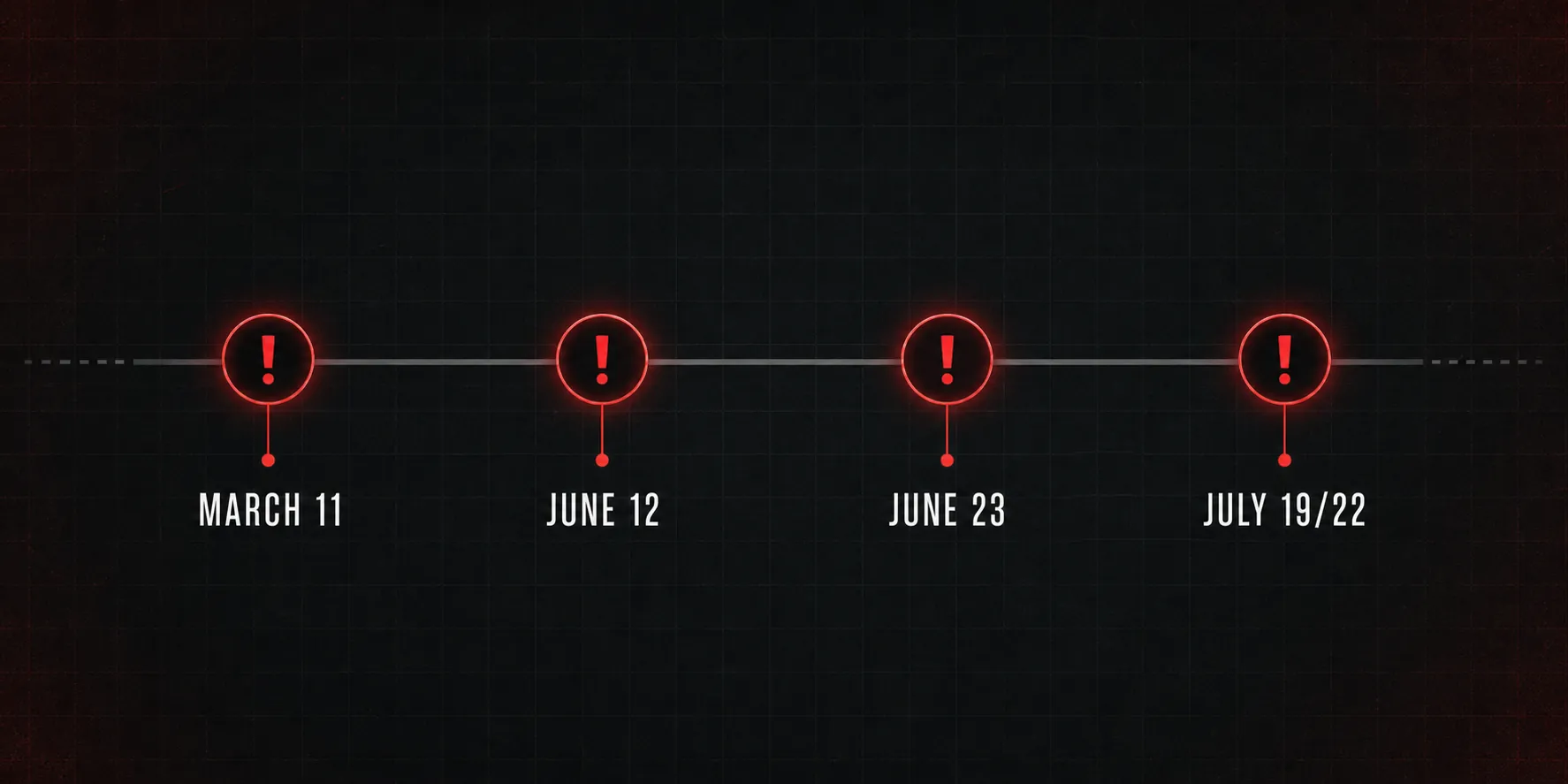
A single outage can be treated as weather. Four DM-affecting incidents across roughly four months are harder to wave away, especially when some of them touched multiple Meta properties at once.
| Date | What was reported | Why marketers should care |
|---|---|---|
| March 11, 2026 | Forbes reported more than 13,000 Downdetector reports, with 71% of reports tied to app access failure, and users unable to post or DM. | A DM-dependent workflow could lose both inbound messages and outbound follow-up during an active sales day. |
| June 12, 2026 | Mashable reported more than 130,000 Meta-wide outage reports affecting Instagram, Facebook, WhatsApp, and Ads Manager. | The fallback cannot simply be “move the conversation to another Meta app” if the disruption crosses the family of tools. |
| June 23, 2026 | GV Wire reported an Instagram outage with roughly 12,000 to 18,000 reports on Downdetector. | Even when the incident is Instagram-specific, the sales team still has to recover stalled threads afterward. |
| July 19/22, 2026 | Downforeveryoneorjustme.com showed recent Instagram availability disruptions around July 19 and July 22. | As of July 23, the newest incident is too recent for a full business-impact record, but it extends the operational pattern. |
Taken together, the incidents change the question from whether Instagram usually works to whether the brand has any path to the buyer when it does not. The June 12 incident is especially important because it affected Facebook, Instagram, WhatsApp, and Ads Manager at the same time. A backup plan that depends on another Meta surface may not be a backup at all.
What Actually Stops When DMs Stop
The revenue loss from an Instagram DM outage is rarely captured in one dashboard. It spreads across the messy middle of the funnel: half-qualified leads, “Can you send the link?” messages, discount-code questions, refund complaints, back-in-stock requests, creator collaboration threads, and support conversations that were one human reply away from calming down.
Start with the motions that depend on the inbox. For a local service business, that may be appointment requests, price questions, and location-specific availability. For a small e-commerce brand, it may be sizing help, delivery timing, product recommendations, and abandoned-cart recovery. For a creator-led brand, it may include wholesale inquiries, affiliate approvals, and customer complaints that arrive in the same place as compliments.
| DM-dependent motion | What breaks during an outage | What to measure before the next one |
|---|---|---|
| Lead qualification | New prospects cannot ask the next question, and the team cannot separate casual interest from ready-to-buy intent. | DM-originated leads per day; share of qualified leads that begin in Instagram. |
| Sales assistance | Questions about fit, stock, price, pickup, shipping, and booking links stall while intent is highest. | Average daily DM-assisted revenue; conversion rate from DM thread to order or booking. |
| Support recovery | Angry or confused customers wait without knowing whether the brand has seen the message. | Open support threads in Instagram; age of unresolved complaints. |
| Automation | Keyword triggers, auto-replies, lead magnets, and comment-to-DM flows may stop or degrade. | Automations that depend on Instagram APIs or Meta messaging availability. |
| Paid social follow-through | Ads may keep generating intent while the conversation channel attached to that intent fails. | Campaigns using DM objectives, Story replies, click-to-message, or DM-based lead capture. |
| Cross-Meta fallback | A planned move to Facebook or WhatsApp may fail if the disruption is broader than Instagram. | Fallback channels outside Meta, not just alternate Meta inboxes. |
This is where the loss becomes more concrete. If a brand averages 40 sales conversations a day in DMs, the outage exposure is not “Instagram was down.” It is 40 conversations that could not move at their normal speed. If 15 of those are usually high-intent threads, the risk is concentrated there. If the team promises same-day support but has 25 unresolved complaints sitting in Instagram, the outage also creates a service backlog. The exact numbers will differ by business, but the calculation has to be built from the workflow, not from the platform status page.
A useful exposure audit asks six questions:
- What percentage of new leads first identify themselves in Instagram DMs?
- How much average daily revenue is influenced by a DM conversation before purchase?
- How many unresolved support threads usually sit in the inbox at opening and closing?
- Which reply-time commitments, formal or informal, does the team normally meet through Instagram?
- Which automations, lead magnets, and paid campaigns depend on Instagram messaging working?
- If Instagram, Facebook, WhatsApp, and Ads Manager fail together, what contact route remains?
The last question is the one many teams discover too late. A backup plan that lives entirely inside the same platform family is not redundancy. It is a different door in the same building.
The Old Warning Still Applies
The clearest small-business impact story is not from 2026. It comes from the October 2021 Meta outage, when TIME reported on small businesses that had built heavily around Instagram. One business owner said about 95% of her traffic came from Instagram; another described e-commerce traffic stopping completely during the roughly six-hour outage.[7]
That case should not be stretched into a claim about dollar losses from the 2026 incidents. It does show something more durable: dependency does not feel risky on the days the channel performs. It feels efficient. It feels like a smart focus. Then the inbox disappears, and the team learns whether it has a customer relationship or only access to one.
Do Not Treat a Rented Inbox Like Owned Infrastructure
Meta does not need to be failing as a company for marketers to face platform risk. Instagram can remain one of the best places to turn casual attention into a real conversation, and the DM layer can still be fragile enough to require a backup plan.
Third-party monitoring analysis cited by Surebright found more than 60 documented Meta ad-platform outages across an 18-month period from October 2024 to March 2026 and described a 316% increase in outage frequency; the same analysis noted that Meta ad products do not offer a meaningful uptime SLA, leaving advertisers to absorb the financial risk when systems fail.[8] Surebright also connects that reliability concern with Meta’s broader operating context, including more than 8,000 reported job cuts in May 2026 and AI infrastructure spending described in the $125 billion to $145 billion range.[8]
Those figures come from third-party analysis and should be verified before being used as a standalone indictment. For working marketers, the narrower conclusion is enough: the platform is not sold to you as guaranteed sales infrastructure. If Ads Manager breaks, if messages lag, if a comment-to-DM automation fails, the buyer does not receive a credit from Meta. The customer simply waits, buys elsewhere, or assumes the brand is disorganized.
Build The Fallback Before The Next Outage
A good contingency plan is not a vague promise to “diversify channels.” It is a set of routes and rules the team can use while the inbox is unavailable and immediately after it returns.
Capture a contact point before the sale depends on DM
Every high-intent DM flow should move toward an owned contact point earlier than feels necessary. That may be an email address for a quote, a phone number for appointment reminders, an SMS opt-in for local pickup updates, or a website account for order status. The goal is not to drag every casual follower into a CRM. It is to make sure the people closest to purchase or resolution are reachable outside Instagram.
Give customers a non-Meta route
The fallback should live somewhere Meta does not control: a website contact form, email address, customer support portal, live chat tool, booking page, or SMS line. If the brand already uses WhatsApp because customers like it, keep it. Just do not call it the emergency route unless there is also a path outside the Meta family.
Prepare outage messaging while nobody is panicking
Write the pinned Story, bio line, website banner, and support macro before the next incident. The message should be plain: Instagram messaging is currently unavailable or delayed; urgent order, booking, or support requests should go to a specific alternate channel; the team will reconcile missed Instagram messages when service returns. During an outage, nobody has time to debate wording.
Decide who pauses, who posts, and who reconciles
Assign the operational calls in advance. Someone should confirm the outage using external monitoring and internal tests. Someone should decide whether to pause click-to-message campaigns or leave them running with modified routing. Someone should publish the alternate-contact message. Someone should own the post-outage inbox sweep, because the recovery work is where many sales are either saved or lost.
| Moment | Action | Owner to assign |
|---|---|---|
| First 10 minutes | Confirm whether the issue affects one account, Instagram broadly, or multiple Meta properties. | Social lead or channel owner |
| First 30 minutes | Publish alternate-contact instructions on available surfaces and update website routing if needed. | Social lead plus web or support owner |
| During outage | Pause or adjust campaigns that rely on DM follow-through, especially click-to-message flows. | Paid media owner |
| During outage | Route urgent sales and support requests through email, SMS, form, chat, or phone. | Support or sales lead |
| After restoration | Tag missed threads, reply with context, reconcile orders, and log estimated lost or delayed revenue. | Inbox owner plus operations |
Log the loss in business terms
After an outage, do not settle for “DMs were down for a while.” Record the outage window, affected campaigns, number of missed or delayed threads, number of high-intent leads recovered, number lost or unresponsive, support backlog created, refunds or complaints escalated, and estimated revenue delayed or missed. That log is what lets a practitioner explain the risk without sounding dramatic.
A Practical Readiness Standard
A brand is exposed if a full business day without Instagram DMs would leave the team unable to contact warm leads, answer urgent customer issues, recover abandoned purchases, or explain where buyers should go instead. It is more exposed if its fallback is Facebook or WhatsApp. It is extremely exposed if paid campaigns continue to generate DM-dependent intent while nobody can receive or route the conversation.
The readiness standard is simple: a customer who was ready to buy, book, or resolve a problem through Instagram should have another obvious route within minutes, and the team should know exactly how to reconcile the interrupted thread afterward. Instagram DMs can remain a high-converting channel. Any brand that cannot survive a day without them has mistaken performance for resilience.
References
- Instagram & Facebook DM Selling Statistics 2026, Jawab24
- Social Media Customer Service Statistics, Kayako
- Instagram Down: New Outage Leaves Users Unable To Post Or DM, Forbes, March 11, 2026
- Meta Instagram Facebook WhatsApp Outage June 2026, Mashable
- Instagram Down Downdetector, GV Wire, June 23, 2026
- Instagram Status, downforeveryoneorjustme.com
- Instagram Outage Small Business Impact, TIME, October 2021
- What's Happening With Meta Ads? Let's Talk About Meta's $145 Billion Experiment, Surebright
This is a record of what happened and what was tested, not legal advice. Compliance determinations require qualified counsel.