
How to Market a Movie Starring an AI-Resurrected Actor
Marketers face a tough line when promoting films with AI-revived actors: the novelty draws attention, but consumer surveys consistently show discomfort. This article examines the only workable approach — the Val Kilmer estate-consented transparency model — and a framework for deciding whether and how to proceed based on consent, role size, and disclosure positioning.
The first marketing decision on a movie with an AI-resurrected actor is not where to place the trailer, which outlet gets the exclusive, or whether the reveal should wait for a festival stage. It is whether the campaign says the AI part plainly before the audience has to discover it.
In movie marketing for AI-resurrected actors, there is no neutral posture. If the AI element leads, the campaign owns the frame: consent, role size, creative purpose, and who approved the use. If it is softened into ordinary casting language, the campaign is waiting for someone else to write the headline. That second version may buy a cleaner first asset. It usually sells out the people who will have to answer the first wave of comments.

Val Kilmer’s appearance in As Deep as the Grave is the cleanest available model in Q3 2026, and even that has to be treated carefully. The trailer debuted at CinemaCon in April 2026 with explicit “AI performance” labeling and family endorsement; the movie was still seeking distribution, so the evidence stops at the trailer launch and press cycle, not box office, audience scores, or campaign ROI.[1]
That distinction matters. Kilmer is not proof that audiences will reward a digitally resurrected actor. It is proof that a campaign can at least avoid pretending the ethically charged part is just another casting bullet.
The Disclosure Problem Comes Before the Creative Hook
A resurrected actor is an unusually powerful publicity object because it compresses nostalgia, technology, grief, fandom, legal control, and performance authorship into one asset. That is exactly why it cannot be handled like a surprise cameo.
A surprise cameo asks the audience to enjoy being kept in the dark. An AI resurrection asks the audience to trust that the person who can no longer speak has not been reduced to campaign inventory. Those are different contracts. The teaser cut, the press release, the social caption, the talent quotes, and the Q&A prep all have to respect that difference.
The available consumer data does not support a “wait and see if anyone cares” approach. Luminate’s April 2026 study, which measured comfort with 14 AI use cases in film and television production, found that AI replacing actors produced the highest discomfort and the largest comfort-discomfort gap. The same research found that interest in AI-written content had declined across all generations since May 2025.[2]
Baringa’s June 2024 U.S. survey of 5,035 consumers found that 52% would rather watch a 7/10 human-made movie than a 9/10 AI-made movie, while only 11% said they would be happy with AI-only films. The same survey found that 81% wanted transparency if AI was used.[3] Hub’s January 2026 research pointed in the same operational direction: 72% of consumers said companies must always disclose AI use, while only 7% said no disclosure was needed.[4]
None of those surveys asks the exact campaign question — “Would you buy a ticket to a movie marketed around a deceased actor recreated with AI?” — so the conclusion should stay narrow. The data does not prove rejection. It does show that discomfort around AI performers is broad enough that concealment is a fragile launch strategy.
What the Kilmer Launch Gets Right, Before We Know Whether It Works
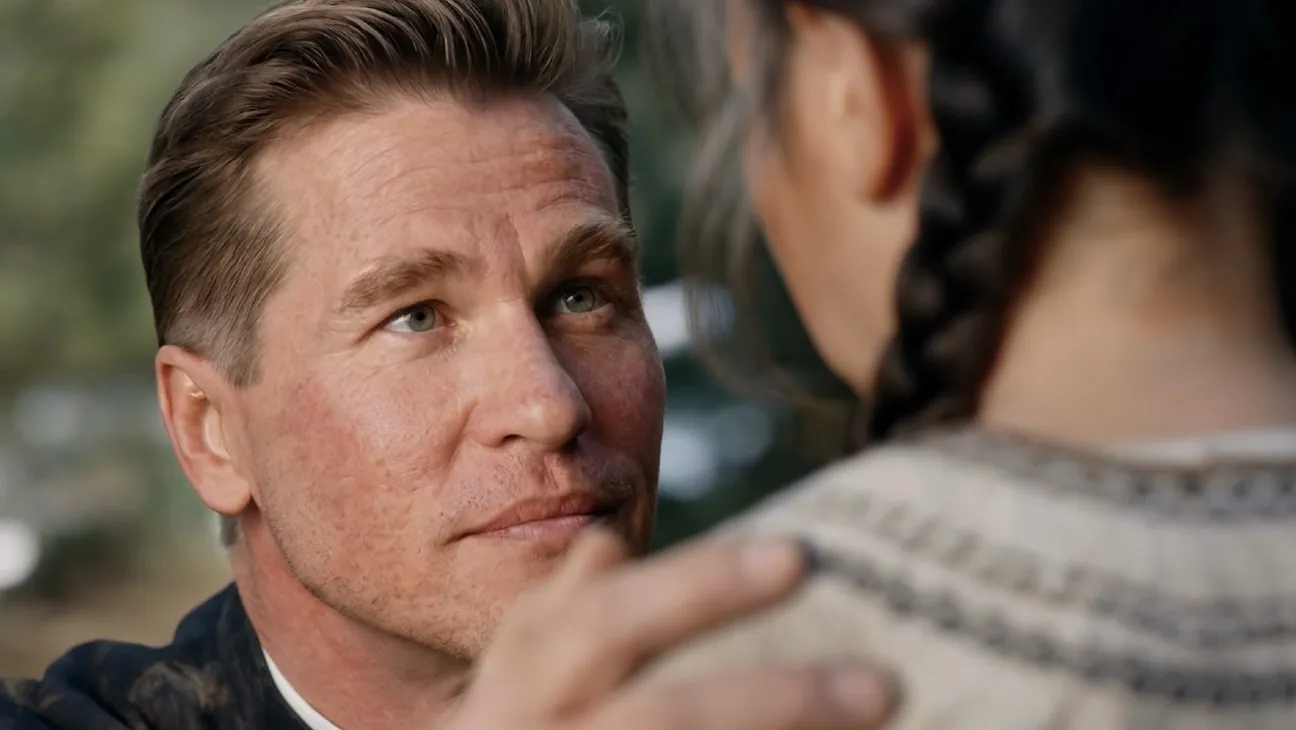
The useful thing about the Kilmer launch is not that it makes everyone comfortable. It does not have to. The useful thing is that it gives the campaign a defensible order of operations.
- Estate consent is part of the public story, not a hidden legal footnote.
- Family endorsement appears early enough to shape interpretation of the asset.
- The trailer uses clear AI labeling instead of letting the audience infer the method.
- The disclosure happens at the trailer, CinemaCon, and press-cycle stage, before distribution claims or commercial results can be used to launder the decision.
That last point is easy to undervalue. If disclosure waits until after buyers, fans, or reporters have already been invited to celebrate the actor’s “return,” the campaign has created its own trust problem. The audience then has to reprocess the emotional pitch as a technology disclosure. Even people open to the creative experiment may resent being managed through vague language.
The Kilmer model also gives publicists something concrete to say when the inevitable discomfort arrives. They can point to permission, family participation, and labeling. That will not convert every critic. It does keep the campaign from sounding as if it discovered the ethics question at the same time as the comment section.
The boundary is just as important: As Deep as the Grave has not yet demonstrated that this approach can sell tickets, secure wide distribution, or produce durable audience goodwill. It is a communications template, not a commercial verdict.[1]
The Two Warning Cases Still Matter
James Dean and Peter Cushing are useful because they show two different ways a campaign can lose the room.
In 2019, the planned use of a digitally recreated James Dean in Finding Jack was announced in the language of a casting coup. The problem was not only the technology. It was the frame. A deceased actor was presented as if he had joined a project, when the central audience question was whether he should be used at all. The backlash overwhelmed the novelty.[5]
Peter Cushing’s digital recreation as Grand Moff Tarkin in Rogue One showed a different risk. The 2016 film did not fail because the effect was invisible or because audiences were unfamiliar with visual effects. It became a durable ethics example because technical execution did not settle the question of posthumous performance, likeness control, and consent.[6][7]
Those cases are not identical to a 2026 AI-labeled launch with family endorsement. They do make one campaign lesson hard to ignore: treating resurrection as ordinary casting is not message discipline. It is a refusal to name the only thing people are guaranteed to discuss.
The Audience You Can Still Move
The goal of transparency is not to persuade the most hostile viewers that AI resurrection is beautiful, necessary, or inevitable. That is an expensive fantasy. The more practical target is the movable middle.
Luminate’s work points to an “indifferent third” of roughly 33% of consumers whose position is not fixed in the way outright discomfort is.[2] For marketers, that group matters more than the loudest edges of the debate. They are the people who may accept the premise if the campaign gives them enough trust signals and may reject it if the rollout feels evasive.
That changes the job of the launch materials. A teaser built only around shock value may harvest awareness from everyone while giving the movable middle no reason to feel safe recommending, sharing, or defending the movie. A transparent launch has a narrower job: reduce the number of unanswered questions that make casual interest curdle into suspicion.
| Audience posture | What the campaign should assume | Useful message discipline |
|---|---|---|
| Strongly uncomfortable | Disclosure will not erase the objection | Do not argue that technology solves consent |
| Indifferent or undecided | Trust signals can affect interpretation | Lead with consent, role size, and clear AI labeling |
| Curious or enthusiastic | Novelty may drive sharing | Do not let excitement outrun ethical explanation |
The data also argues against burying disclosure in a making-of featurette after the first trailer has done its job. If most consumers say AI use should be disclosed, the first public asset is not too early. It is the minimum safe point.[3][4]
A Proceed-or-Do-Not-Proceed Framework

Before a marketing team decides whether the AI-resurrected actor is the campaign hook, it needs a colder internal review than the one used for a normal trailer moment. This is not only a legal signoff question. It is a reputational load test.
1. Estate Involvement and Documented Consent
If the campaign cannot document permission from the estate or authorized rights holder, the actor should not be the campaign engine. That sounds obvious until a team starts rationalizing around archival affection, public-domain assumptions, fan love, or the belief that the actor “would have wanted” the role.
The public version should be simple enough for the press kit and social copy: who approved the use, what they approved in broad terms, and whether people close to the actor are willing to be named in support. If those answers are too sensitive to state clearly, the campaign should not depend on the resurrection as a feel-good reveal.
2. Role Size and Centrality
A brief contextual appearance, a major supporting role, and a lead performance are not the same marketing problem. The larger and more emotionally central the AI recreation becomes, the more the campaign has to explain authorship and approval.
If the recreated actor carries the poster, the trailer climax, or the press tour headline, the campaign cannot speak as if the AI use is incidental. Role centrality determines disclosure weight. A small use may need a clear note. A central performance needs prepared language across the full launch system: trailer card, press release, executive quotes, filmmaker interviews, social moderation, exhibitor materials, and talent talking points.
3. Disclosure Positioning
The safest position is not to make the AI resurrection the only hook. It is to disclose it early and then give the audience other reasons to care about the film: story, genre, living cast, director, craft, and the specific reason the recreated performance exists.
That means avoiding language that implies the deceased actor personally chose the project, “returns” in the same sense as a living performer, or “stars” without qualification when the performance is AI-generated. The word choice does not have to be bloodless. It does have to stop short of laundering the technology through ordinary casting grammar.
| Weak campaign language | Stronger campaign language |
|---|---|
| “Actor returns to the screen in a new role” | “The film includes an AI-generated performance created with estate approval” |
| “A legendary star joins the cast” | “The production uses the actor’s likeness in an AI-labeled performance” |
| “A surprise resurrection audiences have to see” | “A disclosed creative use developed with permission and presented as AI” |
4. The First Public Touchpoint
The first public touchpoint is where the campaign’s trust position becomes real. A label in the trailer, a clear line in the announcement, and a prepared answer for why the choice was made will do more reputational work than a later clarification after backlash has started.
This is where the Kilmer launch is most instructive. The campaign did not wait for a controversy cycle to admit the nature of the performance. It put the AI label and family endorsement into the launch environment itself.[1] Again, that does not prove acceptance. It does prevent the campaign from asking audiences to celebrate first and learn the terms later.
The New Guardrails Help, but They Do Not Carry the Campaign
By Q3 2026, industry rules are no longer theoretical background noise. SAG-AFTRA’s AI provisions moved into active enforcement on July 1, 2026, and the Academy now requires acting nominations to be demonstrably performed by humans. These guardrails matter, but they are too new to measure in marketing outcomes, and they do not replace audience judgment.[7]
A campaign can be compliant and still feel ugly. It can have rights paperwork and still appear extractive if the public story bypasses the actor’s family, minimizes the AI role, or asks viewers to treat a resurrection as a charming innovation before addressing consent. Legal clearance gives the marketing team permission to proceed. It does not give the audience a reason to trust the choice.
That is why the public-facing materials should never lean on compliance as the emotional argument. “We were allowed to do this” is not the same as “we handled this responsibly.” The second claim requires evidence the audience can understand without reading a contract.
How to Decide Whether AI Belongs in the Campaign Hook
The AI resurrection does not automatically deserve top billing in the campaign, even when it will drive coverage. Attention is not permission, and a high-awareness reveal can still weaken the movie if the audience spends the next week debating whether the asset should exist.
A marketer can sort the decision this way:
- If consent is documented, family or estate support is public, and the role is central, disclose AI from the first asset and make the ethical handling part of the launch architecture.
- If consent is documented but the role is small, disclose clearly without letting the resurrection consume the campaign.
- If consent exists but no one close to the actor will stand behind the use publicly, treat the campaign as high-risk and avoid nostalgia-led emotional copy.
- If consent is unclear, disputed, or too complicated to explain, do not build the campaign around the actor.
The last scenario is the one teams are most tempted to finesse. They should not. The consumer data already says audiences want disclosure, and the precedent cases show that the conversation will not stay confined to technology. It will become a story about permission, taste, and who benefits from the dead actor’s continued market value.[3][4][5][6]
There is still room for a bold trailer moment. There is room for awe, unease, curiosity, and even disagreement. What there is not room for is a campaign that uses ambiguity as a launch tactic and then calls backlash unpredictable.
As of Q3 2026, the only viable campaign template is estate-consented transparency: document consent, explain the role honestly, and disclose AI from the first public touchpoint. If a studio cannot do those three things, the AI-resurrected actor should not be the hook.
References
- Val Kilmer Resurrected by AI in 'As Deep as the Grave' Trailer, Variety, 2026
- U.S. Consumers Are Most Uncomfortable With AI Actors and Screenplays, Luminate, April 2026
- More Than Half of U.S. Consumers Prefer Films Made by Humans Versus AI-Generated Content, New Report from Baringa, Baringa, June 2024
- Hub: Consumer Acceptance of AI in Entertainment Depends on Usage, World Screen, January 2026
- James Dean And The Rise Of 'Deep Fake' Hollywood, Forbes, 2019
- The Ethics of CGI and Deepfakes in the Film Industry, USC Viterbi
- AI digital resurrection is coming for actors. Who gets the final cut?, Fast Company, 2026
This is a record of what happened and what was tested, not legal advice. Compliance determinations require qualified counsel.