
What ChatGPT Downtime Actually Means for Ad Copy AI Tools
A dated record of ChatGPT outages through Q3 2026 separates headline-scale claims from confirmed incidents, and shows why the effect on ad copy AI tools remains unmeasured.
- Platform
- OpenAI
- Creative type
- AI ad copy
- Last reviewed
- 2026-09-01
The 2026 incident record through September 1
| Date | What was reported | What the record establishes |
|---|---|---|
| Feb. 3, 2026 | More than 28,000 Downdetector reports, as relayed by GV Wire.[1] | A large volume of third-party user reports; no confirmed platform-wide scope. |
| Feb. 4, 2026 | More than 15,000 reports by 9:36 a.m. PST. OpenAI reportedly said it was not aware of issues at 9:29 a.m., then confirmed custom-GPT update failures at 9:32 a.m. and said mitigation had been applied.[1] | A rapid correction from no known issue to a specific feature problem—not confirmation that all of ChatGPT was unavailable. |
| Aug. 31, 2026 | A major “ChatGPT Work elevated errors and latency” incident lasting 5 hours 23 minutes and marked resolved; a separate minor Responses API latency incident was listed as monitoring.[2] | Two records with different services, severity levels, and statuses. |
| Sep. 1, 2026 | A minor incident lasting 21 minutes.[2] | A short incident record, without evidence here of an ad copy workflow or campaign impact. |
That is the usable answer to the question of the ChatGPT downtime effect on ad copy AI tools: there is a dated incident history, but the supplied record does not connect any incident to a named ad copy tool, an interrupted copy workflow, or a change in spend, ROAS, CPA, or CTR.
February shows why report volume and confirmed scope must stay separate
The Feb. 3–4 sequence deserves more attention than the raw headline. More than 28,000 Downdetector reports were recorded on Feb. 3, followed by more than 15,000 reports by 9:36 a.m. PST on Feb. 4.[1] Those are substantial report counts. They indicate that many users were reporting trouble to a third-party service. They do not identify a common failure mode, establish that every report concerned the same feature, or prove that ChatGPT was unavailable to everyone.
The status sequence on Feb. 4 narrows the claim further. At 9:29 a.m., OpenAI was reported as saying it was “not aware of any issues affecting our systems.” At 9:32 a.m.—three minutes later—it acknowledged that some users were experiencing errors when updating custom GPTs and said mitigation had been applied. By 9:36 a.m., Downdetector’s report count was still above 15,000.[1]
All three timestamps matter. The first shows that the status assessment lagged the user-report surge or had not yet found a qualifying issue. The second confirms an issue, but only at the level of custom-GPT updates. The third shows that a large report count can coexist with a much narrower official description. It does not resolve whether users were reporting additional problems that OpenAI had not confirmed.
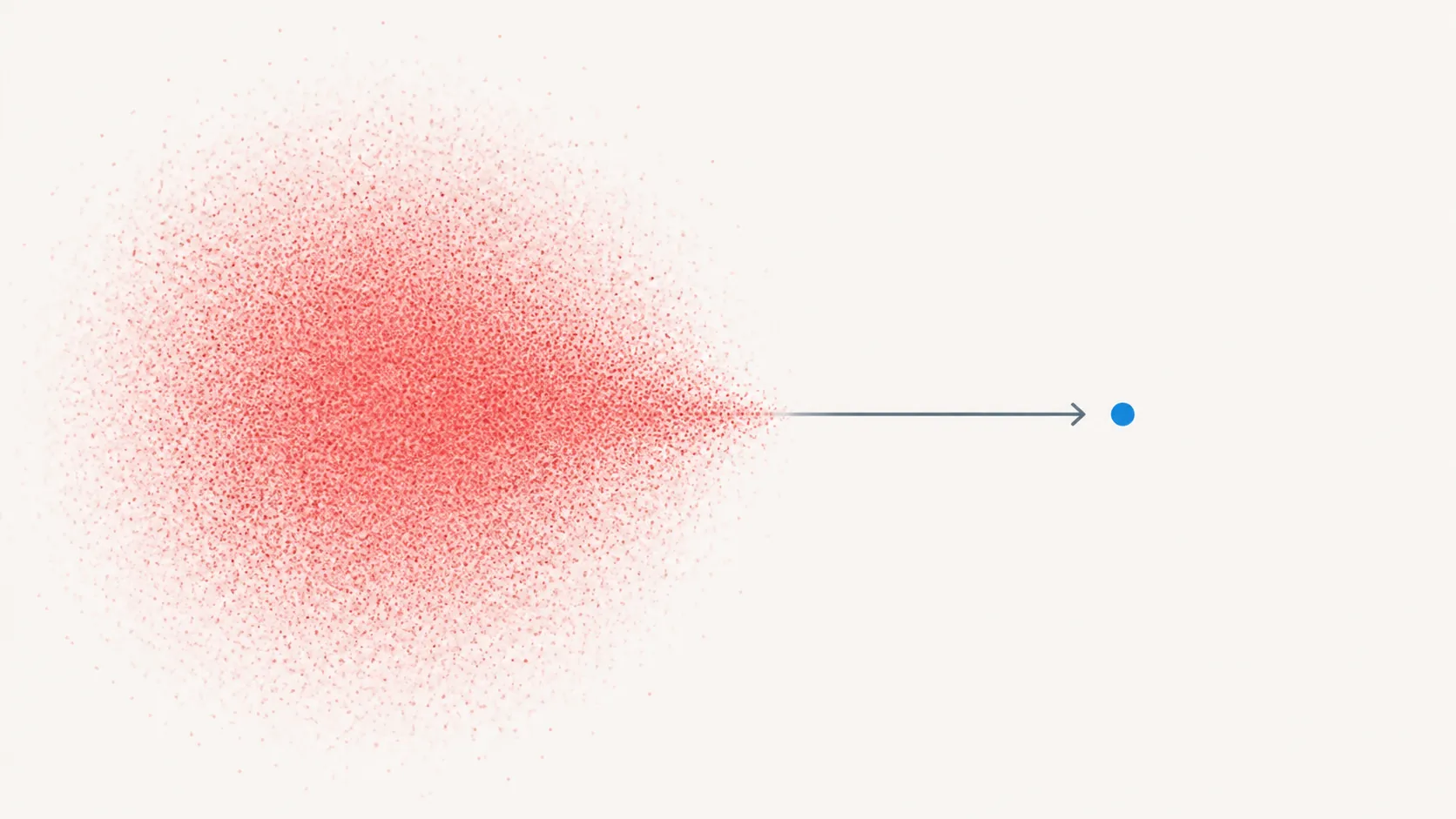
The distinction is operationally important. Updating a custom GPT is a specific action. It is not equivalent to losing access to every ChatGPT function, and neither statement tells us whether an external copywriting product could send prompts to an OpenAI API. A headline that says ChatGPT was down for thousands compresses user reports, platform availability, feature availability, and downstream tool behavior into one claim. The source only supports the first of those broadly and the custom-GPT update problem specifically.
The February record also has unresolved boundaries. The supplied material does not give a final resolution time or a duration for the episode. It does not establish whether the Feb. 3 and Feb. 4 report spikes were one continuous incident, related episodes, or separate patterns of user reports. “Mitigation applied” describes an intervention; without a later resolution record, it should not be rewritten as proof that every reported problem had ended.
August and September were recorded incidents, but not one uniform outage
Pulsetic’s tracker lists two different incidents on Aug. 31. The major incident, labeled “ChatGPT Work elevated errors and latency,” lasted 5 hours 23 minutes and was marked resolved. A separate minor incident concerned elevated latency in the Responses API and appeared with a monitoring status.[2] Combining them into a single platform-wide outage would discard the tracker’s own distinctions between product area, severity, and incident state.
On Sep. 1, Pulsetic recorded another minor incident lasting 21 minutes.[2] The duration establishes that an incident was tracked for a short window. The available material does not supply the affected ad tools, customer workflows, request failure rates, or business outcomes needed to say more.
Pulsetic also reports 86 incidents over roughly 90 days, including 12 classified as major or critical, with a median resolution time of 1 hour 54 minutes and a P95 of 27 hours 57 minutes.[2] That record provides useful scale, but it has two limits. Pulsetic is a third-party status aggregator rather than OpenAI’s primary status archive, and the exact start and end dates behind its rolling window are not verified in the supplied material. The figures therefore cannot be treated as a fixed Q2 or Q3 reliability study.
There are no captured incident records here for March through July. That is a gap in the evidence, not an outage-free period. Likewise, the Pulsetic frequency total cannot fill the gap with a date-by-date reconstruction because the underlying window has not been established.
Where the evidence chain to ad performance stops
To attribute campaign consequences to downtime, an operator has to move through several separate links. The incident itself is only the beginning.
| Evidence link | What would need to be established | What the supplied record contains |
|---|---|---|
| 1. Incident | A dated service problem with a defined window | Partial support: dated February, August, and September records, with the February duration unresolved. |
| 2. Affected service or feature | The relevant API, model, interface, or account function | Partial support: custom-GPT updates, ChatGPT Work, and Responses API latency are identified in some records. |
| 3. Tool dependency | Proof that a named ad copy tool used the affected component during the window | No supporting evidence. |
| 4. Workflow interruption | Logs, errors, failed generations, delayed approvals, or other observed operational consequences | No supporting evidence. |
| 5. Campaign effect | Window-aligned spend, ROAS, CPA, CTR, delivery, or conversion data with a defensible attribution method | No supporting evidence. |
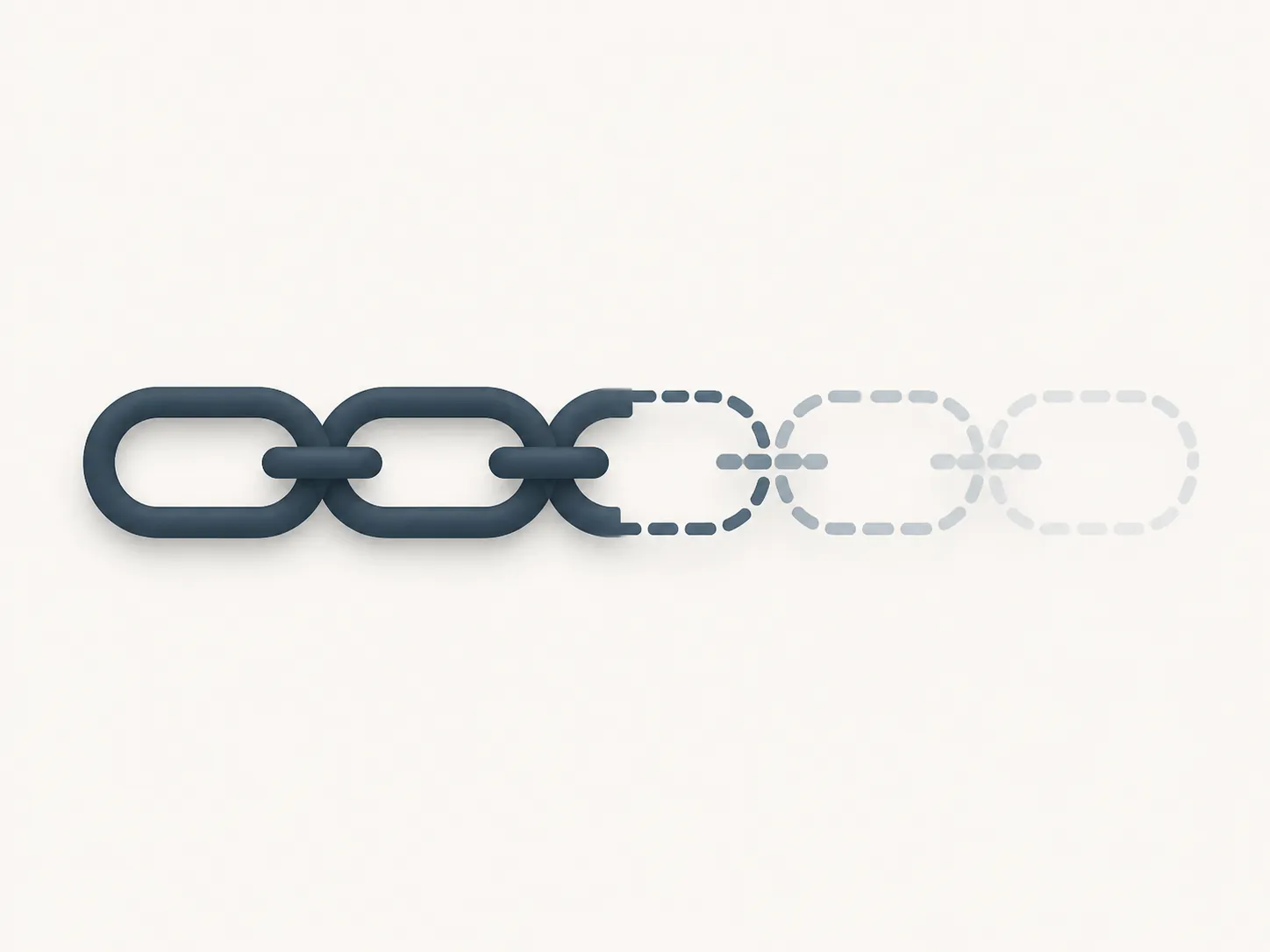
The chain breaks at tool dependency. None of the sources verifies that a particular ad copy product depended on OpenAI during any listed incident, much less that it depended on the affected feature. A product might use an OpenAI model, route requests among several providers, operate its own intermediate services, or experience an unrelated internal failure. Those are possibilities to investigate, not facts available from this record.
Even a verified generation failure would not automatically become a campaign-performance event. A team could lose the ability to create or revise copy while already approved ads continued running. Another team might be waiting on new variants before launch. The operational consequences would differ, and neither hypothetical outcome can be assigned to the 2026 incidents without workflow evidence.
The final link is weaker still. No source supplies outage-window spend, ROAS, CPA, CTR, delivery, or conversion data. A metric moving during the same hours would establish temporal overlap, not causation by itself. Attribution would require evidence that the outage affected the tool, that the tool failure altered campaign operations, and that competing explanations for the metric movement were examined.
Vendor resilience claims provide context, not an incident verdict
Jasper advertises 99.99% uptime for its API.[3] That is a vendor claim about Jasper’s API availability, and the page does not name the model behind the claim. It cannot show that Jasper did or did not depend on an affected OpenAI service during the February, August, or September windows. It also cannot establish what an individual customer experienced.
A Modelslab vendor blog argues that using multiple providers can reduce lock-in risk. Its examples include the May 12, 2026 deprecation of DALL-E 3 and an undated Hacker News migration thread that it characterizes as teams moving off OpenAI three times in 18 months.[4] This supports the general point that provider concentration creates operational exposure. It is not independent evidence that a multi-provider tool remained available during these incidents, nor that a single-provider ad copy tool failed.
When an alert arrives, the useful diagnostic order follows the same evidence chain: note the timestamp and severity; identify the named feature or API; confirm the tool’s actual dependency and routing at that moment; inspect request logs and the copy production queue; then examine campaign metrics only for workflows that were demonstrably interrupted. If the dependency cannot be verified, the diagnosis should stop there rather than jump from an outage headline to presumed media impact.
What can be said through Sep. 1, 2026
The available record supports a dated history of reported and confirmed incidents: high third-party report volumes on Feb. 3–4, a feature-level confirmation involving custom-GPT updates on Feb. 4, separate major and minor records on Aug. 31, and a 21-minute minor incident on Sep. 1. It also documents an important scope correction: thousands of reports and a broad “ChatGPT down” description did not become confirmation that the entire service—or every product connected to it—had failed.
Through Sep. 1, it does not support a measured claim about ad copy AI tools or campaign performance. No named tool dependency, broken copy workflow, or movement in spend, ROAS, CPA, or CTR is tied to an incident window. The effect on ad copy operations remains unmeasured.
References
- OpenAI’s ChatGPT Down for Thousands Again, Downdetector Reports — GV Wire, Feb. 4, 2026
- Is OpenAI Down? OpenAI Status & Outage Tracker — Pulsetic
- Jasper API — Jasper
- OpenAI Vendor Lock-In: Multi-Provider API 2026 — Modelslab
This is a record of what happened and what was tested, not legal advice. Compliance determinations require qualified counsel.