
How Burger King Made the Whopper Guarantee Credible
Burger King's Whopper Guarantee only works because it was the last step in a four-phase turnaround. This article breaks down the sequencing—operations, franchisee economics, brand repositioning, then the guarantee—and why the order made the promise credible.
Burger King’s Whopper Guarantee, launched July 20, 2026, gives customers two remedies if their Whopper is not made their way: an on-the-spot remake and a free Whopper for a future visit through QR-code redemption. The offer is scheduled to run through August 31, 2026, and is paired with a new in-store Your Way Champion role intended to keep the promise from living only in the ad copy.[1]
That is the visible marketing move. The more useful question is why Burger King could risk saying it in public in July 2026. A guarantee is not only a message; it is an invitation for customers to test the system. If the kitchen, field team, franchisee economics, and product satisfaction are not ready, the campaign becomes a coupon attached to an operational failure.
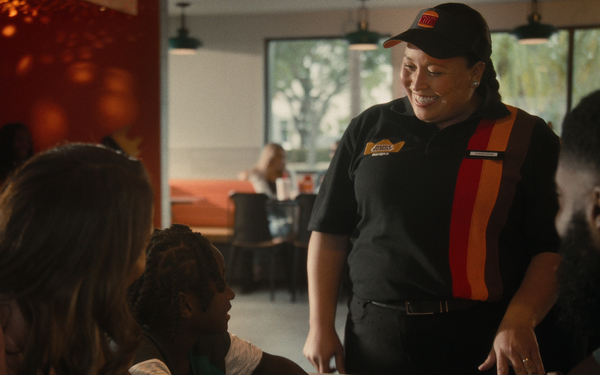
Burger King’s Whopper Guarantee is credible because it arrived late in the sequence. It followed a multi-year repair job that started with restaurant execution, moved through franchisee economics, then used brand repositioning to make the company sound more accountable before asking customers to take a promise literally.
The Starting Point Was Not a Brand Voice Problem
Burger King entered the Reclaim the Flame period with problems that a sharper tagline could not solve. In 2020, the brand ranked 10th out of 12 quick-service restaurant brands in satisfaction. Franchisee profitability had fallen to a trough of $125,000. Image penetration sat below 40 percent while McDonald’s had spent $9 billion modernizing its U.S. restaurants.[2]
Those facts matter because they define what the later guarantee had to overcome. A customer promise about customization and satisfaction is only persuasive if the average restaurant can absorb the extra scrutiny. A store that is already understaffed, underinvested, or inconsistently supervised does not experience a guarantee as a brand platform. It experiences it as more friction at the counter.
Burger King’s useful lesson for marketers begins here: the company did not start by asking customers to believe harder. It first had to make more restaurants capable of delivering a less embarrassing version of the brand.
Operations Came Before the Promise
The least glamorous part of the turnaround is the part that gives the Whopper Guarantee most of its weight. Burger King doubled its field teams, held Royal Roundtables across 43 cities, and concentrated store visits where they were most needed. QSR Magazine reported that targeted visits to bottom-performing stores produced a 1.8 percent same-store sales lift and a 1.3 percent traffic lift versus a control group.[2]
That comparison matters more than a broad statement that operations “improved.” It shows the company was not only issuing standards from headquarters; it was directing field attention toward weaker restaurants and measuring whether intervention changed business outcomes against stores that did not receive the same treatment.
For a guarantee, this is the difference between a promise and a burden. If a customer asks for a remake, the restaurant has to know who handles it, how quickly it moves, whether the crew treats the request as legitimate, and whether the manager sees it as a service recovery or a margin leak. Field execution is where that behavior is either normalized or left to chance.
The Your Way Champion role attached to the 2026 guarantee is therefore not a decorative detail. It is a sign that Burger King understood the campaign needed an accountable in-store owner. The role does not prove flawless execution, and the public data does not yet show how consistently it is being implemented. But it is directionally consistent with the earlier operational repair: name the behavior, assign the responsibility, and reduce the ambiguity customers would otherwise encounter at the counter.[1]
Franchisee Economics Made the System Safer to Challenge
A service guarantee has a balance-sheet audience before it has a customer audience. Franchisees are the people who live with the remake, the labor, the training, the customer argument, and the chance that a promotion turns into a cost center. Burger King’s sequence is notable because it addressed operator economics before asking the system to support a louder trust promise.
The Reclaim the Flame plan included a $700 million corporate investment, with $450 million directed to remodel co-investment. More than 1,000 stores changed ownership to stronger operators. Franchisee profitability rose from the $125,000 trough to $205,000, according to QSR Magazine’s reporting.[2]
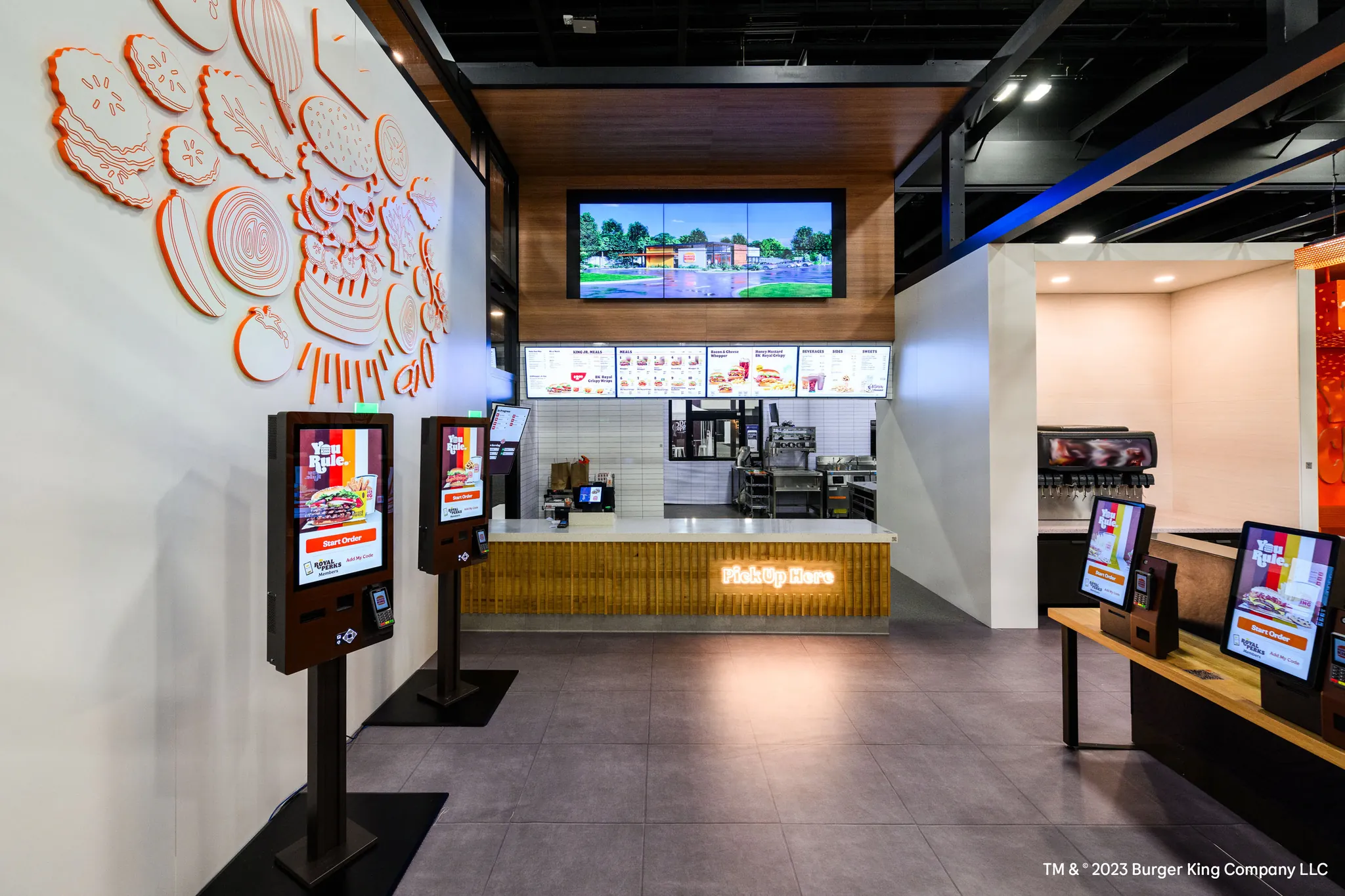
The ownership changes are especially important. Remodeling money can improve the asset base, but a guarantee depends on operator quality as much as signage. A franchise system with too many weak operators cannot reliably turn a national promise into local behavior. Moving more than 1,000 restaurants into better hands gave Burger King a cleaner operating base for any later brand claim.[2]
The operator vote is another useful indicator. Even after a beef-cost-induced profitability dip to $185,000 in 2025, 97 percent of operators voted to maintain elevated ad contributions.[2] That does not mean every franchisee was equally enthusiastic or every local market was fixed. It does suggest that the system had enough confidence in the turnaround to keep funding demand generation instead of retreating into defensive economics.
This is where many brand guarantees fail in practice. Marketing sees a trust gap and wants a dramatic public mechanism to close it. Operators see the same gap and ask who pays when customers accept the invitation. Burger King had more room to ask for operator participation because profitability, investment, and ownership quality had already moved in the right direction.
The Brand Reset Gave Burger King a More Believable Voice
Only after the operational and economic work does the brand repositioning become useful to inspect. Burger King retired the King mascot, returned to the “You Rule” idea, and used a March 2026 Oscars ad to acknowledge mistakes rather than pretend the brand had always been in control.[3][4]
That tonal change mattered because Burger King had to stop sounding like a brand performing confidence it had not earned. The repositioning did not fix restaurant execution by itself. It did, however, make the company’s public posture more compatible with the repair happening underneath: less mascot-led bravado, more admission that the customer experience had not always matched the brand’s ambition.
Tom Curtis’s direct phone line, which generated more than 20,000 calls, belongs in the same category.[3] It was not a scalable service channel in the ordinary sense. Its value was symbolic and diagnostic: leadership was willing to receive unfiltered customer reaction while the company was trying to reposition itself around accountability.
CMO Joel Yashinsky’s role in the reset is best read through that lens. The marketing work gave Burger King a new tone, but the tone was only durable because it followed store-level and franchisee-level repair. “You Rule” is a stronger platform when restaurants are actually being rebuilt to let customers feel more in control.[5]
The Whopper Was Improved Before It Was Guaranteed
The most direct support for the Whopper Guarantee is not the guarantee language. It is the product satisfaction movement that came before it. QSR Magazine, citing Tom Curtis’s investor-day comments, reported that Whopper satisfaction improved from roughly 77 percent in 2022 to north of 87 percent before the guarantee was announced, a nearly 10-point improvement.[2]
The exact 2022 baseline should be treated with care because it is inferred from the reported “nearly 10-point improvement” language, not presented here from a full investor-day transcript. Even with that caveat, the direction is strategically important: Burger King did not attach a satisfaction guarantee to a product whose satisfaction story was still flat.
That order changes the meaning of the offer. If satisfaction is weak, a guarantee can look like compensation for a known defect. If satisfaction has already improved, the guarantee can function as a confidence signal and a service recovery mechanism. The same tactic reads differently depending on the operating evidence behind it.
| Turnaround Layer | What Burger King Changed | Why It Matters to the Guarantee |
|---|---|---|
| Restaurant execution | Doubled field teams, Royal Roundtables in 43 cities, targeted visits to weaker stores | Reduced the chance that customer requests would be handled inconsistently |
| Franchisee economics | $700 million corporate investment, remodel co-investment, ownership transfers, profitability recovery | Made operators more able to absorb and support a public service promise |
| Brand voice | Retired the King mascot, leaned into “You Rule,” publicly owned mistakes | Made the customer-first promise sound less performative |
| Product and service promise | Improved Whopper satisfaction, then launched a time-bound remake and QR redemption offer | Placed the guarantee after the system had more evidence of readiness |
Early Results Support the Sequence, Not a Victory Lap
Burger King’s recent performance gives the sequence more credibility, but it should not be misread as proof that the Whopper Guarantee has already worked. The guarantee launched in Q3 2026, and the offer is time-bound through August 31, 2026. Long-term impact depends on whether Burger King renews, adapts, or retires the program and what customer and operator data show afterward.[1]
The pre-guarantee and early-turnaround indicators are still meaningful. Burger King reported 5.8 percent Q1 comparable sales growth as Reclaim the Flame took hold. The brand moved from 10th to 6th in QSR satisfaction, Whopper average unit volume reached its highest level in more than three years, and revisit intent rose from 5th to 3rd out of 12 brands, based on Circana data cited by QSR Magazine.[6]
Same-store sales also changed trajectory. Before Reclaim the Flame, Burger King was running 700 basis points behind the field; after Q4 2025 comparable sales climbed 2.6 percent, the brand was about 300 basis points ahead.[2] That is the kind of movement that makes a later trust promise less desperate. The business was not relying on the guarantee to create the entire turnaround story.
The correct reading is disciplined: Burger King had enough operational, financial, and product evidence to justify testing a public guarantee. That is not the same as saying the guarantee will produce durable sales growth, higher loyalty, or better franchisee economics on its own. The launch is visible. Effectiveness remains to be measured.
What Marketers Should Take From the Sequence
The tempting lesson is to copy the surface move: offer a guarantee, give customers a redemption mechanic, put an employee role behind it, and make the campaign sound confident. That is the shallow read. Burger King’s stronger lesson is that a trust promise should be placed after the organization has become more capable of surviving the customer taking it literally.
For senior marketers, the useful diagnostic is sequence. Before making a guarantee, the brand should know whether the weakest locations have improved, whether field teams can enforce the behavior, whether operators can afford the service recovery, whether customer satisfaction has already moved, and whether the brand voice has earned enough humility to make the promise believable.
Burger King did not make the Whopper Guarantee credible by wording it cleverly. It made the offer credible by placing it after operational consistency, franchisee alignment, and a brand reset that acknowledged the gap between the old experience and the desired one. The strategic lesson is not “launch a guarantee.” It is do not make a trust promise until the organization underneath it can bear the consequences.
References
- Burger King backs Whopper with satisfaction guarantee, MediaPost, July 20, 2026.
- The Multi-Year Journey of How Burger King Earned the Right to Grow Again, QSR Magazine.
- In its latest brand “reset,” Burger King is owning up to mistakes, Marketing Brew.
- A Surprising New King Reigns in Burger King’s Oscars Ad, Adweek.
- CMO of the Week: Burger King’s Joel Yashinsky, Brand Innovators.
- Burger King Sees U.S. Sales Surge as “Reclaim the Flame” Strategy Takes Hold, QSR Magazine.
This is a record of what happened and what was tested, not legal advice. Compliance determinations require qualified counsel.