
What Australia's AI Song Ban Means for AI Ad Creative
ARIA's ban on wholly AI-generated songs from Australia's official charts doesn't regulate ads, but it is the clearest signal yet that platform labeling, streaming de-prioritization, and label litigation are converging on AI ad creative. Advertisers get three concrete changes to act on — and one big thing the ban does not change.
- Platform
- Meta
- Creative type
- synthetic performer
- Disclosure status
- self-reported platform labels
- Failure type
- unlicensed music use in ads
- Last reviewed
- 0-08-27
As of August 27, 2026, Australia has not banned AI-generated songs from ads, streaming services, or general release. ARIA confirmed on August 25 that wholly AI-generated recordings will be ineligible for Australia’s official charts and associated awards from the chart dated August 31, 2026.[1] That correction matters: this is an industry eligibility rule, not legislation and not a prohibition on publishing or advertising with synthetic audio.
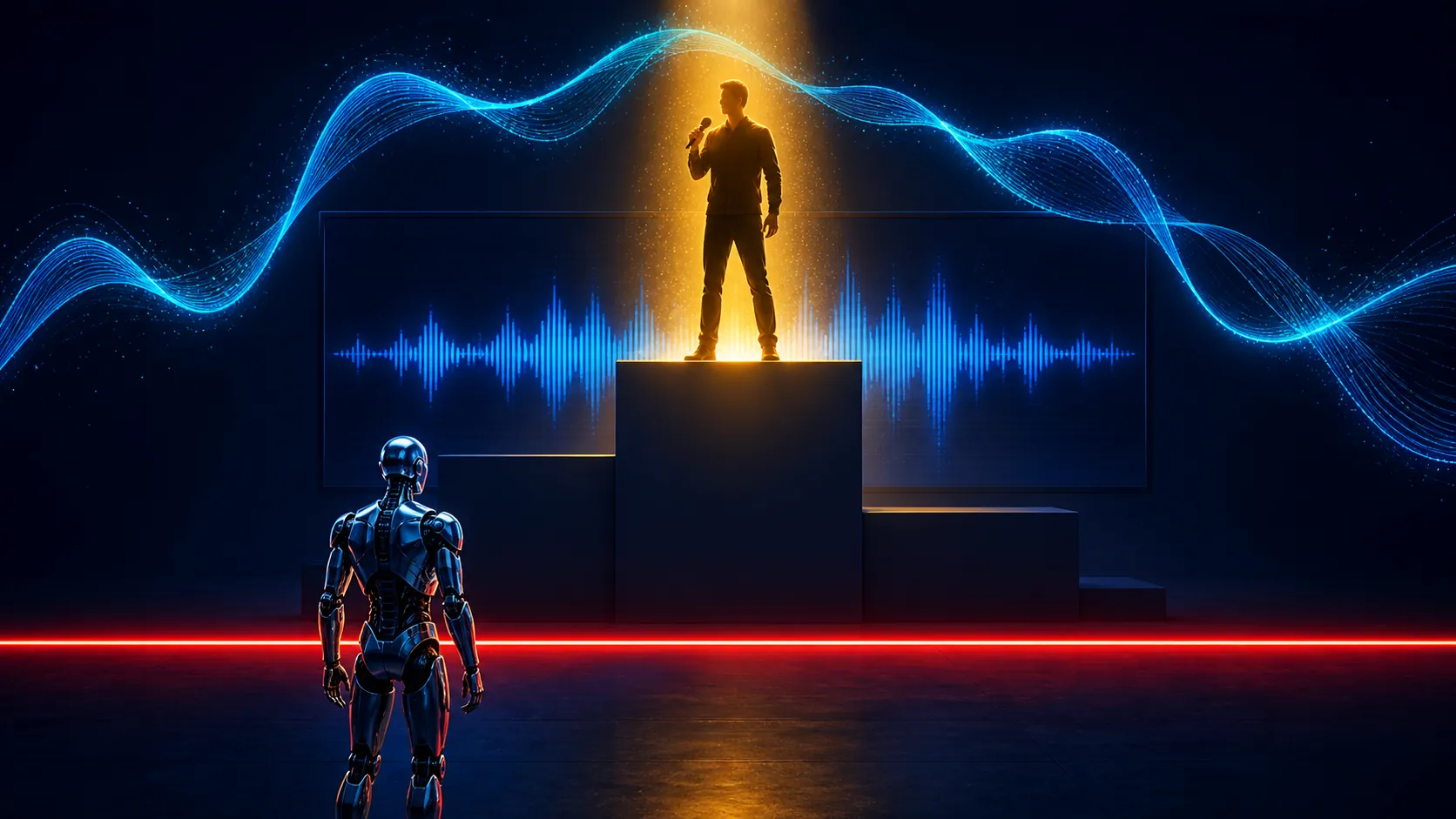
The rule nevertheless gives advertisers a useful test because its line is unusually clear. A recording with an AI-generated lead vocal is ineligible. A human lead vocal can remain eligible when AI supplies backing vocals. AI mastering, stem separation, drum machines, and instrument patches played by a person also remain permitted.[1] In practical terms, ARIA is separating tools used in a human performance from recordings whose central performed identity was generated.
ARIA is applying principles introduced by IFPI on July 30, 2026 and being extended to more than 20 national chart programs. Those principles ask whether the AI service was properly authorized and lawful, whether the recording was substantially human-made, and whether manipulation concerns remain. They also bring copyright, related rights, personality rights, service terms, and consumer labeling into the eligibility decision.[2]
ARIA’s accompanying labeling standard distinguishes “AI-Generated” material from “AI-Assisted” work and uses the lead vocal as an operational boundary.[3] That does not determine whether an advertiser owns all necessary rights. It does show where music-industry institutions are starting to demand an answer more specific than “AI was involved.”
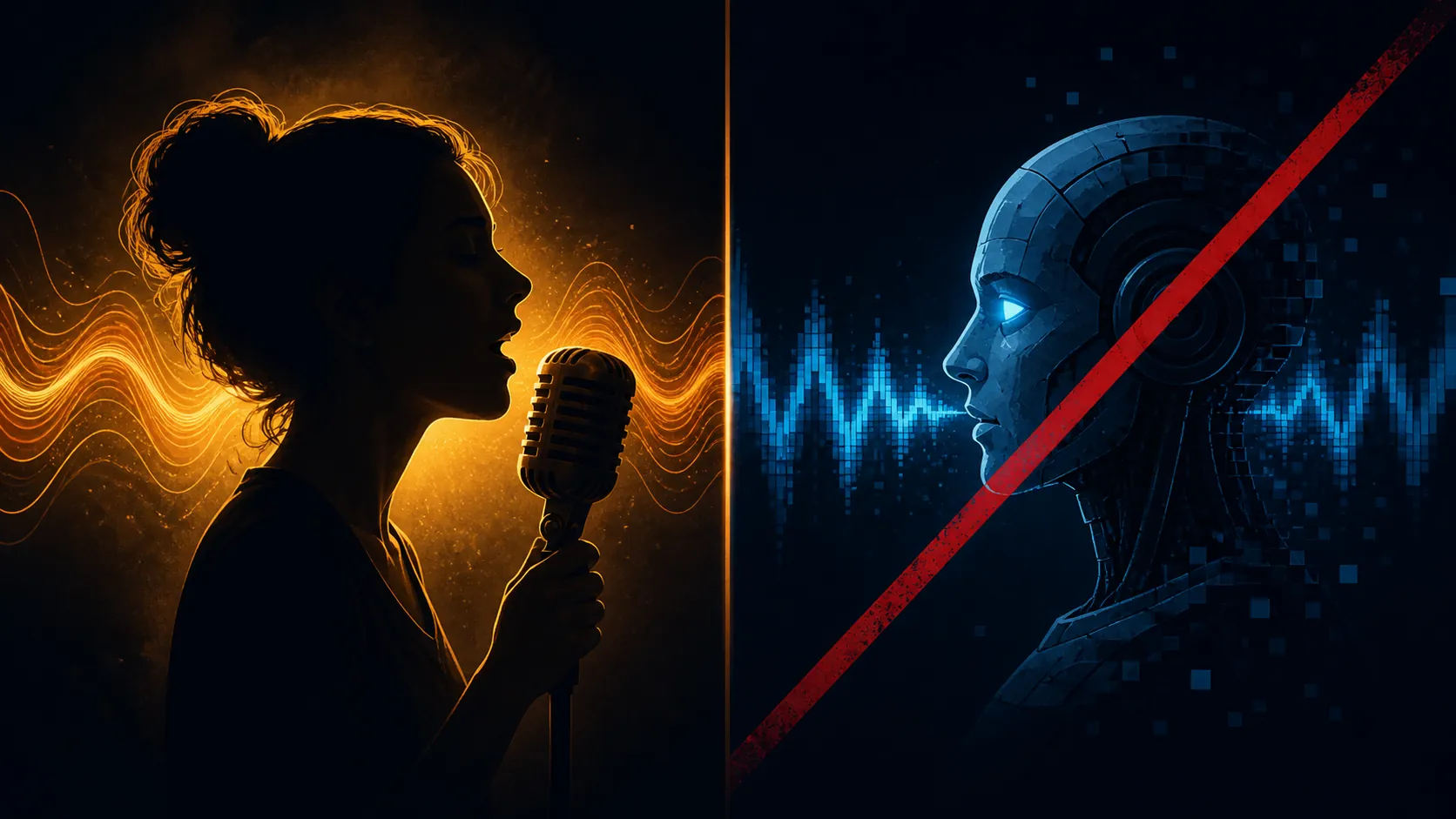
The lead vocal test already has a real promotion case
Josh Fawaz’s AI-assisted cover of “Like a Prayer” peaked at No. 2 in May 2026 and spent 16 weeks on the chart. Its credits were later updated to disclose AI-generated vocals and drums. Music Business Worldwide reported that ARIA told CBC News the recording did not meet the new requirements “based on information provided by the artist.”[1]
The careful wording is important. This is not a finding that every AI-assisted cover is ineligible, nor is it a copyright ruling against Fawaz. It is an application of a newly stated chart rule to information supplied about one recording.
For an advertiser, the case exposes a timing problem. An audio asset can acquire attention before its credits, provenance, and eligibility have been fully examined. If a campaign builds edits, creator briefs, paid placements, and localization around that sound, a later classification change leaves the creative or media team replacing music across work that may already be live.
AI music is becoming identifiable at distribution scale
The chart decision would have limited relevance to advertising if synthetic recordings remained difficult for distributors to classify. That premise is becoming harder to maintain.
Deezer says it receives approximately 90,000 fully AI-generated tracks per day, exceeding half of all new uploads on peak days. Yet those tracks account for only 1%–3% of streams. The service detects and tags fully generated music rather than treating upload volume as evidence of comparable listener demand.[4] Those figures measure adoption and listening share, not the creative quality or advertising effectiveness of any individual track.
Apple Music announced “Made With AI” labels on August 20, 2026. The information is self-reported by labels and distributors, so the presence or absence of a label should not be mistaken for independent technical verification.[5] It still gives distribution partners a structured field they can use to present, filter, or audit a recording.
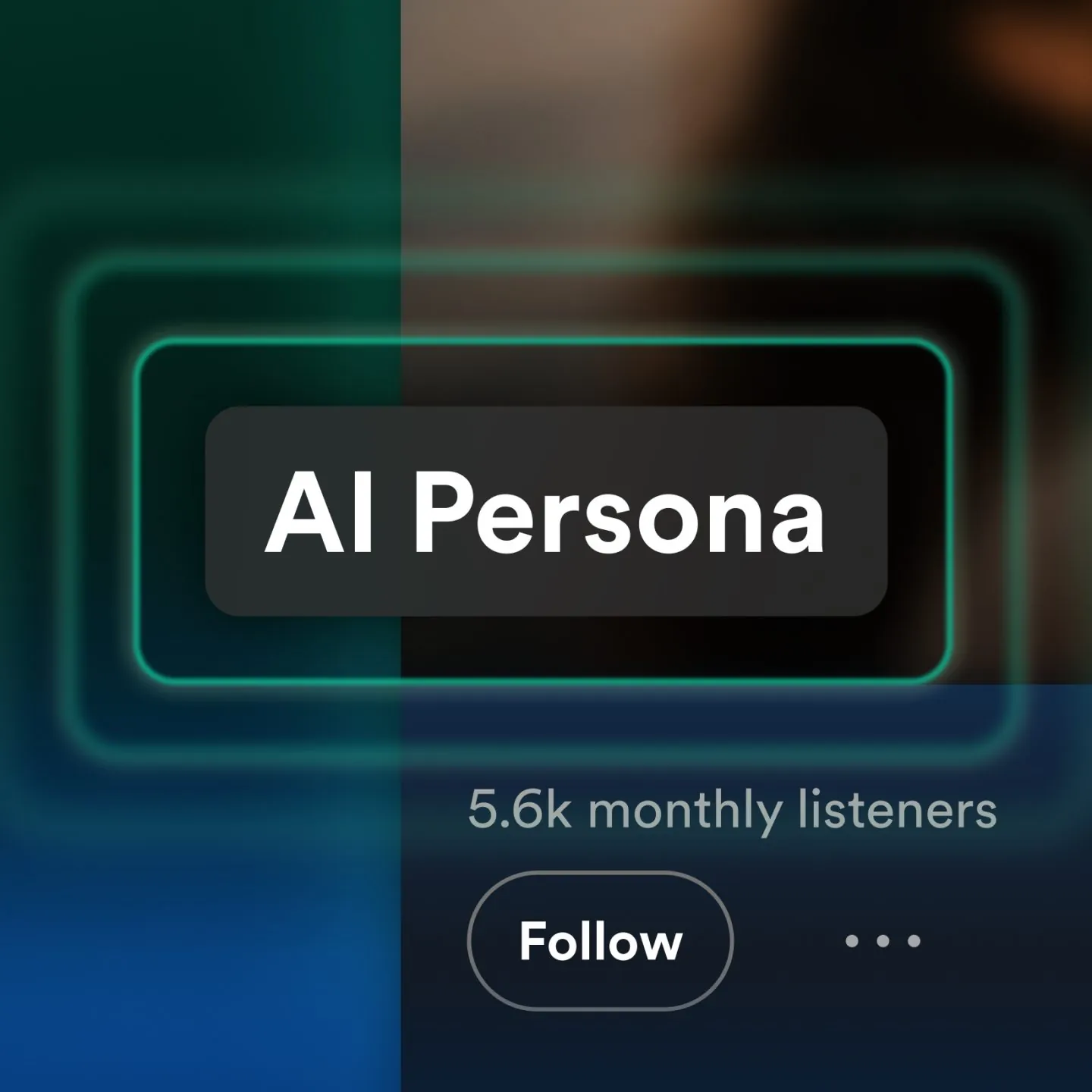
Spotify followed a different route with “AI Persona” badges for generated artist identities. Its launch policy keeps those profiles out of editorial and algorithmic recommendations by default.[6] That is more consequential than a badge displayed after someone opens an artist page: default recommendation eligibility affects whether a synthetic identity receives passive distribution.
Luminate has also launched an AI-music identification framework, with AI-generated labels scheduled to reach its Connect product later in 2026.[7] The platforms are not using one universal definition or detection method, and self-disclosure remains part of the system. Even so, advertisers should now expect audio provenance to travel through distribution data rather than remain buried in a production conversation.
This supports a conditional commercial judgment: wholly synthetic tracks with weak or uncertain rights are becoming less useful as durable promotional sounds. A recording may still be available and may still receive streams, but labeling, chart exclusion, and recommendation defaults can narrow the routes through which it accumulates momentum.
The idea of a chart-to-playlist-to-radio-to-social-sound flywheel is editorial synthesis, not a claim made by ARIA or the streaming platforms. The Fawaz case shows chart momentum; ARIA’s rule can remove future eligibility; and streaming services are creating classification and distribution controls. Together, those developments make it less sensible to assume that a generated track will become more promotable simply because it begins trending.
Platform access still does not grant a brand music rights
The more immediate advertising risk appears when a team treats music available inside a social platform as cleared for branded promotion. The Sony–DSW dispute directly tested that assumption.
Sony alleged that DSW used at least 122 recordings in more than 170 promotional videos. DSW separately sought a declaration that its use was covered by platform licenses, but that action was dismissed as an “anticipatory filing”—a procedural ruling, not a merits decision establishing the scope of those licenses. On August 17, 2026, the parties reported a settlement in principle, with terms undisclosed.[8]
That status should not be inflated. A settlement in principle is not an executed settlement, and the underlying allegations were not converted into a final liability judgment. The operational warning is narrower: a retailer faced substantial litigation after relying on a theory that access through social platforms covered its promotional use, and the retailer did not obtain the declaratory ruling it sought.
The dispute also concerns conventional recordings rather than music generated specifically for ads. It is relevant because the same clearance shortcut can appear in an AI workflow. A generator may produce an audio file, but that fact alone does not establish that its training inputs, melody, lyrics, voice characteristics, samples, service terms, or downstream commercial uses are free of competing claims.
Round Hill’s complaints against Suno and Anthropic add another unresolved signal. The complaints seek remedies that include statutory damages and model-weight impoundment, but their allegations remain untested.[9] They should not be cited as proof that a particular generation service infringes or that every output is unusable. They do show that rightsholders are looking beyond finished tracks to the systems and data involved in producing them.

Three changes for AI ad creative approval
- Verify rights before treating generated audio as reusable. Record the generator and account tier, applicable terms, source materials, samples, performer or voice permissions, modifications, and the territories and media covered. “Commercial use allowed” in a tool plan is only one part of that review.
- Preserve provenance and disclosure information. Keep generation logs, stems, human performance records, contributor credits, license documents, and the version of the service terms that applied when the asset was made. Platforms and measurement services can increasingly classify AI music, while self-reporting fields require someone to provide an answer.
- Do not budget on chart or trend momentum rescuing uncertain rights. If campaign economics depend on a sound entering recommendations, charts, playlists, radio rotation, or creator reuse, model the possibility that eligibility or distribution will be limited. Keep a cleared replacement mix available before launch rather than after a challenge.
These checks should be applied to the actual asset, not to “AI music” as a single category. A recording with a human vocalist, licensed composition, documented contributors, and AI-assisted mastering presents a different approval file from an anonymous generated track that imitates a recognizable performer. ARIA’s framework is useful precisely because it refuses to treat those situations as interchangeable.
What the ARIA change does not change
ARIA governs chart and award eligibility. It does not regulate advertisements, clear commercial music rights, or order streaming platforms to remove AI recordings. A track can be ineligible for an ARIA chart and still remain available elsewhere, subject to the relevant service rules and applicable rights.
Nor did the August announcement create the basic rule for branded social content. Meta’s Music Guidelines, effective since March 26, 2024, prohibit commercial or non-personal use of music without appropriate licenses. They make the poster solely responsible for the music used and warn that greater music density makes content more likely to be limited.[10]
A generated file therefore does not become cleared merely because it can be uploaded, selected from a platform interface, or attached to a paid post. The legal baseline remains where it was before ARIA’s announcement. What is changing around it is the identification, labeling, distribution, and enforcement infrastructure that makes an unsupported rights assumption easier to detect—and more expensive to unwind after launch.
References
- ARIA blocks AI-generated recordings from Australia’s official charts, Music Business Worldwide, August 2026
- IFPI Rolls Out Global Principles for the Eligibility of Recordings Developed Using AI in Official Music Charts Worldwide, IFPI, July 30, 2026
- ARIA welcomes global music industry’s new standard for AI labelling in recordings, ARIA
- 90,000 AI tracks flood Deezer daily, passing half of new music uploads for the first time, Music Business Worldwide
- Apple Music to add “Made With AI” labels, Music Business Worldwide, August 20, 2026
- AI Persona badge, Spotify Newsroom, August 2026
- Luminate launches AI music identification framework, with AI-generated labels reaching Connect later this year, Music Business Worldwide
- DSW reaches settlement in principle with Sony Music over music used in social media ads, Music Business Worldwide, August 17, 2026
- 5 things to know about Round Hill’s Suno and Anthropic lawsuits: Model weights, extraction tools, and a $75M number, Music Business Worldwide
- Music Guidelines, Meta, effective March 26, 2024
This is a record of what happened and what was tested, not legal advice. Compliance determinations require qualified counsel.